
Disregard Everything I Say
Month
Dosage (oral)
Threshold : 5 - 10 mg
Light : 10 – 30 mg
Common : 30 – 50 mg
Strong : 50 – 70 mg
Heavy : 70+ mg
Duration (oral)
Total duration : 4 - 6 hours
Onset : 1 - 3 hours
Peak : 2 - 3 hours
Come down : 1 - 2 hours
After effects : > 2 hours
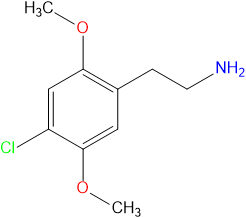
2C-C (2,5-Dimethoxy-4-chlorophenethylamine) is a psychedelic phenethylamine of the 2C-x family.[1] It was first synthesized by Alexander Shulgin and described in his 1991 book PiHKAL: A Chemical Love Story.
In modern times, it is used as a recreational drug and an entheogen, rarely sold on the streets and almost exclusively obtained as a grey area research chemical through the use of online vendors. Therefore, it is relatively uncommon and has only a short history of human use.
Many users report that 2C-C is gentler and more sedating than other closely related psychedelic phenethylamines.
In terms of its chemistry, 2C-C is a substituted phenethylamine with methoxy groups attached to carbons R2 and R5 as well as a chlorine attached to carbon R4.
In terms of its pharmacology, 2C-C’s psychedelic effects are believed to come from its efficacy at the 5-HT2A receptor as a partial agonist. However, the role of these interactions and how they result in the psychedelic experience continues to remain elusive.
The effects listed below are based upon the subjective effects index and personal experiences of PsychonautWiki contributors. The listed effects will rarely if ever occur all at once but heavier dosages will increase the chances and are more likely to induce a full range of effects.
Physical effects:
The physical effects of 2C-C can be broken down into 9 components all of which progressively intensify proportional to dosage. These are described below and generally include:
Cognitive effects:
The head space of 2C-C is described by many as one which is both insightful and relatively normal in its thought processes even at moderate to high dosages.
The total sum of these cognitive components regardless of the setting generally includes:
Visual effects:
Enhancements
2C-C presents a full and complete array of possible visual enhancements which generally includes:
Distortions
2C-C presents a full and complete array of possible visual distortions which generally includes:
Geometry
The visual geometry that is present throughout this trip can be described as more similar in appearance to that of 4-AcO-DMT or Ayahuasca than that of LSD, 2C-B or 2C-I. They can be comprehensively described as structured in their organization, organic in geometric style, intricate in complexity, large in size, slow and smooth in motion, colourful in scheme, glossy in colour, equally blurred and sharp in their edges and equally rounded and angular in their corners. They give off a contradictory natural and synthetic feel to them that at higher dosages. While the geometry for 2C-C has yet to be formally confirmed, it seems more likely to result in states of Level 8B visual geometry over Level 8A.
Hallucinatory states
2C-C produces a full range of high level hallucinatory states in a fashion that is more consistent and reproducible than that of many other commonly used psychedelics. This holds particularly true in comparison to other substances within the phenethylamine family. These effects include:
Auditory effects:
The auditory effects of 2C-C are common in their occurrence and exhibit a full range of effects which commonly include:
Physical health effects, potential addiction and tolerance:
The toxicity and long term health effects of recreational 2C-C use do not seem to have been studied in any scientific context and the median lethal dose (LD50) is unknown. This is because 2C-C is a research chemical with very little history of human usage. Anecdotal evidence from those who have used 2C-C would suggest that there are little to no immediate or short-term negative health effects attributed to simply trying the drug at low to moderate doses or using it very sparingly. The validity of these statements, however, cannot be confirmed.
The addictive potential of 2C-C has not yet been formally studied, but anecdotal evidence would suggest that 2C-C is not physically addictive. Many users describe a self-regulating quality and commonly report a tolerance build up when using the drug consecutively many days in a row. A build up in tolerance may lead to weakened effects and a diminished experience, however, this effect is nearly non-existent when consumption periods are spaced 5-7 days apart.
Legal issues:
Conclusion:
Despite its lack of relative potency, 2C-C definitely holds up as an excellent psychedelic and is particularly useful for those who are inexperienced. Although I have yet to determine the proper dosage for this method, I would highly recommend smoking or vaporizing this compound using a standard water bong (like one used to smoke cannabis) as it delivers an intense experience which is somewhat on par with a phenethylamine-esque DMT breakthrough experience.
This substance breakdown was written through collaboration between PsychonautWiki contributors PJosepherum, Josikins and Oscarette. The full article, including references, is available here.
Dosage (oral)
Threshold : 50 mg
Light : 70 – 85 mg
Common : 85 – 110 mg
Strong : 110 – 150 mg
Heavy : >150 mg
Duration (oral)
Total duration : 2 - 5 hours
Onset : 15 - 30 minutes
After effects : 4 - 24 hours
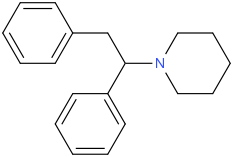
Diphenidine (1-(1,2-diphenylethyl)piperidine) is a dissociative NMDA receptor antagonist and anesthetic drug that has been sold online as a research chemical.
The synthesis of diphenidine was first reported in 1924 and employed a nitrile displacement reaction analogous to the one that would later be used to discover phencyclidine in 1956. Shortly after the 2013 UK ban on arylcyclohexylamines, diphenidine and the related compound methoxphenidine became available on the grey market. Anecdotal reports describe high doses of diphenidine producing “bizarre somatosensory phenomena and transient anterograde amnesia.”
In 2014, there have been two published reports of diphenidine being sold in combination with synthetic cannabinoids in Japanese herbal incense blends. A herbal incense sold in the Shizuoka Prefecture under the name “Aladdin (sic) Spacial Edition” was found to contain diphenidine and 5-fluoro-AB-PINACA at concentrations of 289 mg/g and 55.5 mg/g, respectively. Another product called ‘‘Herbal Incense. The Super Lemon’’ containing AB-CHMINACA, 5F-AMB, and diphenidine was implicated in a fatal overdose.
Based on collaborative anecdotal evidence, diphenidine seems to have a much more rapid onset and lower half life when vaporized or smoked. When consumed this way, it is a suspected to be carcinogenic when excess heat is used. Some user reports have concluded that vaporization requires as low as 20% of what would be a common oral dose for that person.
In terms of its chemistry, diphenidine is a diarylethylamine related to methoxphenidine. It is named for its two phenyl and piperidine groups. Diphenidine’s crystalline structure is very similar to MK-801 (Dizocilpine) and shares many of the same effects. These two compounds are homeomorphs. Diphenidine is synthesized in a reaction analogous to the synthesis of PCP. The ®-enantiomer of diphenidine has a remarkable high affinity as a NMDA receptor channel blocker.
In terms of its pharmacology, diphenenidine acts as an NMDA receptor antagonist. NMDA receptors allow for electrical signals to pass between neurons in the brain and spinal column; for the signals to pass, the receptor must be open. NMDA receptor antagonists close the NMDA receptors by blocking them. This disconnection of neurons leads to loss of feeling, difficulty moving, and eventually the famous “hole”.
Although vendors of diphenidine have stated the compound acts as a dopamine-reuptake inhibitor and a serotonin reuptake inhibitor with µ-opioid affinity and typical dissociative effects, to date diphenidine has not been screened for affinity at the dopamine transporter. If this is indeed the case, however, it provides an explanation for its euphoric and often stimulating effects.
Diphenidine and related diarylethylamines have been studied in vitro as treatments for neurotoxic injury. Diphenidine may be a stronger NMDA receptor antagonist for neurogenis and neurological repair than other more common NMDA receptor antagonistic dissociatives such as ketamine, dextromethorphan, PCP analogs, Iboga and methoxetamine.
The effects listed below are based upon the subjective effects index and personal experiences of PsychonautWiki contributors. The listed effects will rarely if ever occur all at once but heavier dosages will increase the chances and are more likely to induce a full range of effects.
Physical effects:
The subjective physical effects of diphenidine can be broken down into nine components all of which progressively intensify proportional to dosage. These are described below and generally include:
Cognitive effects:
The general head space of diphenidine is often described as particularly euphoric and clear headed in comparison to that of DXM and Ketamine. The specific cognitive effects can be broken down into 8 separate subcomponents which are listed and described below:
Visual effects:
Suppression:
This substance does not enhance visual stimuli; instead it tends to degrade and decrease visual aptitude in a variety of ways which generally includes:
Distortions:
Diphenidine exhibits a full array of dissociative distortions and alterations in visual perception which generally includes:
Geometry:
The visual geometry found within diphenidine can be described as very dark and bland when compared to that of Ketamine or DXM and often consists of many tiny interlocking and woven lines. It does not extend beyond level 4 and can be comprehensively described through its variations as simplistic in complexity, algorithmic in style, synthetic in feel, unstructured in organization, dimly lit in lighting, multicoloured in scheme, glossy in shading, soft in edges, small in size, slow in speed, smooth in motion, equal in rounded and angular corners, immersive in depth and consistent in intensity.
Hallucinatory states:
At high dosages, diphenidine can produce a full range of high level hallucinatory states in a fashion that that is less consistent and reproducible than that of many other commonly used psychedelics. These effects include:
Auditory effects:
The auditory effects are common in their occurrence and exhibit a range of effects which commonly includes:
Physical health effects, potential addiction and tolerance:
The toxicity and long term health effects of recreational diphenidine use does not seem to have been studied in any scientific context and the exact toxic dosage is unknown. This is because diphenidine is a research chemical with very little history of human usage. Anecdotal evidence from people who have tried diphenidine within the psychonaut community suggests that there are no negative health effects attributed to simply trying this drug at low to moderate doses or using it very sparingly (but nothing can be completely guaranteed).
There is a very strong tolerance build up with diphenidine which results in the need to consume increasingly large doses in order to achieve the same level of effects. This should reset to baseline after 1 - 2 weeks. There may well be some addictive potential but this is still unknown.
Tolerance may be mitigated via preparing the citrate salt by mixing the chemical with citric acid or lemon juice, which will aid in absorption and increase effects.
Legal issues:
Diphenidine is currently a legal grey area drug worldwide and is freely available through the use of online research chemical vendors. However, this does not guarantee anyone to be immune from legal prosecution should they be found in possession of this substance as the legality is likely to vary from country to country.
Conclusion:
In conclusion, diphenidine feels almost identical to MXE with only subtle differences. It is a powerful hallucinogen and just as capable of inducing deep states of detachment which rival that of the other more commonly used dissociatives.
This substance breakdown was written through collaboration between PsychonautWiki contributors Kaylee, PJosepherum, Josikins and Oscarette. The full article, including references, is available here.
DISCLAIMER: I do not encourage you to break the law and this guide is purely for informational purposes only. I am not responsible for your actions.
Theory:
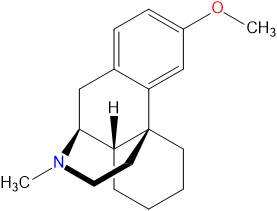
This extraction uses acid-base reactions to extract the DXM HBr from cough syrup to its finished product, DXM salt in lemon juice. The basic ammonia converts the DXM to freebase. The Naptha is used as a nonpolar solvent to extract the DXM from the ammonia. Then, the citric acid binds with the freebase DXM to produce DXM hyrdocitrate, a DXM salt soluble in water. This extraction has a yield around 90-95% when followed carefully.

Materials:
Equipment:
Safety:
Preparation:
If using citric acid, prepare a solution in water ahead of time. For each bottle of tussin, use 1.5 tablespoons of citric acid in 4 ounces of water. If using lighter fluid, be sure it evaporates without residue.
Procedure:
Conclusion:
In conclusion, this simple article allows the masses to easily extract a powerful hallucinogenic substance from perfectly legal over the counter products containing DXM. This reduces the nausea associated with the compound and drastically increases potency.
The article was written and submitted by the PsychonautWiki contributor known as Kaylee. For more information and pictures of this extraction process, please see our full article here. For information on DXM and its effects, please click here.