
Disregard Everything I Say
Month
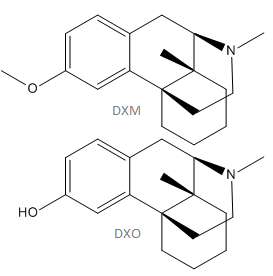
Dosage:
Light : 100 - 200 mg
Common : 200 - 400 mg
Strong : 300 - 600 mg
Heavy : 600 - 900 mg
Risk of Death : 900 - 20,000 mg
Duration : 4 - 8 hours
Duration:
Total duration : 6 - 8 hours
Onset / Initial effects : 20 - 60 minutes
Coming up : 15 - 30 minutes
Peak : 3 - 6 hours
Coming down : 3 - 5 hours
After effects : 2 - 5 hours
DXM or Dextromethorphan is an antitussive (cough suppressant) drug. It is one of the active ingredients in many over-the-counter cold and cough medicines, including Robitussin, Delsym, Benylin and others, including many generic labels. It is a dissociative hallucinogen of the Morphinan chemical class with multiple mechanisms of action. These include actions of a nonselective serotonin reuptake inhibitor, inhibiting the reabsorption of the neurotransmitter serotonin even after it has performed its function of transmitting a neural impulse, essentially allowing it to accumulate and be reused, causing physically euphoric effects. It is also a sigma-1 receptor agonist, allowing for its antitussive effects, and the action of its major metabolite dextrorphan as an NMDA receptor antagonist, essentially blocking the connections between neurons and creating for its dissociative effects.
Instead of acting as a direct antagonist of the NMDA receptor itself, Dextromethorphan is rapidly absorbed from the gastrointestinal tract and converted into the active metabolite dextrorphan in the liver; a metabolite that is nearly 10 times more potent and the true mediator of this substance’s dissociative effects.
It was first patented and approved by the U.S. Food and Drug Administration (FDA) in 1954 and subsequently sold as an over-the-counter cough suppressant in 1958, with the first record of its recreational use dating back to 1962.
Although it is often considered to be a “kiddie drug” by many people within the online drug community, DXM is without doubt, visually on par with all of the other commonly used dissociatives such as Ketamine, MXE and PCP, and an extremely powerful substance.
The DXM experience contains a complex and wide array of effects which based on the predefined potential subjective effects index found here, I will now begin to breakdown and describe…
Physical effects:
The subjective physical effects of DXM can be broken down into nine components all of which progressively intensify proportional to dosage. These are described below and generally include:
Cognitive effects:
The head space of DXM is often described as particularly impairing, disorientating and generally less clear headed in comparison to that of MXE and Ketamine. The cognitive effects of DXM can be broken down into 9 separate subcomponents which are listed and described below:
Visual effects:
Suppression
This substance does not enhance visual stimuli, instead it tends to degrade and decrease visual aptitude in a variety of ways which generally include:
Distortions
DXM exhibits a full array of dissociative distortions and alterations in visual perception which generally includes,
Geometry
The visual geometry found within DXM can be described as intricate in complexity, fast in movement, soft in edges, rounded and angular in corners, large in size, immersive in presence and very brightly coloured in scheme when compared to that of MXE.
Hallucinatory states
At high dosages, DXM can produce a full range of high level hallucinatory states in a fashion that that is less consistent and reproducible than that of many other commonly used psychedelics. These effects include:
Auditory effects:
The auditory effects of DXM are common in their occurrence and exhibit a range of effects which commonly includes:
After glow:
The afterglow is a feeling that occurs within the 24 hours after the trip itself. It is long lasting and as equally enjoyable as the trip itself to many people. It can be be described in terms of its physical sensation as one of euphoria, rejuvenation, relaxation and a light bounciness. In terms of its mental thought processes however, it can be described as a complete loss of anxiety, contentedness and an extremely high appreciation for music.
Grapefruit Potentiation:
It’s worth noting that grapefruit juice is extremely efficient for potentiating and enhancing the DXM trip if approximately 1 glass of white grapefruit juice or more is drunk every hour throughout the day before the trip. The effects will be considerably stronger and more intense. For people who are drinking store brought syrup, this is extremely useful as it means drinking less foul syrup.
The Grapefruit juice acts on DXM by inhibiting the activity of cytochrome P450 enzymes of the 3A and 1A groups. DXM is converted to DXO by this same enzyme, only with different groups. Therefore, with enough grapefruit juice, your overall trip should be more intense, as the DXM is converted into DXO at a faster rate.
Health effects, potential addiction and tolerance:
The biggest speculation regarding the long term health effects DXM abuse was that it may cause a form of brain damage know as Olney’s lesions or NMDA receptor antagonist neurotoxicity (NAN), due to similarities with Phencyclidine (PCP). Despite this however, studies show that in rats oral administration of dextromethorphan did not trigger Olney’s lesions in laboratory tests. Oral administration of dextromethorphan repeatedly during adolescence, however, has been shown to impair learning in those rats during adulthood.The occurrence of Olney’s lesions in humans, however, has not been proven or disproven. William E. White, author of the DXM FAQ which can be found here, has compiled informal research which can be found here from correspondence with dextromethorphan users suggesting that heavy abuse may result in various deficits corresponding to the brain areas affected by Olney’s lesions; these include loss of episodic memory, decline in ability to learn, abnormalities in some aspects of visual processing, and deficits of abstract language comprehension.
The biggest risk of DXM use is the potential accidental misuse of multi-symptom cold medications, rather than using a cough suppressant whose sole active ingredient is dextromethorphan, carries significant risk of fatality or serious illness. Multi-symptom cold medicines contain other active ingredients, such as paracetamol (acetaminophen), chlorpheniramine, and phenylephrine, any of which can cause permanent bodily damage such as kidney failure, or even death, if taken on the generally-accepted recreational dosing scale of dextromethorphan.
Combining dextromethorphan with other substances can compound risks. Stimulants such as amphetamine and cocaine can both cause a dangerous rise in blood pressure and heart rate. CNS depressants such as alcohol will have a combined depressant effect, which can cause a decreased respiratory rate. Combining dextromethorphan with other serotonergic drugs such as the 2Cx family, MDMA and AMT could possibly cause serotonin toxicity, a dangerous excess of serotonergic activity in the central nervous system and peripheral nervous system.
Dextromethorphan generally does not produce withdrawal symptoms characteristic of physically addictive substances such as alcohol or benzos, but there have been cases of psychological addiction. This is because in comparison to psychedelics such as LSD and mushrooms, DXM has no real tolerance and can be taken multiple days in a row if it is desired with tolerance only manifesting itself at different speeds within people and only through regular long term usage. This is something that can easily be prevented by manually limiting your usage of the drug.
Legal issues:
Antitussive preparations containing dextromethorphan are legal and uncrontrolled to purchase from pharmacies in most countries, with some exceptions being Sweden, Estonia and Latvia. As of January 1, 2012, dextromethorphan is also prohibited for sale to minors in the state of California, except with a doctor’s prescription.
No legal distinction currently exists in the any part of the world besides the state of illinois between medical and recreational use, sale, or purchase. The sale of dextromethorphan in its pure powder form has incured penalties towards people in the past, although no explicit law exists prohibiting its sale or possession.
If you want to try DXM, your easiest bet is visiting your local pharmacy, supermarket or buying it in pure form online. Pure powder is cheaper and signifigantly more efficient than syrup, it can be found with a quick google search for the term “DXM powder buy”, “pure dextromephorphan buy” or other similar phrases, usually being sufficient to find a supplier in the top 3 or 4 links.
In the UK specifically, Benilyn non-drowsy cough syrup is sold behind the counter in Boots, Morrisons, Sainsburys, Tesco’s and ASDA for under £5 with 225mg of DXM contained within every 150ml of liquid. You need to be atleast 16 years of age to purchase a bottle and they will not sell it to you if you look like an irresponsible teenager or have piercings / dyed hair.
Reader submitted trip reports:
Conclusion:
In conclusion, DXM is an extremely powerful drug, capable of taking people to incredibly rich induced mystical and transcendental states. This is despite the fact that it is nothing more than the active chemical in generic over the counter cough syrup and legal in every country across the world.
Click here for a more comprehensive breakdown.
This article is written with an emphasis on hallucinogens but is relevant for any and all drug induced experiences. It is dedicated to providing a comprehensive instructional guide on the variety of factors one should consider before experimenting with psychoactive substances in a safe and responsible manner. These individual factors are listed below:
Effects:
It is important to know in advance on a detailed and comprehensive level, the duration, pharmacology, subjective effects and potential adverse effects which the substance or combination of substances are likely to induce. There are many online resources to use for education and reference regarding this aspect of drug usage. If a dedicated breakdown for your specific substance of choice has been written, be sure to find and read it within the specific substances portal. For further research on the effects of any substance that one may be considering, a combination of www.erowid.org, www.en.wikipedia.org and www.google.com can be used. It may also help to read relevant anecdotal trip reports found here on PsychonautWiki or else where across the internet.
If one knows the exact effects of the drug in advance, then they will know what to expect. This is something which significantly reduces the chances of a negative experience by a huge margin through the prevention of unexpected circumstances.
Dosage:
An extremely important rule when it comes to using substances responsibly is to avoid dosages which one is uncomfortable or unfamiliar with at all costs. An inexperienced user should always be starting at very low dosages with the goal of working their way up in small increments, as they feel comfortable doing so. This should be done by slightly increasing the dosage with each separate experience and never taking great leaps into the unknown. Doing so allows people to get a feel for the substance that they are using in a controlled setting before they dive into deeper states. This minimizes the risk of an accidental negative experience enormously as although dosage guidelines exist, it is important to remember that everybody reacts differently to every substance depending on their own personal tolerance and neurochemistry.
For information on the appropriate dosage for any substance, research should be done using a combination of PsychonautWiki, www.Erowid.org, www.en.Wikipedia.organd www.Google.com.
Setting:
Choosing an appropriate and safe place for a person to undergo the effects of a substance is extremely important and plays a huge factor in determining the outcome of a experience. The best place for an inexperienced user is a familiar, safe and indoors environment that is completely devoid and free of certain factors which can cause a direct negative influence. These factors include:
Once a person has become familiar with their substance of choice and aware of their own limits. It becomes entirely down to them as an individual when it comes to whether or not they would be comfortable tripping in more recreational environment such as nature, social gatherings, parties, raves, etc. The inexperienced however, should always seek out a safe, comfortable room at home or a friends house. This should be with privacy, relaxing music, comfortable seating and readily available food / water.
Mind state:
One of the most important factors to consider as an inexperienced user is your current state of mind. Many substances enhance a person’s current mind state, emotions and general perspective on the world many times over which is a process that can go in either a positive and euphoric direction or a negative, terrifying and anxiety ridden direction. It’s because of this that many substances should not be used by the inexperienced during stressful or negative periods of a person’s life and users should be fully aware of the ways in which hallucinogens and other drugs, particularly psychedelics, consistently force a person to face and deal with the personal introspective problems that all human beings are plagued with.
Throughout the experience itself the person needs to let go and allow the effects to take charge. One should be taking the metaphorical passenger seat and never try to control any part of the experience. It is extremely important that people simply relax and take things as they come. The user must understand that the act of tripping is often ineffable and incomprehensible at high enough dosages, meaning that an acceptance of not being able to understand the full scope of what is happening should be present at all times. One should be embracing the fact that their thought processes, although more insightful in places, will always be impaired along with motor control, conversational skills and general functioning. Something which the user should be sure to view as normal and not feel self conscious or insecure about within the presence of others.
Trip sitters:
A sober, responsible trip sitter is strongly recommended to be present throughout an inexperienced individual or groups experiences with an unfamiliar substance. It is this person’s responsibility to assist the individual or group by maintaining a rational and responsible frame of mind. This should be done by simply watching over the trippers and calmly reassuring them if they experience any anxiety or stress, whilst also preventing them from coming to any harm. There is an obvious correlation between the name trip sitter and babysitter; this is because at many times, trip sitting can be like babysitting and it is definitely a responsibility that must be taken just as seriously.
A good trip sitter needs to be sure of a number of things throughout the experience. They should remain (mostly) sober and should be able to empathize with the group members’ situation through personal experiences with the substance, similar substances or at least considerable amount of research on their effects. Understanding that when a person is tripping, they might not be able to communicate as they usually do. Also, their balance and spatial judgement may be off so assistance in performing physical tasks can greatly reduce anxiety. The trip sitter can contribute to the conversation but should also remember to leave them to explore the experience without too much external influence.
Once a person is familiar with the experience, it becomes down to them whether or not they feel comfortable enough to trip without a sitter.
Anchors:
An anchor, in the context of hallucinogen usage can be defined as an activity or physical object which keeps one grounded during heavy suppression and distortion of a person’s sense of time, space, language, ego and short/long-term memory. At higher dosages, this can result in extreme disorientation and confusion. Anchors are often used to counteract this and maintain ones concept of the current situation as it is within reality. Examples of anchors include:
Tolerance and over use:
If a person is to use a substance responsibly, the frequency in which they use them should be monitored closely. Although many of the classical psychedelics are physically benign no matter how frequently they are used and come with a built in tolerance which prevents using them more than once a week. This is not the case with allhallucinogens, dissociatives, deliriants and certain psychedelics may come with potential adverse health effects that need to be individually researched before use. Not to mention that any hallucinogen can cause problems with a person’s psychological health if over used. Keep in mind that substance usage becomes an addiction once the negative aspects start to outweigh the positive aspects but one continues to use it regardless.
It’s important to note that one must pay attention to more than just making sure that drugs do not get in the way of your responsibilities. Over use of substances can be avoided by understanding that life should not be comprised of any single interest. If a person’s life becomes exclusively dedicated to any one thing including drugs or anything else, it starts to become meaningless. The goal is to remain interested in these substances whilst ensuring that hobbies and interests are broadened across other areas such as personal, intellectual and creative pursuits. Drugs should be for helping one learn to appreciate the things that already exist in life, not for replacing them.
Conclusion:
In conclusion, careful consideration should be taken before undergoing a trip with any class of hallucinogen. Following these simple instructions however should minimize the risks by a huge margin, allowing people to trip safely and responsibly with little danger or fear.
This section of the article attempts to break down the auditory, physical and multisensory effects contained within the psychedelic experience into simple, easy to understand titles, descriptions and leveling systems. This will be done without depending on metaphors, analogy’s or personal trip reports.
Auditory effects:
Enhancements
Auditory enhancements can be described as the feeling of being extremely aware of all of the sounds around you with an enhanced ability to pinpoint the exact direction from which multiple layers of noise are coming from as sound becomes vastly crisper and clearer than anything felt during normal sober living.
The most interesting manifestation of this component is a greatly enhanced appreciation of music, allowing people to hear songs they’ve listened to their entire life in a level of detail that is simply unparalleled in day to day life. This can be described as every single layer of the music being brought forward and heard with perfect comprehension, to the point where many people feel that you have not fully listened to music until you have heard it under the influence of this effect.
Distortions
Auditory distortions can manifest themselves in many forms but often take the shape of echoes or murmurs rising in the wake of each sound, accompanied by distorted changes of pitch. These increase proportionally with dosage up until the point where music and sounds are consistently followed by a continuous reverb as sounds begin to bounce at great speeds across the walls of your brain continuously, often leaving the original sound as completely unrecognisable but always resetting to base level and starting over if the noise is stopped or changed.
This effect can be broken down into 3 differing levels of intensity:
Hallucinations
Auditory hallucinations are essentially the heard equivalent of imagery and open-eye transformations. They can be described as spontaneous imaginary noises that are either triggered at complete random or manifested in the place of noises that are subconsciously expected to happen. The most common examples of these are usually experienced as clips of recorded sound, such as imagined music or voices, and an infinite variety of sounds that are stored within the brain.
The most common audio hallucination that people experience are ones of heard memory replays from the previous several hours, commonly manifesting themselves as spontaneous clips of the music that was played and indistinct voices of the people who were spoken too. These are usually heard repeatedly over the course of several hours after the consumption of certain substances.
This effect can be broken down into:
Physical effects:
Enhancement of touch
Enhancement of touch can be described as an overall enhancement of tactile sensations and the sensations derived from them alongside of an increase in the person’s overall awareness of the nerve endings across their body. At its highest level, this progressively becomes more extreme until the exact location and current sensation of every single nerve ending across the tripper’s skin can be felt and comprehended all at once. In contrast, throughout normal sober living our immediate consciousness can only maintain awareness of the tactile sensations which are relevant to the current situation.
This can result in the pleasure derived from tactile sensations such as touching, hugging, kissing, and sex becoming greatly enhanced or it can result in an over-sensitivity of the skin which causes the same sensations to become overwhelming and uncomfortable.
Increased bodily control
Increased bodily control is an which induces a dramatic increase in a person’s control over their physical body. This can be described as the feeling of being able to accurately control every single muscle across the entire body with the tiniest of precise mental triggers, leaving trippers feeling extremely active and nimble. It is often interpreted by people as a strangely profound or primal feeling of being put back in touch with the animal body.
Spontaneous tactile sensations
Spontaneous tactile sensations is a component which is commonly referred to as a “body high” within the psychonaut community and can be described as an activation of nerve endings across the body occurring without any obvious or immediate physical trigger. The experience of this results in feelings of distinct random tactile noise and general tingling sensations. These vary greatly in their alternative styles of sensation, depending on the substance consumed but can be broken down into four basic levels of intensity,
Variations
The differences between each differing style of body high can be broken into five basic opposites of sensation.
See also:
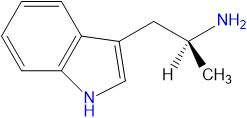
Threshold : 5 - 15 mg
Light : 15 - 25 mg
Common : 25 - 40 mg
Strong : 40 - 60 mg
Heavy : 60 - 80 mg
(oral ingestion)
Threshold : 2 mg
Light : 4 - 5 mg
Common : 6 - 10 mg
Strong : 10 - 20 mg
(smoked)
Onset : 30 - 120 minutes
Peak : 3 - 5 hours
Duration : 10 - 14 hours
Normal After Effects : 1 - 5 hours
(oral ingestion)
Onset : 10 seconds - 30 minutes
Duration : 8 - 12 hours
(smoked)
AMT (a-Methyltryptamine) is a psychedelic, stimulant, and entactogen drug of the tryptamine class. It was originally developed in Russia as an antidepressant in1963. Similar in mechanism to LSD and Mushrooms, AMT acts as a non-selective serotonin receptor agonist but also acts as relatively balanced releasing agent of serotonin, norepinephrine, and dopamine. Alongside this, it been shown to be a very weak, non-selective, and reversible inhibitor of the enzyme monoamine oxidase (MAOI), similar to harmine. MAOI is an enzyme that degrades amine neurotransmitters, such as dopamine, norepinephrine, and serotonin. AMT therefore increases the amount of these neurotransmitters in the brain.
The mechanism that produces the psychedelic effects of AMT is a direct result from its action as a 5-HT2A serotonin receptor agonist in the brain (a mechanism of action shared by all other hallucinogenic tryptamines and phenethylamines).
It is because of this that AMT cannot be safely used in combination with antidepressants, painkillers, stimulants, SSRIs, MDMA, dextromethorphan, and a number of other drugs as certain combinations can cause deadly reactions.
The AMT experience contains a complex and wide array of effects which based on the predefined potential subjective effects index found here, I will now begin to breakdown and describe.
Physical Effects:
The physical effects of AMT can be broken down into five components all of which progressively intensify proportional to dosage. These are described below and generally include:
Cognitive Effects:
In comparison to more traditional psychedelics such as LSD, DMT and Psilocin, the AMT head space is described as not nearly as deep, insightful or profound.
The total sum of these cognitive components regardless of the setting generally includes:
Visual Effects:
Enhancements
AMT presents a full and complete array of possible visual enhancements which generally include:
Distortions
As for visual distortions and alterations, the effects experienced are detailed below:
Geometry
The visual geometry that is present throughout this trip can be described as more similar in appearance to that of psilocin and 2C-E than LSD. At lower levels, they appear to be bland and simplistic but become equal in terms of intricacy and depth to that of any of the classical psychedelics. They can be comprehensively described as structured in their organization, organic in geometric style, intricate in complexity, large in size, fast and smooth in motion, colourful in scheme, glossy in colour, blurred in their edges and rounded in their corners. They have a “natural” feel to them and at higher dosages are significantly more likely to result in states of Level 7B visual geometry over Level 7A.
Hallucinatory States
At high dosages AMT can produce a full range of high level hallucinatory states in a fashion that is more consistent and reproducible than that of many other commonly used psychedelic. These effects include:
Auditory Effects:
The auditory effects of AMT are common in their occurrence and exhibit a full range of effects which commonly include:
Smoking vs Oral Ingestion:
One of the practical things about AMT is that there are two methods of consumption that result in two alternate trips which differ in terms of their duration, body high, and visuals. If smoked, AMT has a quicker onset and a much shorter duration that is far less likely to keep tripper’s up all night and completely unable to sleep. It is also devoid of the nauseating effects found with oral ingestion, but is less visually intense while more physically stimulating. If you are going to try and smoke AMT, it is essential that it is purchased in freebase and not salt form.
Health Effects, Potential Addiction, and Tolerance:
The toxicity and long term health effects of recreational AMT use do not seem to have been studied in any scientific context and the exact toxic dosage is unknown. Anecdotal evidence from people who have tried AMT within the psychedelic community suggest that there are no negative health effects attributed to simply trying this drug at low to moderate doses or using it very sparingly but nothing can be completely guaranteed.
In rats, the median lethal dose or dosage at which 50% of participants die (LD50) of AMT for mice when administered orally is 22 milligrams per kilogram (mg/kg) and in mice it is 38 milligrams per kilogram (mg/kg). This means that for a 60-kilogram (130 lb) human to reach the LD50 value of rats they would have to take 1320 mg or 2280 mg to reach the LD50 of mice. This is between 44 and 76 times the active dosage of 30 mg.
AMT is non-habit-forming and the desire to use it can actually decrease with use. They are most often self-regulating so addiction to this substance is essentially unheard of. It can be prevented by manually limiting your usage of the drug.
There is an immediate tolerance to AMT after ingestion, preventing you from experiencing its full effects more often than every 4-7 days (unless you increase your dose significantly). This also produces a cross tolerance between AMT and LSD, psilocin and various other tryptamine psychedelics.
MAOIs have highly dangerous interactions when combined with almost any antidepressant (particularly SSRIs such as Prozac) or stimulants (such as MDMA and amphetamines), common migraine medications, certain herbs (such as St John’s Wort), or even most cold medicines (including decongestants, antihistamines, and cough syrup) as it can cause serotonin syndrome or hypertensive crisis. In short, do not mix this drug with anything other than the classic psychedelic tryptamines like LSD and mushrooms unless you have done your research and are absolutely sure it isn’t going to kill you or cause serotonin syndrome.
Legal Issues:
If you want to try this substance, it is extremely cheap and easy to obtain with a quick google search of the term “buy amt” resulting in the first page becoming full of links to legitimate vendors. For those who are lucky enough to have a local head shop in their town, many of us can simply buy this substance in the form of perfectly legal, prepackaged, over the counter pills and skip the delivery process all together.
Reader Submitted Trip Report:
Conclusion:
Although this drug may not be as visually intricate or transcendental as more commonly used psychedelics, this is a substance that still holds its place in the psychedelic world.
Click here for a more comprehensive breakdown.
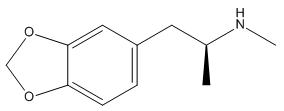
Duration:
Onset : 20 - 70 minutes
Duration : 3 - 5 hours
Normal After Effects : up to 24 hours
Dosage:
Threshold : 30mg
Light : 40 - 75mg
Common : 75 - 100mg
Strong : 100 - 200mg
Heavy : 200mg +
MDMA (3,4-methylenedioxy-N-methylamphetamine) is an entactogenic drug of the phenethylamine and amphetamine family. It was first synthesized in 1912 by the chemist Anton Köllisch as a potential medicine for the stopping of abnormal bleeding. Over the following 65 years, MDMA was largely forgotten about, with the first reports of it being used recreationally dating back to 1970. It was finally scheduled as a controlled substance in 1985 when its use began to spread out to mainstream society and rave culture.
MDMA acts as a releasing agent of the neurotransmitters known as serotonin, dopamine and norepinephrine, the neurotransmitters in charge of pleasure, motivation and focus. It does this by inhibiting the reuptake and reabsorption of the neurotransmitters after they have performed their function of transmitting a neural impulse. Essentially allowing them to accumulate and be reused, causing physically stimulating and euphoric effects.
Many people across online psychedelic communities seem to think that reports of MDMA’s psychedelic effects are an outright myth but these are simply claims from people who have not experienced it for themselves. It does produce extremely powerful psychedelic effects and hallucinations under the right circumstances, particularly at high doses and especially when combined with marijuana. These effects are on par with Mushrooms and LSD and unlike anything found on commonly used psychedelics. Not presenting themselves consistently but just as readily induced within people even if they have no previous experience with tripping on traditional psychedelics. They can happen at any point throughout an MDMA buzz, but seem to be much more common during the comedown.
The MDMA experience contains a complex and wide array of effects which based on the predefined potential subjective effects index found here, I will now begin to breakdown and describe.
Physical effects:
The physical effects of MDMA can be broken down into five components all of which progressively intensify proportional to dosage. These are described below and generally include:
Cognitive effects:
The cognitive effects of MDMA can be broken down into ten components all of which progressively intensify proportional to dosage. The general head space of MDMA is described by many as one of extreme mental stimulation, feelings of love or empathy and powerful euphoria. It contains a large number of typical Psychedelic, Entactogenic and Stimulant cognitive effects.
The most prominent of these cognitive effects generally include,
Visual effects:
The visual effects of MDMA have an occurrence rating that is more selective and less consistent than any of the traditional psychedelics. This is to the point where many people disregard psychedelic experiences with MDMA as a “myth” or “rumour” but this is simply because they have not experienced it for themselves. The effects can never be guaranteed to manifest themselves but are more likely to occur with chemically pure high dose MDMA experiences, towards the end of the experience and if the user has been smoking marijuana. They are also more likely to occur if the user has prior experience with psychedelics but remain entirely possible within those who have never tried one for themselves.
Enhancements
MDMA presents an array of visual enhancements which are mild in comparison to traditional psychedelics but still distinctively present.
These generally include:
Distortions
MDMA presents a single visual enhancement:
Geometry
The visual geometry that is present throughout this trip can be described as more similar in appearance to that of psilocin than LSD. They can be comprehensively described as structured in their organization, organic in geometric style, intricate in complexity, large in size, fast and smooth in motion, mostly blue and grey in scheme, glossy in colour, equal in blurred and sharp edges and equal in rounded and angular corners. At higher dosages they are significantly more likely to result in states of Level 7A visual geometry over Level 7B. Many users report an almost menacing feeling, following a sinister and ominous style with a colour scheme that generally consists of greys and blues.
Hallucinatory states
MDMA is capable of produces a unique range of low and high level hallucinatory states in a fashion that is significantly less consistent and reproducible than that of many other commonly used psychedelic.
These effects include:
Auditory effects:
The auditory effects of MDMA are common in their occurrence and exhibit a partial range of effects which commonly includes:
Tips on inducing these effects:
If you want to help induce these effects, I suggest you take whatever you consider to be a moderate-strong dose for your tolerance. For me this seems to be around 0.6g +. Make sure you have pure MDMA and not miscellaneous pills of an undetermined nature. If this is combined with a bong and a large amount weed psychedelic effects almost always occur.
This generally seems to do it for most people but since MDMA seems to be a strange sort of selective psychedelic it may not for others. Other people and I have tripped when we haven’t smoked weed just a few times but have consistently tripped when we have– every damn time.
Conclusion:
MDMA is an entactogen first and a psychedelic second. It is best used for resolving interpersonal problems, strengthening bonds and hard core recreational partying. Its psychedelic properties are extremely unique and interesting and something that I take advantage of and deliberately attempt to induce every time I happen to be taking this substance.
It’s important to keep in mind, however, that the over use of this substance can result in severe neurotransmitter depletion and serotonin syndrome. It is because of this that I recommend you do your research before even considering the use of this drug. Coming from personal experience, it should never be used more than once a month or preferably no more than a couple of times a year.
Click here for a more comprehensive breakdown.
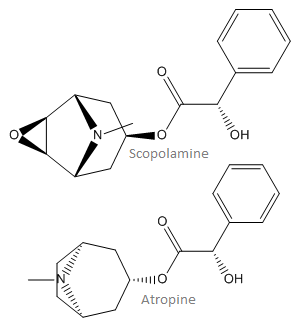
Onset : 60 - 120 minutes
Duration : 8 - 18 hours
Normal After Effects : up to 3 days
Datura is a genus of legal flowering plants that contains two psychoactive chemicals in roughly equal amounts. These are known as Scopolamine and Atropine, two molecules that are both in the tropane alkaloid class, with anticholinergic effects. The plants precise and natural distribution seems to be throughout most of the temperate and tropical regions of the globe, owing to its extensive cultivation and naturalization. There are a total of nine different species in the Datura genus, but the two most well-known species are Datura inoxia and Datura strammonium. Both of which have been used in a shamanic context for religious purposes on most continents since before recorded history began, with records of its use being found throughout the ancient americas, europe and india.
In terms of it’s subjective effects the Datura trip is extremely similar to that of DPH with a significantly longer duration but less dysphoria. The mental transition from reality to delirium is an extremely smooth one, a stuporous, hazy, mildly dissociating, light and floaty high is felt, and everything seems almost normal apart from waves of mild to intense paranoia. Feelings of being unable to communicate or understand normal language also become apparent with higher doses.
Although Datura is not nearly as dysphoric as DPH it is still capable of feeling overwhelmingly unpleasant. With extreme dry mouth, hot / cold flushes and the inability to urinate despite desperately needing to all commonly reported throughout the trip. Blurred vision occasionally occurs, blinding the tripper and rarely but occasionally lasting for days to weeks after wards.
After a while, delirium takes over, causing you get used to the feeling and not notice it any more, or perhaps it genuinely fades. Leaving the trippers to experience concrete and 100% convincing visual and auditory hallucinations that can vary from mundane, to fascinating to horrifying.
You can use Datura in many ways, one of the most common ways is to smoke the leaves and flowers, which offers a very mild trip with a duration similar to that of weed. You can also make a tea out of the leaves, flowers, and seeds, or you can eat the seeds with or without cooking them. Eating raw seeds is not recommended because of the high toxicity of them. The most potent parts in decreasing order are respectively the seed pods, leafs and flowers. Seeds are eaten while leaves are usually brewed as tea, though they are also chewed for their effects.
It is extremely important to note however that the potency of plants varies wildly and there is no way for the common man to accurately measure the dosage. At high enough doses Datura becomes an incredibly toxic poison that can easily result in death, making Datura the most dangerous hallucinogen out there with accidental overdoses resulting in hospitalization not unheard of. The safest way to ensure this does not happen is to grind the dried plant matter into an extremely fine and even powder so that the active chemicals within them are distributed evenly across itself. From here you can slowly work your way up in extremely small increments until the correct dosage for that particular plant is found.
If you want to try Datura despite all of its risks, you can grow it yourself using seeds purchased online or find a wild plant in your local area.
There is little to no insight to be gained from these substances and they can be extremely dangerous both physically and mentally if dosage is not payed close attention to. I would not recommend either of these drugs to any human being alive but view them more as drugs of interest than anything. Something that a person tries even if only once, just to see what they are like. Nobody is going to stop you from trying these substances, even our nations governments have deemed these substances as legally acceptable, whilst still prohibiting the use and sale of physically benign and mentally beneficial hallucinogens such as LSD or mushrooms. Keep in mind however, that you and you alone are responsible for your actions and that almost everybody who tries these drugs regrets it immediately.