
Disregard Everything I Say
Month
Threshold : 8 - 20 mg
Light : 20 - 40 mg
Common : 40 - 60 mg
Strong : 50 - 100+ mg
(oral ingestion)
Onset : 20 - 60 minutes
Duration : 2 - 6 hours
Normal After Effects : 2 - 48 hours
Click here for a more comprehensive breakdown.
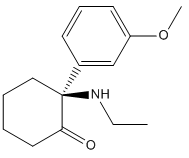
Methoxetamine (MXE) or 3-MeO-2-Oxo-PCE is a chemical of the arylcyclohexylamine class which acts as hallucinogenic dissociative.
This substance was originally developed as a research chemical through the use of intelligent drug design. An interesting and detailed interview with the anonymous chemist who invented this substance can be found here. It is a chemical derivative of Ketamine that also contains structural features of phencyclidine (PCP) and 3-MeO-PCP.
MXE has almost no history of human usage prior and was first identified by the European Monitoring Centre for Drugs and Drug Addiction, which monitors the Internet for new psychoactive substances within the European Union, in November 2010. By July 2011, they had identified 58 websites selling the compound, at a cost of 145–195 euros for 10 grams. Today it is used as a recreational drug and an entheogen, rarely sold on the streets and almost exclusively obtained as a grey area research chemical through the use of online vendors.
In terms of its chemistry, MXE is classed as an arylcyclohexylamine drug. The Ar group is methoxybenzene in MXE. The nitrogen has one substituted ethyl group and there is an acetyl group attached at carbon R2.
In terms of its pharmacology, MXE acts as an NMDA receptor antagonist. NMDA receptors allow for electrical signals to pass between neurones in the brain and spinal column; for the signals to pass, the receptor must be open. NMDA receptor antagonists close the NMDA receptors by blocking them. This disconnection of neurones leads to loss of feeling, difficulty moving, and eventually the famous “hole”.
MXE also acts as a dopamine-reuptake inhibitor and a serotonin reuptake inhibitor with µ-opioid affinity and typical dissociative effects. This provides an explanation for its euphoric and often stimulating effects.
The effects listed below are based upon the subjective effects index and personal experiences of PsychonautWiki contributors. The listed effects will rarely if ever occur all at once but heavier dosages will increase the chances and are more likely to induce a full range of effects.
Physical effects:
The subjective physical effects of MXE can be broken down into nine components all of which progressively intensify proportional to dosage. These are described below and generally include:
Cognitive effects:
The general head space of MXE is often described as particularly euphoric and clear headed in comparison to that of DXM and Ketamine. The specific cognitive effects can be broken down into 8 separate subcomponents which are listed and described below:
Visual effects:
Suppression
This substance does not enhance visual stimuli; instead it tends to degrade and decrease visual aptitude in a variety of ways which generally includes:
Distortions
MXE exhibits a full array of dissociative distortions and alterations in visual perception which generally includes:
Geometry
The visual geometry found within MXE can be described as very dark and bland when compared to that of Ketamine or DXM and often consists of many tiny interlocking and woven lines. It does not extend beyond level 4 and can be comprehensively described through its variations as simplistic in complexity, algorithmic in style, synthetic in feel, unstructured in organization, dimly lit in lighting, multicoloured in scheme, glossy in shading, soft in edges, small in size, slow in speed, smooth in motion, equal in rounded and angular corners, immersive in depth and consistent in intensity.
Hallucinatory states
At high dosages, MXE can produce a full range of high level hallucinatory states in a fashion that that is less consistent and reproducible than that of many other commonly used psychedelics. These effects include:
Auditory effects:
The auditory effects of MXE are common in their occurrence and exhibit a range of effects which commonly includes:
Potential health effects, addiction and tolerance:
The toxicity and long term health effects of recreational MXE use do not seem to have been studied in any scientific context and the exact toxic dosage is unknown. This is because MXE is a research chemical with very little history of human usage. Anecdotal evidence from people who have tried MXE within the community confirm that there do not seem to be any negative health effects attributed to simply trying this drug at low to moderate doses or using it sparingly (but nothing can be completely guaranteed).
In terms of MXE tolerance, this can take weeks to build up for some, but for others it can take a single night of heavy use. Once a physical tolerance to MXE has set itself in, it can often take a month or more to reset itself.
MXE has a fairly high potential to be abused. It does not seem to physically addictive, but can become habit-forming as there is no real tolerance attributed to this drug, meaning that it could potentially be used multiple days in a row if somebody chooses to do so. There have been multiple reports across the internet of people becoming seriously addicted daily users of this substance so serious precautions and considerations should be taken before trying this substance.
Reports of compulsive redosing during high dose trips resulting in overdoses have also been reported. This can be prevented by keeping MXE far away from oneself when tripping. Addiction can be avoided by manually limiting one’s usage of the drug. It’s worth noting, however, that as with most hallucinogens, most users note that the desire to use them can actually decrease with use.
In terms of its long term health effects, when used repeatedly and with excess for extended periods of time, MXE seems to exhibit almost identical bladder and urinary tract problems to those found within Ketamine but to a lesser extent. This is because MXE is 4 times as potent as ketamine so significantly less of drug needs to be consumed. Symptoms of Ketamine-induced cystitis can become extremely serious and can described as:
All of these, however, can easily be avoided by simply not using MXE on a daily or even weekly basis and manually limiting your usage of the substance.
Legal Issues:
Elsewhere in the world, however, MXE is completely uncontrolled and unscheduled. If you want to try this substance, a quick google search for the term “MXE vendor”, “methoxetamine vendor” or other similar phrases is usually sufficient to find a supplier in the top 3 or 4 links. It is also freely available in any desired quantity in the countries of which it has been made illegal, you just have to search a little harder.
Conclusion:
In conclusion, MXE is one hell of a drug. It is an extremely weird trip and not for the faint-hearted. It is, in my opinion, the most genuinely interesting research chemical created so far, taking its users to impossibly deep states of detachment and incredibly rich hallucinations. MXE is capable of taking people to worlds so unlike anything found within psychedelics yet still freely available across the internet through grey market research chemical vendors.
It is definitely worth noting, however, that MXE does have a dark side to it with potentially addictive effects for those who are lacking in self-control; it can easily be abused.
Onset : 60 - 120 mins
Duration : 6 - 12 hrs
Normal After Effects : 2 - 5 hrs
Threshold : 20 µg
Light : 25 - 75 µg
Common : 50 - 150 µg
Strong : 150 - 400 µg
Heavy : 400+ µg
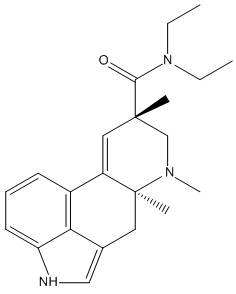
LSD or Lysergic acid diethylamide is a semisynthetic drug of the lysergamide psychedelic family. It was first synthesized by Albert Hoffmann in 1938 from ergotamine which is a chemical derived from ergot, a grain fungus that typically grows on rye. In pure form it is a colourless, odourless, and mildly bitter solid.
LSD is typically delivered orally, usually in liquid form or on a substrate such as absorbent blotter paper which can be taken by simply chewing on it or swallowing.
It is one of the most potent drugs in the world, meaning that extremely small amounts are needed for the effects to show. A single dose of LSD may be between 100 and 500 micrograms - an amount which is roughly equal to one-tenth the mass of a grain of sand.
The mechanism that produces the psychedelic effects of LSD is a direct result from its action as a 5-HT2A serotonin receptor agonist in the brain, a mechanism of action shared by all other hallucinogenic tryptamines and phenethylamines.
The LSD experience contains a complex and wide array of effects which based on the predefined potential subjective effects index found here, I will now begin to breakdown and describe.
Physical Effects:
The physical effects of LSD can be broken down into five components all of which progressively intensify proportional to dosage. These are described below and generally include:
Cognitive Effects:
The cognitive effects of LSD can be broken down into ten components all of which progressively intensify proportional to dosage. In comparison to other psychedelics such as Psilocin, LSA and Ayahuasca, LSD is significantly more stimulating and fast paced in terms of the specific style of thought stream which it produces and contains a large number of potential effects.
The most prominent of these cognitive effects generally include:
Visual Effects:
Enhancements
LSD presents a full and complete array of visual enhancements which generally include:
Distortions
As for visual distortions and alterations, the effects experienced are detailed below:
Geometry
The visual geometry that is present throughout this trip can be described as more similar in appearance to that of 2C-B and the 2C-x family as a whole than psilocin, LSA, or DMT. They can be comprehensively described as unstructured in their organization, algorithmic and digital in geometric style, intricate in complexity, large in size, fast and smooth in motion, multicoloured in scheme, bright and flat in colour, and sharp in their edges with extremely angular corners. At higher dosages they consistently result in states of Level 7A visual geometry.
Hallucinatory States
LSD is capable of producing a full range of low and high level hallucinatory states in a fashion that is significantly less consistent and reproducible than that of many other commonly used psychedelic. These effects include:
Auditory Effects:
The auditory effects of LSD are common in their occurrence and exhibit a full range of effects which commonly include:
Health Effects, Potential Addiction, and Tolerance:
Similar to other psychedelic drugs, there are relatively few physical side effects associated with LSD acute exposure. Various studies have shown that in reasonable doses in a careful context, it presents no negative cognitive, psychiatric, or toxic physical consequences of any sort. The median lethal dose or dosage at which 50% of participants die (LD50) of LSD for human beings has never been reached in any setting and is predicted to be roughly 12,000 micrograms, based on studies involving rats whereas the active dosage is between 100 and 500 micrograms. This means that assuming a person has unusually potent tabs, each of which are 200 micrograms in strength each, they would have to consume at least 60 of them to reach a potentially lethal dosage. Keep in mind that your average tab of LSD found on the street is 100 micrograms or less in strength and anything stronger than this is particularly rare.
It’s important to note that LSD is non habit-forming and that the desire to use it can actually decrease with use, it is most often self-regulating. You also build an almost immediate tolerance to LSD after ingestion, preventing you from experiencing its full effects more often than every 4-7 days (unless you increase your dose significantly).
Legal Issues:
The United Nations Convention on Psychotropic Substances (adopted in 1971) requires its parties to prohibit LSD. Hence, it is illegal in all parties to the convention, which include the United States, Australia, New Zealand, and most of Europe. However, enforcement of extant laws varies from country to country. Medical and scientific research with LSD in humans is permitted under the 1971 UN Convention.
If you want to try LSD you will have to find it through a street dealer or order it online through many various vendors which I can not legally ever mention the name of.
Reader submitted trip reports:
Conclusion:
LSD was the first psychedelic I ever tried and the first psychedelic I ever fully explored. It has benefited me and the people around me in so many personal ways through its deep states of introspection. It is amazingly therapeutic but eventually loses its novelty due to its complete lack of hallucinatory states and consistent unchanging visuals in a way that other psychedelics such as mushrooms simply do not.
LSD is a psychedelic that eventually loses its magic, becoming something which can be better enjoyed as an enhancer of recreational activities. Thanks to its long lasting, stimulating and euphoric nature, it is probably the best psychedelic for this purpose.
Click here for a more comprehensive breakdown.
Onset : 60 - 120 minutes
Duration : 2 - 6 hours
Normal After Effects : up to 8 hours
Threshold : .25 - 1 g
Light : 1 - 2.5 g
Common : 2.5 - 3.5 g
Strong : 3.5 - 5 g
Heavy : 5 g +
(Mushrooms)
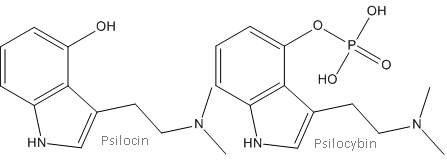
Psilocin is a naturally occurring tryptamine psychedelic found within approximately 190 separate species of mushroom and growing on every continent across the planet. Psychedelic mushrooms have been in use since before recorded human history with their depiction being found on cave art and famously used by the native people of Mesoamerica for religious and shamanic purposes.
There are two separate chemicals found within mushrooms in roughly equal amounts. They are both classed as substituted tryptamine alkaloids and serotonergic psychedelic drugs, but it’s important to note that only psilocin is directly active. The other substance, psilocybin, is instead a pro-drug of the pharmacologically active substance psilocin and converted directly into it within the liver. Once the molecule has been converted into psilocin, it acts as a partial agonist for several serotonergic receptors. Psilocin has a high affinity for the 5-HT2A serotonin receptor in the brain where it mimics the effects of serotonin (5-hydroxytryptamine, or 5-HT).
The psilocin experience contains a complex and wide array of effects which based on the predefined potential subjective effects index found here, I will now begin to breakdown and describe the chemical.
Physical Effects:
The physical effects of Psilocin can be broken down into two components all of which progressively intensify proportional to dosage. These are described below and generally include:
Cognitive Effects:
The head space of psilocin is described by many as extremely relaxing, profound and stoning in its style when compared to other commonly used psychedelics such as LSD or 2C-B which tend to be energetic and stimulating. It contains a large number of psychedelic typical and unique cognitive effects.
The most prominent of these typical effects generally include:
Visual Effects:
Enhancements
Psilocin presents a full and complete array of possible visual enhancements which generally include:
Distortions
As for visual distortions and alterations, effects experienced are detailed below:
Geometry
The visual geometry that is present throughout this trip can be described as more similar in appearance to that of 4-AcO-DMT, Ayahuasca and 2C-E than LSD. It can be comprehensively described as structured in its organization, organic in geometric style, intricate in complexity, large in size, fast and smooth in motion, colourful in scheme, glossy in colour, blurred in its edges and rounded in its corners. They have a very “natural” feel to them and at higher dosages are significantly more likely to result in states of Level 7B visual geometry over Level 7A.
Hallucinatory States
Psilocin and its various other forms produce a full range of high level hallucinatory states in a fashion that is more consistent and reproducible than that of many other commonly used psychedelics. These effects generally include:
Auditory Effects:
The auditory effects of psilocin are common in their occurrence and exhibit a full range of effects which commonly include:
Health Effects, Addiction Potential and Tolerance:
The toxicity of psilocybin, psilacetin and psilocin is extremely low. In rats, the median lethal dose (LD50) of psilocybin when administered orally is 280 milligrams per kilogram (mg/kg). Psilocybin comprises approximately 1% of the weight of Psilocybe cubensis mushrooms, so nearly 1.7 kilograms (3.7 lb) of dried mushrooms or 17 kilograms (37 lb) of fresh mushrooms would be required for a 60-kilogram (130 lb) person to reach the 280 mg/kg LD50 value of rats. Based on the results of animal studies, the lethal dose of psilocybin has been extrapolated to be 6 grams which is 1000 times greater than the effective dose of 6 milligrams.
There are no known long term physical effects from ingestion of mushrooms containing psilocybin and psilocin.
Keep in mind that psychedelic mushrooms are non-habit-forming and that the desire to use them can actually decrease with use. They are most often self-regulating. You also build an almost immediate tolerance to them after ingestion, preventing you from experiencing their full effects for more often than every 4-7 days (unless you increase your dose significantly).
Legal issues:
If you want to try psilocin despite the legal issues you have multiple options. You can purchase them through a street dealer, grow them yourself using this guide here or you can pick them fresh in your local area during the correct season if you know where to look for them.
If you want to try 4-ACO-DMT despite the legal issues, you can find it for sale through the power of Google. It sold online to the masses through various research chemical vendors who I cannot legally mention the names of.
Reader submitted trip reports:
Conclusion:
Psilocin is one of my favourite psychedelics and is best used in silent darkness and in high doses to fully release its hallucinatory effects. Mushrooms are slightly more capable of producing bad trips in people who are inexperienced with psychedelics as they can be a little more confusing. However, they are extremely rewarding in terms of head space, allowing for extremely deep philosophical thoughts and realizations that I have not found with any other substance.
Click here for a more detailed breakdown.