
Disregard Everything I Say
Month
I am writing this article to define the exact analytical processes that I run through when breaking down and describing the subjective effects of any specific substance. This is because I consistently receive messages on a regular basis from people who seem to be genuinely astonished that I can seemingly describe “the impossible” in a clear and understandable format. This is despite the fact that many of the people who send me these messages seem to be vastly better spoken as well as considerably more intelligent and educated than I will ever be. Something which has led me to the conclusion that it has almost nothing to do with a person’s intelligence, use of language or background because at this point, I am simply well practised and nothing more. This is because over the last two years I have gradually and unconsciously developed a technique which can be applied to literally any substance in existence for the purposes of documenting their subjective effects in a formal and understandable manner.
It’s here in this article that I will explain in detail every single variable and piece of information that needs to be analyzed and questioned when a person is breaking down, for the first time, the experience of a previously undocumented hallucinogen. It will serve as an organized index of hallucinogenic effects and also provide people with guidelines on the pre-existing knowledge and experience they should have as well as general tips regarding the easiest and most convenient ways to record accurate data in the correct setting with minimal amounts of external influence.
I am doing this for two reasons, to better define the process for myself and so that if I die in some sort of horrible accident tomorrow, the project can continue regardless.
Preparation:
It’s important to note that before anybody is capable of accurately documenting the subjective effects of any class of specific hallucinogen, they need to have a good understanding of what they are getting into. There are two equally important methods behind this that are both necessary to ensure the tripper is not overwhelmed with disorientation and that they have the appropriate vocabulary to describe very specific details regarding the experience.
The first of these is to study and understand in as much detail as possible, the exact effects which their chosen class of hallucinogen is going to induce. This can be done by thoroughly reading through and studying the pre-existing guides which I have already written for psychedelics, dissociatives and deliriants. If this is done, it will ensure that you are completely familiar with the names, descriptions and preset terminologies’ regarding each and every specific effect that you are likely to come across. This will equip you with the appropriate vocabulary to understand and describe the experience which you are currently going through in a level of detail which would be otherwise impossible. It will also guarantee that others can understand your writings, because knowledge of the preset terminologies and names will mean that your use of language should be consistent with how other people would describe the same experience.
The second of these methods is to ensure that you not only understand what you are getting into but are completely familiar with it. This should be done by ensuring that you have had prior in-depth experience with at least one class of hallucinogen to the point where you can remain calm and aware of the current situation throughout the entirety of the experience with minimal confusion. This is completely necessary because without prior experience you will not be able to accurately describe the effects to others and will simply become overwhelmed with the disorienting intensity of the trip instead. So, if you are not already familiar with the class of hallucinogen which the specific substance resides in, you can do so by simply experimenting with it. Starting with low threshold dosages and working your way up in small increments as you feel comfortable, until you feel that you are completely familiar the substance. If you want to be truly familiar and experienced, the goal should be to become capable of comfortably withstanding the specific style of ego loss and eventually ego death which the substance you are experimenting with has to offer. This could take anywhere from 3 to 50 separate trips and is completely dependant on the individual but it is extremely important to note that nothing should be rushed and the user should only increase their dosage as they feel comfortable.
Finally, although this is not 100% necessary, it’s worth noting that if you are categorizing the effects of specific psychedelics it can be extremely helpful to do this not just as they stand for themselves but in comparison to other more commonly used psychedelics such as LSD or Psilocin (Mushrooms / 4-aco-dmt). These are the two substances which I write every specific substance guide in relation to simply because they are the two most widely used psychedelics in existence and writing about substances in relation to them provides a significantly clearer picture to potential users.
Documentation:
First and foremost, the most important thing to understand when you are documenting the effects of hallucinogens is to understand exactly what you should and shouldn't be recording. The goal of categorizing and documenting the subjective effects of hallucinogens is to describe in an easy to understand, empirical and objective manner the very specific effects which these hallucinogens induce across all people. This should be done in a way that uses clear, rational language that does not depend on metaphor or analogy. It is not a trip report and therefore does not include personal experiences but should concentrate exclusively on the universally experienced effects.
The easiest and most efficient way to ensure accurate documentation of the subjective effects of any hallucinogen is to record your experience through audio or video as it is happening or having a close friend write down everything which is being said. This should ensure that you do not become a victim to drug induced amnesia and simply forget the experience immediately after it has happened.
A close friend who is equally as knowledgeable, experienced and familiar with these states as the tripper should be there to facilitate the experience by interviewing them in as much detail as possible. They should do this by ensuring that they are comfortable and by actively encouraging the tripper to describe the effects, ensuring that each and every relevant comment which they make is recorded.
In the section below I am going to provide every one of the differing variables between the various categories of sensation which are experienced throughout every specific hallucinogen. To determine and comprehensively document the exact nature of the drug which you are using, simply study the information below and use it as a check list which allows you to choose and note down the specific components and sub-components which most accurately fit and describe the exact experience you are currently going through.
Be sure to not only note their presence and how often they occur, but to comment on their level of intensity in relation to the current level of visual effects and experience. It’s also important to note that many of the subcomponents below can only be described in relation to their opposites. This means that a large portion of the sensations are usually lying somewhere between the two conflicting extremes but can also be felt as a mixture of the two. If they are felt as a mixture of the two, be sure to note down whether these conflicting effects occur simultaneously or if they alternate between the two in an either spontaneous or consistent rhythm.
Potential Physical effects:
Increase in pre-existing tactile sensations,
This can be described as a mild - extreme increases in a persons awareness of the nerve endings across the body.
This can result in an the pleasure derived from tactile sensations such as touching, hugging, kissing and sex becoming greatly enhanced, or it can result in an oversensitivity of the skin which causes the same sensations to become overwhelming and uncomfortable.
Effects such as these are a near universal experience with psychedelics but seemingly non existent and unconfirmed for both dissociatives and deliriants.
Decrease in Pre-Existing Tactile Sensations,
This can be described as sensations of Physical Anaesthesia and a simple lack of sensation and general numbness across the body. It eventually increases until nothing is felt and the body is completely anaesthetized.
This effect is universally present throughout dissociative experiences but currently unconfirmed with pyschedelics and deliriants.
Spontaneous Tactile Sensations (body high),
The differences between each differing style of body high can be broken five basic opposites of sensation.
The above effects are a universal experience with psychedelics and a common experience with dissociatives and deliriants.
Changes in energy levels,
A persons energy levels can be changed in a way that is either interpreted as physically stimulating and encouraging when it comes to movement or physically sedating and discouraging through sensations of bodily calmness and relaxation.
Changes in Physical Perception,
This can be described as not a change in the amount of tactile sensation that is received from the physical body but a change in the way in which our body is perceived. It can be manifested in three differing styles.
Changes in motor control,
This can be described as a simple increase or decrease in a person’s gross and fine motor control which can be defined as a persons ability to perform physical tasks such as walking, balancing, crawling, running, house hold tasks, instrument playing, writing, spliff rolling, etc.
Depending on the substance consumed, motor control can either decrease or increase throughout the experience. If it is decreased a general loss of balance and difficulty performing physical actions combined with unsteady and shaky hands will either partially or completely prevent the tripper from moving. If it is increased however, a greater sense of physical connection to the body will manifest itself, resulting in a newfound ability to accurately control every single muscle across the entire body with the tiniest of precise mental triggers and leading onto feelings of nimbleness and a sense of ease when performing any physical action.
Another direction in which a person’s motor control can be altered into is a sense of physical autonomy. This can be described as movement not necessarily becoming any easier or more difficult but completely automatic in its processes, creating the sensation that the body is performing the actions which you wish it to act out on its own accord.
Negative side effects,
Although most hallucinogens are a safe and generally a physically comfortable experience for the prepared, there are still certain hallucinogens that can come with a range of negative side effects which happen throughout the experience, immediately after it once the substance has worn off or both and it is important to note the specific part of the trip which these effects are felt.
Negative side effects, “come downs” or “hangovers”, are just as important to document as the positive effects. There are a number of negative side effects and I have tried to list as many of them as possible below.
Some of these side effects (particularly nausea and vomiting) may not be a result of the drug itself but the way in which it has been consumed and potential contaminants which may have been ingested with it. If you are documenting the subjective effects of any hallucinogen, be sure to differentiate between the two potential causes of any negative side effects which may occur.
Potential Cognitive effects:
In this section I am going to break down and organize each and every one of the differing variables and subcategories of effects between the various cognitive sensations and alterations in thought processes which are experienced throughout every specific hallucinogen.
Enhancement of pre-existing mind state and thought processes,
This can be described as profound and exponential enhancements of a person’s current emotional state and perspective on the world. Alongside this enhancement of current mind state there are alterations and enhancements of thoughts that allow people to look at them selves and the world around them with levels of mental insight so far beyond sober living that they are often capable of having life changing consequences. These enhancements and alterations of thought patterns can be broken down into 5 basic categories.
Suppression of pre-existing mind state and thought processes,
This is the opposite of mental enhancement and can be described as an overall suppression of mental insight and normally functioning analytical abilities. It can be broken down into 5 different simplistic subcategories of thought suppression.
Inducement of previously non-existent mind states,
This can be described as triggered states of mind that are induced regardless of a persons state of mind prior to ingesting the drug.
Time distortion,
This is an effect that occurs in two different forms and makes the passage of time difficult to keep track of and wildly distorted.
The first and most common of these effects is time deceleration and can be described as the feeling that time has completely slowed down. At its highest level this can increase until the passage of time stops completely.
The second form is known as time acceleration and can be described as the experience of time speeding up and passing much quicker than it generally should.
Visual effects:
In this section I am going to break down and organize each and every one of the differing variables between the various visual enhancements, effects and alterations which are experienced throughout every specific hallucinogen.
Enhancement of Vision,
This can be described as an overall increase in the level of visual input attributed to the external environment that a person experiences and is manifested in a couple of different ways.
The above components are a universal experience on psychedelic substances but non existent with dissociatives and deliriants.
Suppression of vision,
This can be described as an overall increase in the level of visual input attributed to the external environment that a person experiences and is manifested in a total of 3 different ways.
The above components are confirmed to exist within both dissociatives and deliriants but non existent within psychedelics.
Visual distortions,
This subcomponent can be generally described as open eye alterations and changes in perception attributed to pre-existing stimuli such as the external environment appearing to breath, melt, flow and warp. They can also present themselves as alterations in depth perception, colour shifting and tracers. All these distortions come in a variety of different styles but each of these can be broken down into a few basic subcomponents and rules which are described below.
Visual geometry,
This subcomponent is commonly referred to by the psychonautic community as “visuals”. They are broken into 6 distinct levels of intensity and can be described as the sensation of a person’s field of open and closed eye vision being partially or completely encompassed by fast-moving kaleidoscopic and indescribably complex geometric patterns, form constants, shapes, fractals, structures and colour. Visuals manifest themselves in a variety of different styles but each of these can be broken down into a few basic subcomponents and rules which are described below.
Visual geometry is present throughout every class of hallucinogen in varying levels of intensity. It is a universal experience on psychedelic substances, a common experience with dissociative experiences and an occasional experience with deliriants.
Imagery, transformations and hallucinations,
Every single category of hallucinogen is capable of producing vivid hallucinatory states at appropriately high dosages at 3 distinct levels of intensity. The upper two levels of which can be defined as the manifestation of an infinite variety of internally stored concepts in a fashion that feels almost identical to dreams. They are capable of becoming completely realistic and fully 3-Dimensional in their detail and generally consist of imagery, imagined land scapes, concepts, scenarios and contact with autonomous entities. They are presented in a number of different styles depending on the class of hallucinogen or specific substance consumed but can be broken down into a few basic rules and subcomponents of description.
Audible effects:
In this section I am going to break down and organize each and every one of the differing variables between the various sensory enhancements, effects and alterations of sound that are experienced throughout every class of hallucinogen.
Audial enhancement,
This can be described as the sensation of sound becoming vastly crisper and clearer than anything felt during normal sober living and the sudden feeling of being extremely aware of all of the sounds around you, with an enhanced ability to pinpoint the exact direction from which multiple layers of noise are coming from. This often results in a greatly enhanced appreciation for music and is an effect which seems to be consistently present throughout any psychedelic experience. It is occasionally present on dissociatives but unconfirmed with deliriants.
Audial suppression,
This can be described as the sensation of sound becoming partially to completely muffled and indistinct. It is essentially unheard of with psychedelics and deliriants but extremely common throughout the classical dissociatives such as DXM, MXE, Ketamine and PCP.
Audio distortions,
This can be described as alterations of pre-existing sound, commonly manifesting itself as the experience of an echo or murmur rising in the wake of each sound, accompanied by distorted changes of pitch. These increase proportionally with dosage up until the original sound is completely unrecognisable.
They are found throughout each class of hallucinogen but are more prevalent with certain substances such as Mescaline and DiPT than others.
Audio hallucinations,
Audio hallucinations are essentially the heard equivalent of imagery and open eye transformations. They can be described as spontaneous imaginary noises that are either triggered at complete random or manifested in the place of noises that are subconsciously expected to happen. The most common examples of these are usually experienced as clips of recorded sound such as imagined music or voices. At their lowest level, voices and music appear to be garbled but distinct, with the voices sounding devoid of meaning and the music difficult to make out. At their highest levels however, they eventually evolve into completely coherent hallucinations such as heard conversations with spirits and autonomous entities or fully formed and completely original, extremely detailed symphonies and songs with multiple perfectly played instruments that have never been heard before.
This particular component of hallucinogen induced audial effects is almost universal on deliriants, common on psychedelics and so far unconfirmed with dissociatives.
Audio effects,
This effect can be described as hearing an infinitely wide array of random and nonsensical sounds from within the brain. Sometimes fleeting and seemingly triggered at random but other times maintaining an internal consistency that follows and fits itself around the rhythm of a persons thought processes. Common examples of these include hearing noises such as; reverb, tones, and general sound effects. Including pitches and notes that increase in intensity the harder you concentrate. They can also be experienced in the form of sounds such as a soft purring or multiple tones and phasers, but they are essentially limitless in their possibilities in and completely rhythm-less in tune.
These are confirmed to exist on both psychedelics and dissociatives but unconfirmed with deliriants. They are most common on Nitrous Oxide, Harmine, DMT and 2C-E.
Multi Sensory effects:
In this section I am going to break down and describe the effects which exclusively occurs across multiple senses at once.
Synaesthesia,
This is known as synaesthesia and is defined as a blending, merging or mixing of the senses. For example, alterations to sensory perception such as seeing music, tasting colors, hearing smells or any other possible combination of the senses are all possible. At its highest level, synaesthesia becomes so all encompassing that every one of senses becomes completely intertwined and experienced through all of the other senses. This is a complete blending of human perception and extremely profound when experienced.
It is triggered spontaneously on most of the classical psychedelics and unconfirmed with dissociatives and deliriants, seemingly more common on stimulating psychedelics such as LSD or the 2Cx family.
Dissociation and detachment,
Feelings of dissociation and detachment from the senses, the external environment and the mind are extremely common on dissociative hallucinogens. It can be broken down into 5 distinct levels of disconnection starting with feeling generally separate from the external world and eventually leading onto complete detachment and out of body experiences.
It is extremely important to note which of level of detachment (1 – 5) is present throughout the trip.
Feelings of detachment and dissociation are a universal experience throughout every dissociatives including ketamine, MXE, DXM, PCP and Nitrous as well as Salvia divinorum.
At level 3 and above, these feelings of detachment and out of body experiences are capable of triggering a specific component of the dissociative experience known as Hallucinatory structures. It is extremely important to note not just the level of visual intensity (1 – 4) which these structures are occurring at but also the methods of transition which are being used to switch between them. Hallucinatory structures usually manifest themselves in differing styles but are generally quite similar. Changing in their colour scheme, darkness, clarity and complexity depending on the substance consumed.
So far, these have been confirmed to be consistently found on dissociatives such as MXE, DXM, Ketamine and PCP as well as Salvia and potentially ibiogaine.
Conclusion:
The above descriptions can essentially be used as a check list for documenting the subjective effects of hallucinogens. This allows people to describe and discuss any hallucinatory experience with any specific substance on a level of detail that would not be possible without the use of preset terminologies, definitions and descriptions to ensure that peoples use of language remains formally consistent and understandable across itself.
I have tried to make this as comprehensive as I possibly can but know for a fact that it cannot possibly include every single effect that hallucinogens induce, it just documents the ones which I have personally encountered, named and described so far. This means that if you are documenting the effects of any specific hallucinogen, do not limit your questioning and writings to this article. Be ready to encounter and discover effects that have never before been documented in all of history.
As time goes on it is becoming more and more obvious that hallucinogens are quite literally, uncharted territory for the human race. We are with no exaggeration, on the brink of an unexplored dimension of historical significance and infinite proportions that has existed within human beings all along. In my opinion this is the next frontier for the human race and if our nations governments are too busy being wrapped up in cultural delusion to concentrate on something besides shooting people in the desert and arresting stoners then it is down to us, the people to try and come to an understanding of these states on our own.
Even from a scientific perspective, hallucinogens are only being studied in two different contexts. The first of these is the precise effect which hallucinogens have on the brain and our neurochemistry while the second is the study of the many potential uses which hallucinogens have in therapeutic contexts. Although these are worthwhile pursuits, there does not seem to be a single formalized attempt from any organization on the planet at coming to an empirical reason based analysis regarding the subjective experiential effects which hallucinogens induce, despite the fact that this is obviously and without a doubt the single most important defining feature which they possess.
Terrence Mckenna has been quoted as saying that we will not be able to discuss or come to an understanding of the psychedelic experience until we finally map it out. This is a statement that I completely agree with, it’s developing a formalized and rational approach to this that will be the first of many steps in the important mission of promoting psychonautics from a field of mysticism, to a legitimate field of science.
Dosage:
Threshold : 50 mg
Light : 50 - 100 mg
Common : 100 - 150 mg
Strong : 150 - 200 mg
Heavy : 200 mg +
Duration:
Onset : 20 - 60 minutes
Duration : 2 - 5 hours
Normal After Effects : up to 12 hours
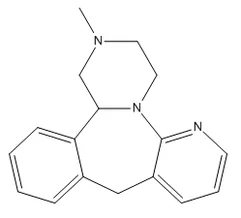
Mirtazapine is a very common prescription antidepressant which was first introduced by Organon International in the United States in 1990. It is classed as a Noradrenergic and specific serotonergic antidepressants (NaSSAs), acting by antagonizing the Alpha2-adrenergic receptor and certain serotonin receptors such as 5-HT2A and 5-HT2C. It has little to no history of human usage and is used primarily in the treatment of major depressive disorder and other mood disorders. It is also commonly used as a treatment for anxiety, insomnia, nausea and as an appetite stimulant. Structurally, mirtazapine is classified as a tetracyclic antidepressant (TeCA) due to its four distinctive rings.
When it is taken in large doses, it is capable of inducing bizarre experiences which are visually on par with and in the same distinct class as any of the classical psychedelics but almost completely devoid of mental insight or anything that could considered fun recreational potential.
The mirtazapine experience contains a complex and wide array of effects which based on the predefined potential subjective effects index found here, I will now begin to breakdown and describe.
Physical effects:
The physical effects of mirtazapine can be broken down into five components all of which progressively intensify proportional to dosage and generally include:
Cognitive effects:
The mental processes, thought patterns and general head space experienced during a high dose mirtazapine trip is one that is completely devoid of insight. There is seemingly no introspection, personal problem solving or creative insight to be found with this substance whatsoever and it’s because of this that mirtazapine holds absolutely no therapeutic potential when used in the context of a hallucinogen.
These effects generally include:
Visual effects:
Distortions
Distortions within mirtazapine do not seem to be present beyond tracers which are unusually capable of manifesting with full level 4 effects.
Geometry
In terms of complexity, the visual geometry found within high dose mirtazapine trips can be said to be completely on par with that of LSD or psilocin. They can be comprehensively described as structured in their organization, organic in geometric style, intricate in complexity, large in size, fast and smooth in motion, glossy in colour, equal in blurred and sharp edges and equal in rounded and angular corners. At higher dosages level 7A and 7B geometry is not present simply because the sedating effects are too overwhelming to allow people to remain conscious at such a high level. Many users almost menacing feeling, following a sinister and ominous style with a colour scheme that generally consists of greys and blues.
Hallucinatory states
The components which comprise mirtazapines hallucinatory states generally include:
Auditory effects:
Mirtazapine exhibits auditory hallucinations just as consistently as any other hallucinogenic substance and generally includes:
Health effects, potential addiction and tolerance:
It is considered by the medical literature to be relatively safe in the event of an overdose. There are no significant cardiovascular adverse effects at 7 to 22 times the maximum recommended dose which is 45mg. The LD50 is 600-720mg/kg (oral, mice) and 320-490mg/kg (oral, rat) which extrapolates to something roughly between 2.9g - 3.6g for a 60kg human. This is 13 times or more the recreational dosage of roughly 210mg.
Mirtazapine is simply not enjoyable enough to become addictive and this only happens when it is taken daily as a prescription anti depressant over long periods of time. This results in dependence and intensely unpleasant withdrawal symptoms if a person decides to suddenly quit.
In terms of their tolerance, they do not seem to have one which lasts more than a few days when used for recreational purposes, but possesses a cross tolerance with other psychedelics such as LSD and mushrooms which lasts roughly one week.
Legal issues:
Mirtazapine is unscheduled in all countries but available for prescription usage only, meaning that it is not illegal to possess but illegal to sell or buy without a license.
If you want to try mirtazapine for yourself you will have to get or know somebody with a prescription who is willing to share their drugs with you.
Conclusion:
Mirtazapine is not a drug which will provide anybody with a “fun” experience but can provide extremely interesting experiences which are on par with any of the classical psychedelics despite the fact that the cognitive alterations are devoid of mental insight.
If you are planning on experimenting with this substance, be sure not to take it until 9pm at the very earliest so that you do not drastically alter your sleeping pattern.
Click here for a more comprehensive breakdown.
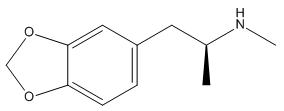
I recently added a comprehensive health effects, potential addiction, and tolerance as well as a legal issues section to everyone of my specific substance guides. I wanted to add this article to specifically include with the MDMA health section; since there was so much information and preventative tips, it was necessary to make it an article on its own. This was so all the information was in one simple place, so people no longer have to trawl through random forum posts. Once again, this article is not written by me, but the same friend of mine who wrote the previous article on “An Explanation of the Effect of Hallucinogens upon the Nervous System”.
Negative Effects on Health
Serotonin syndrome occurs when there is an excess of serotonergic activity in the central nervous system (CNS). Serotonin syndrome can often be overcome by resting in a cooler environment. However, occasionally it will turn into a medical emergency, which can be fatal. If dangerously excessive amounts of MDMA are taken, serotonin syndrome may occur.
Excessive sweating, high body temperature, high blood pressure, increased heart beat, pupillary dilatation, nausea, diarrhoea, shivering.
Twitching, restlessness, tremor, in-coordination rigidity, teeth chattering, reduced opening of jaw, seizures.
Confusion, agitation, anxiety, persistent elevated/irritable mood, insomnia, hallucinations, headache.
Dehydration can occur when taking MDMA; this happens when not enough fluid is consumed to replenish that already lost. MDMA can cause excessive sweating, diarrhoea and hyperthermia on its own, which can exacerbate the dehydration. To prevent dehydration occurring, fluids should be drunk before thirst is felt. Thirst is the preliminary indicator of dehydration. As many ions/electrolytes (essential for many bodily functions) in the body are lost while on MDMA, the best fluids to drink are sports/energy drinks, or water with a tablespoon per litre of table salt added but normal water will always suffice regardless. This restores the electrolytes lost via sweating or diarrhoea.
It is also important to regulate the amount of fluid consumed. If too much is drunk, hyponatremia (water intoxication) can occur. This interferes with the sodium levels, making them lower than normal levels. Symptoms include include nausea and vomiting, headache, confusion, lethargy, fatigue, appetite loss, restlessness and irritability, muscle weakness, spasms, or cramps, seizures, and decreased consciousness or coma. To prevent this occurring, fluid must be drunk at the correct rate, ensuring you sip the water at a slow rate:
During active e.g. dancing: between 250ml and 500ml every hour.
When inactive: around 250ml every hour.
MDMA interferes with the body’s ability to regulate temperature. This is because it causes vasoconstriction, where the blood vessels closest to the skin constrict, preventing the body from ridding itself of excess heat. Hyperthermia can occur, which is where the body overheats. This can be controlled by staying hydrated and taking breaks from physical activity. If hyperthermia occurs, cease physical activity immediately, and apply cool (but not freezing cold) flannels to the forehead, chest and groin.
Improving the MDMA Experience
Taking supplements before/after taking MDMA is known as pre/post-loading. There are a number of supplements that can improve the MDMA experience and help with some of the negative effects and neurotoxicity.All these, apart from the SSRIs (prescription only) are cheap and freely available through Google, Amazon, and local health food stores.
5-HTP: This is the precursor to serotonin, and taking it after taking MDMA helps restore levels of serotonin in the body. Due to the depletion of serotonin after taking MDMA, a comedown is often felt the next day or upon ‘coming-down’. Symptoms are very similar to depression, and can include impaired attention, focus, and concentration, as well as drive and motivation, aches and pains, exhaustion, and feelings of sadness. Taking 5-HTP can help relieve these effects, by replenishing serotonin.
SSRIs: If you have access to SSRIs (specific serotonin reuptake inhibitors), these can be taken after a buzz to help restore serotonin levels also. However, taking them before an MDMA buzz appears to dull the buzz.
Magnesium: There is a nerve in the jaw called the trigeminal nerve, which is responsible for innervating the jaw. This nerve is especially sensitive to changing levels of (among other things) serotonin. This causes the jaw to clench and the teeth to grind, known as bruxism or “gurning”. Magnesium can be taken before MDMA, and acts as a muscle relaxant.
Vitamin C: Vitamin C has been proven to be effective when combating neurotoxicity of MDMA.
Pre/Post-Loading Recipe
One Hour Before
100mg of Magnesium
1000-2000mg of Vitamin C
After
200mg of 5-HTP
Another effect caused by MDMA is the release of anti-diuretic hormone (ADH). ADH is responsible for regulating urination. If more ADH is released, urination will become difficult. This, coupled with the vasoconstriction, makes urination almost impossible. If heat is applied to the genitals, especially when male, this helps reduce the vasoconstriction, and make urination easier.
MDMA can be taken safely without using any of these supplements, and most dangers generally come from overuse, over a long period of time, or unnecessary excessive doses. The information above can be used to seriously diminish the negative health effects and sometimes notoriously unavoidable comedown that is experienced for some in the days after taking MDMA.
This article is intended to be a detailed explanation of how hallucinogens affect the brain, via the inhibition and excitation of neurotransmitters in the nervous system. This article is not written by me, but an extremely close friend of mine who is significantly more knowledgeable when it comes to science, and specifically chemistry. She is also my editor and grammar-checker, as well as scientific advisor and participator in 100% of the field of research that has gone into the previous several specific substance guides which have been posted on this website.
A nerve impulse is a self-propagating wave of electrical disturbance that travels along the surface of the axon membrane. This electrical disturbance comprises of a temporary reversal of the electrical potential difference; not an electrical current. The axon is usually negatively charged compared to the outside of the axon, and this is known as the resting potential, the value of which is usually around -65mV. When a stimulus is received, a reversal in electrical potential difference is caused, and this is known as the action potential (normally around +40mV).
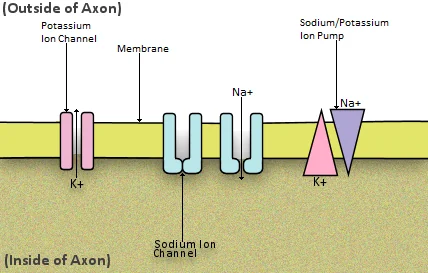
To begin, the inside of the axon is negatively charged, compared with the outside of the axon. The change in potential difference, that is needed to fire off an action potential, is controlled by the movement of sodium and potassium ions in and out of the axon. An ion is a positively or negatively charged molecule. This movement occurs via the action of ion pumps and channels. The ions cannot just diffuse in and out of the axon uncontrollably; this diffusion is prevented by a membrane around the axon. Periodically placed along the membrane are proteins that act as channels for ions to pass through. Sodium gated channels and potassium gated channels open and close to allow the ions to pass through only at specific times. Sodium-potassium pumps transport Na+ and K+ in and out of the axon.
The inside of the axon starts at around -65mV compared to the outside of the axon. An action potential is reached when the axon is at +40mV compared to the outside of the axon. This value of +40mV is reached by the movement of sodium and potassium ions in and out of the axon. Sodium-potassium pumps transport 2K+ into the axon for every 3Na+ transported out of the axon. Both sodium and potassium are in the forms of positive ions here. However, more sodium is removed from the axon compared to the potassium brought. This means the overall electro negativity is decreasing in the axon, and the axon is getting closer to reaching the potential difference of +40mV. Sodium ions then begin to diffuse back into the axon naturally, and potassium ions diffuse back out. At this stage however, potassium gated channels are open, whereas sodium gated channels are closed. This means the K+ can diffuse out faster than the Na+ can diffuse back into the axon. This increases the potential difference further between the inside and the outside of the axon.
Once an action potential has been established, it “moves” along the axon in a neurone. The action potential doesn’t move in a physical sense of the word; the reversal of electrical charge is instead reproduced at different points along the axon, in a “Mexican wave” effect. One point in an axon will become depolarised (depolarisation is a change in a cell’s membrane potential, making it more positive, or less negative), and this depolarisation is a stimulus for the next region of the axon to depolarise. As the next region depolarises, the previous region returns to normal and repolarises.
Eventually, the action potential will reach the end of an axon, known as a synaptic knob. A synapse occurs at a point where the axon of one neurone meets the dendrite of another neurone.
When an action potential reaches the synaptic knob, the calcium ion channels open, and Ca2+ enters the synaptic knob. As the Ca2+ enters, the vesicles containing the neurotransmitters fuse with the membrane of the pre-synaptic neurone, and the neurotransmitters are released into the synapse. The neurotransmitter molecules attach to the receptors on the sodium ion channels, which allow Na+ ions to diffuse into the post-synaptic neurone. This influx of Na+ generates a new action potential in the post-synaptic neurone. An enzyme is then released into the synapse that breaks the neurotransmitters down into small, precursor molecules. These fragments are reabsorbed by receptors on the pre-synaptic neurone, and they are then used to remake the neurotransmitters. The neurotransmitters are then ready to release when a new action potential reaches the pre-synaptic neurone. This reabsorbing prevents the neurotransmitters from continuously binding with the sodium ion channels on the post-synaptic neurone, and firing off repeated new action potentials.
Neurotransmitters can have one of two effects. Excitatory neurotransmitters/receptors make it more likely that a new action potential will fire off. Inhibitory neurotransmitters/receptors make it less likely that a new action potential will fire off. Many drugs work by affecting the way neurotransmitters work. There’s a handy table listing the effects of different neurotransmitters right here.
Drugs are also capable of inhibiting the nervous system by creating fewer action potentials in the post-synaptic neurone. This can be done by inhibiting the release of neurotransmitter, or blocking receptors on the sodium/potassium ion channels. This reduces the body’s response to impulses. Antagonists work by blocking or dampening signals of agonist drugs/neurotransmitters.
The Action of Different Drugs on the Nervous System
Psychedelics mostly act on serotonin receptors, and act as full or partial agonists. LSD, LSA, psilocin, DMT, mescaline and the 2Cx family all work as partial agonists. The table below shows a few of the commonly known psychedelics, and their action on receptors. The 5HT receptor system acts via the neurotransmitter of serotonin, D1 acts via dopamine, and the A-2 system acts via noradrenaline.
The current scientific consensus is that the 5HT-2A receptor is the one targeted by drugs responsible for psychedelic experiences. However, drugs like mescaline and MDMA are both capable of inducing psychedelic experiences on par with that of psilocin and LSD, but show no affinity to the 5HT-2A receptor.
LSD, for example, works by fitting into the receptors on the post-synaptic neurone. It has a higher affinity than serotonin itself for the serotonin receptors, specifically 5HT receptors, and therefore prevents serotonin binding to the receptors by competing with it.
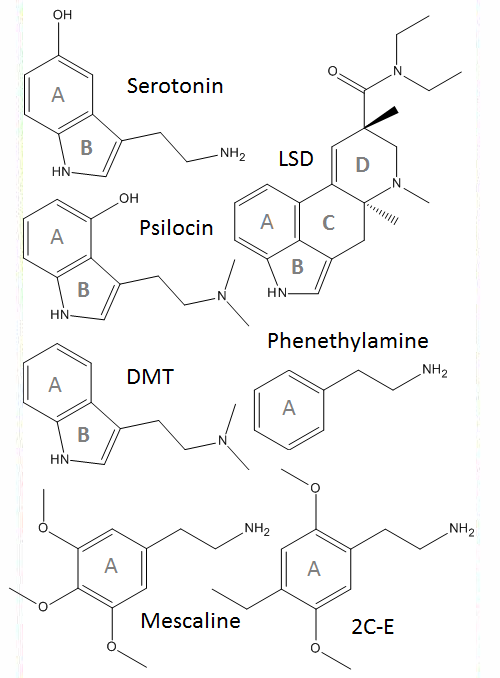
The diagram above shows the structural similarities between the psychedelics. The three classes (phenethylamines, lysergamides and tryptamines) all contain the same chemical rings, which have been labelled. A represents the benzene ring, which all three classes contain. B represents the pyrrole ring, in both tryptamines and lysergamides. A and B together form the indole ring. C (cyclohexane) and D are only contained in the lysergamides, possibly contributing to its potency.
Dissociatives act as non-competitive NMDA receptor antagonists, meaning they inhibit glutamate molecules. Glutamate is the neurotransmitter responsible for telling the body when it’s “awake”, for building up memories and for regulating awareness, mood and movement. NMDA receptors allow for electrical signals to pass between neurones in the brain and spinal column; for the signals to pass, the receptor must be open. NMDA receptor antagonists close the NMDA receptors, by preventing the glutamate from binding to it. This disconnection of neurones leads to loss of feeling, difficulty moving,and eventually the k-hole. It is also this disconnection that causes the anaesthetic properties of dissociatives.
PCP, MXE and ketamine fall into the arylcyclohexylamine class of chemicals, which possess NMDA receptor antagonist properties. DXM/DXO fall into the morphinan class of chemicals. Nitrous oxide, however, is unique, due to being an inorganic molecule. Another inorganic dissociative is xenon, which is also an NMDA receptor antagonist. However, information on recreational use is limited.
Deliriants are antagonists towards the cholinergic receptors, blocking the neurotransmitter acetylcholine. Acetylcholine is the neurotransmitter responsible for regulating the sleep cycle, dreaming alertness, and for building memory. The prolonged suppression of cholinergic activity and REM sleep due to deprivation or amphetamine abuse creates psychotic episodes which may be defined as bursts of dream activity erupting spontaneously into waking states. Deliriants could therefore be considered to trigger a similar state by blocking acetylcholine and suppressing cholinergic system activity. Causing trippers to begin dreaming whilst maintaining full conscious awareness. Deliriants are known for causing people to have no memory of their experience, tying in with their anticholinergic effects. Anticholinergics are split into two class; anti-muscarinic (act on muscarinic acetylcholine receptors) and anti-nicotinic (act on nicotinic acetylcholine receptors). Anti-muscarinic drugs include DPH, scopolamine and atropine. They are all competitive antagonists, meaning they bind to the receptor, but do not activate it.
Atypical drugs don’t fit into the three basic hallucinogen categories, and act in a number of different ways. MDMA is an entactogenic drug that works as a re-uptake inhibitor targeting serotonin receptors. This leads to the prevention of the re-uptake of the serotonin. More serotonin in then in the synapse, so the receptors on the post-synaptic neurone continue to be fired off. Serotonin is known for its control of mood, often being referred to as “the happy chemical”, along with dopamine. Muscimol is a GABA agonist. Salvia is a k-opioid receptor agonist. The k-opioid receptor is responsible for altering the perception of pain, consciousness, gravity, fear, mood and motor control. This explains the sensations of intense gravity, painful tingling and paranoia during Salvia trips. Ibogaine is 5HT-2A agonist, an NMDA antagonist and the k-opioid receptor agonist. The tryptamine core of ibogaine causes the affinity to the 5HT system.
This section has described the chemistry and neuroscience at the basic level of the neurone. However, I intend to write a second part to this article, which describes in detail the effects of hallucinogens, and specifically psychedelics, on specific parts of the brain, and how this translates into the subjective components of the psychedelic experience.
