
Disregard Everything I Say
Month
Dosage (sublingual)
Threshold : 25-150µg
Light : 150-400µg
Common : 450-600µg
Strong : 700-1200µg
Duration
Total Duration : 4 - 6 hrs
Onset : 15 - 120 mins
Coming Up : 30 - 120 mins
Peak : 2 - 3 hrs
Coming down : 1 - 2 hrs
After effects : 5 - 24 hrs
25C-NBOMe can be fatal at heavy doses (as low as 4mg).[1] It is strongly discouraged to take large amounts of this substance or to snort it.
25C-NBOMe or 2C-C-NBOMe is a serotonergic N-benzyl derivative of the substituted phenethylamine psychedelic known as 2C-C.
It has nearly no history of human use prior to 2010 when it first became popular due its ease of purchase from online research chemical vendors.
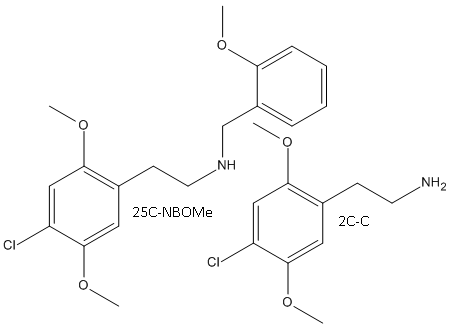
25C-NBOMe was discovered in 2003 by Ralf Heim at the Free University of Berlin, it differs from 2C-C structurally through a substitution on the amine (NH2) with a 2-methoxybenzyl (BOMe) group as shown in the image above. This change in structure results in roughly a sixteen fold increase in potency when compared to 2C-C, allowing even the most extreme of dosages to fit in liquid form onto tabs and blotter paper (which people often mistake for LSD).
There are, however, methods of differentiating between LSD and adulterants like 25-C-NBOMe with and without test kits.
For example, one of the key differences between 25C-NBOMe and LSD is that this substance is only active when taken through a sublingual or insufflated route. This means that in order to get the full effects, 25C-NBOMe blotter paper must be lightly chewed on within the mouth for 10 - 20 minutes and never immediately swallowed.
Insufflation, however, is not recommended due to the amount of people who have suffered through dangerous and often fatal overdoses due to this route of administration.
The 25C-NBOMe experience contains a complex and wide array of effects which based on the predefined potential subjective effects index found here, I will now begin to breakdown and describe.
Physical effects:
The physical effects of 25C-NBOMe can be broken down into six components all of which progressively intensify proportional to dosage. These are described below and generally include:
Cognitive effects:
The head space of 25C-NBOMe is described by many as remarkably light and underwhelming in comparison to the classical psychedelics. It is not uncommon for people to report feeling that their thought stream has maintained general normality in its specific style throughout low to moderate dosages. At high dosages, however, mild to overwhelming cognitive alterations become present; this dosage seems to be lower in proportion to physical effects when compared to 25I-NBOMe.
The most prominent of these cognitive effects generally include:
Visual effects:
Enhancements
25C-NBOMe presents a full and complete array of possible visual enhancements which generally include:
Distortions
The visual distortions and alterations which are experienced are detailed below:
Geometry
The visual geometry that is present throughout this trip is often described as very similar in appearance to that of LSD. They can be comprehensively described as algorithmic in geometric style, intricate in complexity, fine and zoomed out in detail, fast and smooth in motion, structured in shape, colourful in scheme, glossy in colour, sharp around the edges and mostly rounded across their corners. In comparison to other more commonly used psychedelics, they can be described as significantly more intricate than the visual geometry found within 2C-I and most of the 2C-x family in general as well as completely on par with LSD, psilocin and DMT at appropriately high dosages (which seem lower in proportion to the accompanying physical effects when compared to that of 25I-NBOMe).
In terms of their behaviour, 25C-NBOMe’s geometry leads onto Level 7A visual geometry with Level 7B remaining so far unconfirmed within this substance. They also seem to consistently build up in visual intensity when the tripper stares at a central point. This eventually envelops the visual field and creates the sensation that the tripper has broken through into a continuously shifting geometric landscape or structure with a vast sense of immersive physical size attributed to it.
Hallucinatory states
25C-NBOMe is capable of producing a full range of hallucinatory states within the level 1 - 3 range extremely consistently. However, level 4 hallucinatory breakthroughs are reported but very uncommon and inconsistent in comparison to other more commonly used psychedelics such as psilocin, 2C-E and DMT. This can be considered as on par with and identical in behaviour to that of LSD and 25I-NBOMe.
These effects include:
Auditory effects:
The auditory effects of 25C-NBOMe are common in their occurrence and exhibit a full range of effects which commonly includes:
Health effects, addiction potential and tolerance:
25C-NBOMe is a very new substance and little is known about its pharmacological or behavioural risks. The LD50 is not known. Some deaths have been attributed to 25C-NBOMe overdose caused by improper handling and uneducated use of this substance. Its recent widespread use suggests that death is primarily caused from overdoses and not from ordinary doses, particularly from insufflation.
The fact that 25C-NBOMe is active in the microgram range is likely a contributing factor since this makes measuring doses significantly more difficult.
It’s worth noting that although many 5-HT2A agonists have documented safety, none of these have been full agonists so their safety data cannot be applied to 25C-NBOMe.
In terms of its addictive potential, 25C-NBOMe has not been studied formally but due to its immediate tolerance build up which lasts up to 2 - 3 weeks after the experience, it is essentially impossible to use this substance compulsively.
Legal Issues:
Conclusion:
The subjective effects breakdown contained within this article was written and contributed by the PsychonautWiki admin known as cocoanatta.
As for the substance itself, 25C-NBOMe and the NBOMe series as a whole are an extremely interesting set of psychedelics but do not quite compare in terms of hallucinatory and cognitive depth if you have access to classical psychedelics such as genuine LSD, DMT and psilocin.
Please let me know if you agree or disagree with any particular points contained within this article by using the comment system below.
Click here for a more comprehensive article.
Dosage (oral)
Threshold : 1-3mg
Light : 2-5mg
Common : 6-10mg
Strong : 10-16mg
Heavy : 16+mg
Dosage (insufflated)
Threshold : 0.5-2mg
Light : 1-3mg
Common : 3-6mg
Strong : 5 - 10mg
Heavy : 12+mg
Duration (oral)
Onset : 1 - 3 hrs
Come up : 2 - 4 hrs
Peak : 5 - 8 hours
Come down : 1 - 3 hours
After effects : 3 - 6 hours
Duration (insufflated)
Onset : 1 - 2 minutes
Come up : 20 - 60 minutes
Peak : 4 - 6 hours
Come down : 2 - 3 hours
After effects : 2 - 4 hours
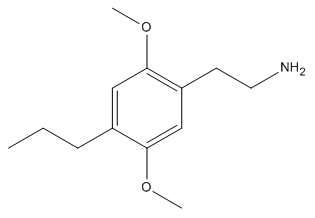
2C-P (2,5-dimethoxy-4-propylphenethylamine) is a synthetically produced psychoactive drug usually sold by online research chemical vendors. The substance itself is classed as a psychedelic phenethylamine of the 2C-x family and was first synthesized by Alexander Shulgin in 1974.
Like many 2c-x substances, this drug is a highly dose sensitive psychedelic known for its entactogenic effects, powerful (yet bright) visuals, and intense body load. It is often described by users as a chemical which is very similar to that of 2C-E yet distinct in its own effects. This drug may be overly intense for those who are not already experienced with psychedelics. This is something which is consistently attributed to its often overwhelmingly powerful effects and extremely long duration of 10 - 20 hours.
The 2C-P experience contains a complex and wide array of effects which based on the predefined potential subjective effects index found here, I will now begin to breakdown and describe.
Physical effects:
The physical effects of 2C-P can be broken down into six components all of which progressively intensify proportional to dosage. These are described below and generally include:
Cognitive effects:
The head space of 2C-P is described by many as one which is both insightful and relatively normal in its thought processes even at moderate to high dosages.
The total sum of these cognitive components regardless of the setting generally includes:
Visual effects:
Enhancements
2C-P presents a full and complete array of possible visual enhancements which generally include:
Distortions
As for visual distortions and alterations, effects experienced are detailed below:
Geometry
The visual geometry that is present throughout this trip can be described as more similar in appearance to that of 4-AcO-DMT or ayahuasca than that of LSD, 2C-B, or 2C-I. They can be comprehensively described as structured in their organization, organic in geometric style, intricate in complexity, large in size, fast and smooth in motion, colourful in scheme, glossy in colour, sharp in their edges and equally rounded and angular in their corners. They give off a contradictory natural and synthetic feel to them that at higher dosages are significantly more likely to result in states of Level 7B visual geometry over Level 7A. There seems to be visual geometry that is distinct from 2C-E, psilocin and ayahuasca and can be described as faster moving and more intense in proportion to the present cognitive and physical effects than 2C-E.
Hallucinatory states
2C-P produces a full range of high level hallucinatory states in a fashion that is more consistent and reproducible than that of many other commonly used psychedelics. This holds particularly true in comparison to other substances within the phenethylamine family. These effects include:
Auditory effects:
The auditory effects of 2C-P are more common in their occurrence than many commonly used psychedelics and exhibit a full range of effects which commonly include:
Health effects, addiction potential and tolerance:
The toxicity and long term health effects of recreational 2C-P use does not seem to have been studied in any scientific context and the exact toxic dosage is unknown. This is because 2C-P is a research chemical with very little history of human usage.
Anecdotal evidence from people who have tried 2C-P within the psychedelic community suggests that there are no negative health effects attributed to simply trying this drug at low to moderate doses or using it very sparingly (but nothing can be completely guaranteed).
2C-P does not seem to be physically addictive and many users experience a self-regulating quality even though there is no real tolerance attributed to this drug (meaning that it could potentially be used multiple days in a row if somebody chose to do so). However, due to its slow onset and long duration, usage of this substance in this manner in unlikely to be favourable.
Like 2C-E and unlike many other psychedelics, 2C-P has the ability to be redosed after peaking quite successfully. For most drugs, there will be substantially diminished effects from the second dose, but there is minimal with 2C-P. However, due to the rather long delay before come up and long duration, many users of 2C-P may find this impractical.
Legal Issues:
Possession and sale of 2C-P is unscheduled in most countries.
Conclusion:
The subjective effects breakdown contained within this article was written and contributed by the PsychonautWiki admin known as Cocoanatta.
As for the substance itself, this drug is perhaps one of the most interesting 2C-X compounds available today through the online market. It is extremely powerful in its effects and completely comparable with that of other more traditional psychedelic drugs such as LSD.
Click here for a more comprehensive breakdown.
Dosage:
Threshold : 10 - 150 mg
Light : 150 - 300 mg
Common : 250 - 500 mg
Strong : 450 - 700 mg
Heavy : 650 - 1000 mg
Duration:
Onset : 60 - 120 mins
Duration : 6 - 8 hours
After effects : up to 12 hrs
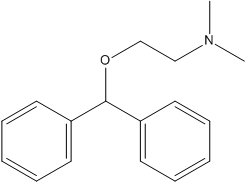
DPH (Diphenhydramine) is a legal and freely available over the counter first-generation antihistamine possessing anticholinergic and sedative properties. It was one of the first known antihistamines, invented in 1943 by Dr. George Rieveschl and usually sold under the brand name of “benadryl”. This substance is available in many forms of generic or store brand medication which are mainly used to treat allergies or as a general sleep aid. When taken in “recreational” doses however, DPH becomes a notorious and extremely powerful deliriant.
Diphenhydramine is classed as an anticholinergic which is functionally similar to tropane alkaloids found within Datura stramonium and other plants in the nightshade family. This substance works via its antagonistic action on acetylcholine receptors. It’s this inhibition of acetylcholine which leads to delirium, sedation and intensely realistic hallucinations along side of some extremely uncomfortable and dysphoric physical side effects.
DPH and other deliriant hallucinogens are generally considered as both physically and psychologically unsafe by the online psychonautic community. This is further backed up by the consistent way in which almost everybody who tries this substance immediately regrets the experience.
Although we strongly discourage ever trying such a drug, the experience itself can be fascinating in itself and worthy of scientific documentation none the less.
In terms of it’s subjective effects, the DPH has a dosage scale unlike anything found within psychedelics or dissociatives. It is not like other drugs in sense of dosage, as a light dose does not equal a light trip. Doses under 300mg induce more of a restless feeling, body high, and muscle relaxation. Doses typically 600mg+ are what make the user enter delirium and begin to see fully formed hallucinations.
Anything in between these two extremes is often a disappointing and uncomfortable experience, characterized with twitching and only very minor hallucinations, mostly in the peripheral vision.
The DPH experience contains a complex and wide array of effects which based on the predefined potential subjective effects index found here, I will now begin to breakdown and describe…
Physical effects:
The physical effects of DPH are usually described as extremely uncomfortable. They can be broken down into nine components all of which progressively intensify proportional to dosage. These are described below and generally include:
The physical effects of DPH and other deliriants are thought to occur when the concentration of acetylcholine in the vagus nerve decreases due to acetylcholine inhibition, leading to the commonly experienced physical dysphoria.
The levels of dysphoria experienced, however, vary between people with a very small percentage of users reporting that they do not seem to experience them at all.
Cognitive effects:
The head space of DPH is described by many as generally negative and dysphoric throughout the trip, generally consisting of extreme paranoia and feelings of impending doom. It is largely confusing and disorienting often leading to a complete inability to communicate or understand normal language. It contains unique cognitive effects found almost exclusively in the deliriant class.
The most prominent of these effects include:
Visual effects:
Suppression
DPH does not enhance visual stimuli in the way that psychedelics do, instead it tends to decrease visual aptitude both increasing hallucination and degrading vision.
Distortions
As for visual distortions and alterations, effects experienced are detailed below:
Hallucinatory states
DPH and other deliriants are unique in that they offer solid hallucinations which display themselves seamlessly into waking consciousness, similar to fully formed dreams or delusions. In contrast, classical psychedelics and dissociatives have progressive levels of multiple all encompassing sensory effects, before reaching the level of concrete hallucination.
These can literally encompass anything but common manifestations include,
The hallucinatory states in DPH and other deliriants are more delirious and uncontrollable than that of any other commonly used hallucinogen. These states alternate between waking external hallucination and internal hallucinatory states.
The effects of such hallucinatory states include two separate components:
Auditory effects:
The auditory effects of DPH are common in their occurrence and exhibit a range of effects which commonly includes:
Physical health effects, potential addiction and tolerance:
If taken on any kind of a regular basis, DPH can have some serious but unstudied adverse effects on ones kidneys and result in bladder issues similar to that of ketamine cystitis.
It is assumed non-addictive by most due to the nature of the experience but many people do find themselves coming back to it on a regular basis. This can often lead to addiction and extreme caution should be taken.
Diphenhydramine can become fatal if amounts close to or exceeding 2 grams are consumed and can result in death when combined with most stimulants and MAOI inhibitors. It is worth noting however that a dosage of 1 gram is considered extreme in its strength and could potentially result in a fatal overdose if a person happened to be particularly sensitive to this substance.
In terms of its tolerance, this forms very quickly with DPH trips, meaning that a trip can only occur at full effects every 2-4 weeks.
Available forms:
DPH is available in several different forms over the counter and online.
Legal issues:
DPH is available either over the counter or by prescription in most countries. Some countries however require the purchaser to be over 16, 18 or 21.
Reader submitted trip reports:
Conclusion:
The subjective effects breakdown contained within this article was written by the PsychonautWiki admin known as Cocoanatta.
Nobody is going to stop you from trying this but if you’re completely set on it, at least wait until you have had a large amount of experience being out of your mind on psychedelic and dissociative substances first.
The fact that this substance is completely legal and available to the masses, despite being far more dangerous than comparatively benign psychedelics such as LSD shows that our governments are not concerned with the dangers of drug induced hallucination in itself. They are instead concerned with the secondary effects, namely the drug induced changes of perspective which psychedelics offer but deliriants do not.
Click here for a more comprehensive breakdown.
Dosage:
Threshold : 5 - 10mg
Light : 10 - 20mg
Common : 20 - 30mg
Strong : 30 - 40mg
Heavy : 40mg +
Duration:
Total Duration : 6 - 8 hours
Onset : 20 - 60 minutes
Initial effects : 15 - 30 minutes
Peak : 3 - 6 hours
Coming down : 3 - 5 hours
After effects : 2 - 5 hours
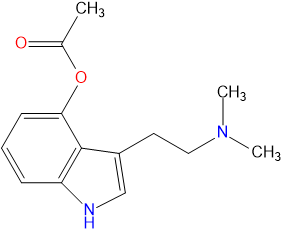
4-AcO-DMT (also known as Psilacetin, 4-Acetoxy-DMT, or O-Acetylpsilocin) is a synthetically produced psychoactive drug usually sold by online research chemical vendors. It is the acetylated form of the psilocybin mushroom alkaloid psilocin and is a lower homologue of 4-AcO-DET, 4-AcO-MiPT and 4-AcO-DiPT.
This substance is considered by the psychedelic community to be an extremely useful alternative to psilocybin as they are both believed to be pro-drugs of psilocin. This is because many people report that the subjective effects are indistinguishable from that of a typical psilocybin mushroom trip.
However, many people also report that 4-AcO-DMT’s effects differ greatly from that of psilocybin and psilocin. The exact differences are often difficult to define but suggest that as well as being a pro-drug to psilocin, 4-AcO-DMT is also active in itself.
The 4-AcO-DMT experience contains a complex and wide array of effects which based on the predefined potential subjective effects index found here, I will now begin to breakdown and describe.
Physical Effects:
The physical effects of 4-AcO-DMT can be broken down into two components all of which progressively intensify proportional to dosage. These are described below and generally include:
Cognitive Effects:
The head space of 4-AcO-DMT is described by many as extremely relaxing, profound and stoning in its style when compared to other commonly used psychedelics such as LSD or 2C-B which tend to be energetic and stimulating. It contains a large number of psychedelic typical and unique cognitive effects.
The most prominent of these typical effects generally include:
Visual Effects:
Enhancements
4-AcO-DMT presents a full and complete array of possible visual enhancements which generally include:
Distortions
As for visual distortions and alterations, effects experienced are detailed below:
Geometry
The visual geometry that is present throughout this trip can be described as more similar in appearance to that of 4-AcO-DMT, Ayahuasca and 2C-E than LSD. It can be comprehensively described as structured in its organization, organic in geometric style, intricate in complexity, large in size, fast and smooth in motion, colourful in scheme, glossy in colour, blurred in its edges and rounded in its corners. They have a very “natural” feel to them and at higher dosages are significantly more likely to result in states of Level 7B visual geometry over Level 7A.
Hallucinatory States
4-AcO-DMT and its various other forms produce a full range of high level hallucinatory states in a fashion that is more consistent and reproducible than that of many other commonly used psychedelics. These effects generally include:
Auditory Effects:
The auditory effects of 4-AcO-DMT are common in their occurrence and exhibit a full range of effects which commonly include:
Physical Health Effects, Potential Addiction and Tolerance:
The lethal dosage at which 50% of users would suffer a fatal overdose (LD50) of psilacetin has been extrapolated from animal results to be roughly 800mg for an average human being. This is 10 times the extremely high dosage of 80mg which most users would never feel the need to take.
In terms of its tolerance, 4-AcO-DMT tolerance lasts for approximately a week, meaning that it is very difficult to form an addiction to this substance. It also has a high cross-tolerance, affecting the potency of other tryptamines. Alongside of this (due to its psychedelic properties) users report a strong self-regulating quality towards the usage of this substance.
As a member of the tryptamine family, 4-AcO-DMT can be considered harmless and benign when it comes to any negative physical repercussions towards one’s health. This is supported by the total lack of any negative health reports, but of course cannot be guaranteed due to lack of formal scientific studies.
Legal issues:
Possession and sale of 4-AcO-DMT is unscheduled in most countries.
Reader submitted trip reports:
Conclusion:
As far as I am aware, 4-AcO-DMT is by far the experientially deepest and most spiritual research chemical tryptamine that is currently available within the online market. It is in many ways considerably more practical than psilocybin mushrooms and from my personal experience indistinguishable in its effects and considerably easier to ingest with reduced nausea.
Click here for a more comprehensive breakdown.
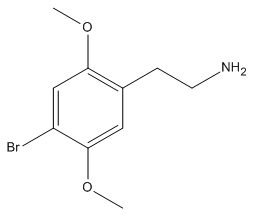
Dosage (oral)
Threshold : 2-5mg
Light : 5-15mg
Common : 15-25mg
Strong : 25-40mg
Heavy : 40+mg
Duration (oral)
Onset : 20 - 90 minutes
Come up : 15 - 30 minutes
Peak : 3 - 7 hours
Come down : 1 - 2 hours
After effects : 2 - 4 hours
Dosage (insufflated)
Threshold : ~1mg
Light : 1 - 5mg
Common : 5-10mg
Strong : 10 - 15mg
Heavy : 15+mg
Warning!!! (2C-B insufflation is extremely painful)
Duration (insufflated)
Onset : 1 - 2 minutes
Come up : 10 - 20 minutes
Peak : 2 - 4 hours
Come down : 1 - 2 hours
After effects : 2 - 4 hours
2C-B (4-bromo-2,5-dimethoxyphenethylamine) is a psychedelic phenethylamine of the 2C-x family. It was first synthesized by Alexander Shulgin in 1974.
This substance first saw use among the psychiatric community as an aid during therapy. It was considered one of the best drugs for this purpose because of its short duration, relative absence of side effects, and comparably mild nature.
Like many 2c-x substances, this drug is a highly dose sensitive psychedelic known for its entactogenic effects, bright visuals, and intense body load. This substance is often described by users as feeling half way between LSD and MDMA. Many reports suggest that while 2C-B’s entactogenic effects are less pronounced than MDMA, the visual effects are described as more pronounced and colourful.
The 2C-B experience contains a complex and wide array of effects which based on the predefined potential subjective effects index found here, I will now begin to breakdown and describe.
Physical Effects:
The physical effects of 2C-B can be broken down into five components all of which progressively intensify proportional to dosage. These are described below and generally include:
Cognitive Effects:
The head space of 2C-B is described by many as one which is both insightful and relatively normal in its thought processes even at moderate to high dosages.
The total sum of these cognitive components regardless of the setting generally includes:
Visual Effects:
Enhancements
2C-B presents a full and complete array of possible visual enhancements which generally include:
Distortions
As for visual distortions and alterations, effects experienced are detailed below:
Geometry
The visual geometry that is present throughout this trip can be described as more similar in appearance to that of LSD than that of 2C-E, psilocin, or ayahuasca. They can be comprehensively described as unstructured in their organization, algorithmic in geometric style, intricate in complexity, large in size, fast and smooth in motion, colourful in scheme, glossy in colour, sharp in their edges and angular in their corners. They seem high in algorithmic visuals such as fractals and at higher dosages are significantly more likely to result in states of Level 7A visual geometry over Level 7B.
Hallucinatory States
Like LSD, while 2C-B is capable of producing a full range of low and high level hallucinatory states, this is extremely rare and inconsistent at higher levels but common at lower and generally includes the following effects:
Auditory Effects:
The auditory effects of 2C-B are more common than some psychedelics in their occurrence and are capable of producing a full range of effects which commonly include:
Physical Health Effects, Potential Addiction and Tolerance:
There is no current data for the lethal dosage of 2C-B, but it is thought to be extremely high. Alexander Shulgin reported in his book PIHKAL that an accidental dosage of 100mg resulted in no physical or psychological damage.
Since the invention of this substance in 1974, not a single person has yet to accidentally or deliberately experience a fatal overdose with this substance. This suggests that 2C-B is very safe but please keep in mind that clinical studies assessing its safety have not been performed in any scientific context.
In terms of its tolerance, 2C-B can be redosed repeatedly with little to no loss in the strength of its subjective effects. This means that is theoretically possible to become addicted to it but thanks to its psychedelic properties users experience a powerful self-regulating quality to this substance.
Legal Issues:
Reader submitted trip reports:
Conclusion:
The main bulk of the 2C-B subjective effects breakdown for this particular article was not written by myself but the PsychonautWiki admin known as Cocoanatta. I have tried 2C-B on two separate occasions and can confirm that the descriptions are indeed accurate.
As for the substance itself, 2C-B is an incredibly fun and therapeutically beneficial substance. This makes it extremely useful for both recreational and introspective purposes. It is, in my opinion, the most suitable psychedelic for a beginner in existence due to its clear, euphoric headspace and proportionally mild visual effects in comparison to that of LSD or mushrooms.
Click here for a more comprehensive breakdown.
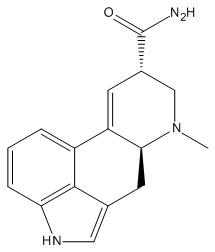
Onset : 30- 180 min
Duration : 4 - 10 hours
Normal After Effects : 2 - 24 hours
Dosage : Differs between Differs between Morning glory seeds & Hawaiian Baby Woodrose seeds.
LSA (also known as Ergine, d-lysergic acid amide, and d-lysergamide) is an alkaloid of the ergoline family that occurs in various species of vines, the morning glory flower and some species of fungi. It is the dominant alkaloid found in the seeds of several varieties of morning glories in concentrations of approximately 10 µg per seed, as well as Hawaiian baby woodrose seeds at a concentration of around 0.13% of dry weight. It has structural similarities to LSD, putting it in the lysergamide family of psychedelics.
A traditional use of morning glory seeds by Mexican Native Americans was first described by Richard Schultes in 1941 in a short report documenting their use going back to Aztec times. Further research was published in 1960, when Don Thomes MacDougall reported that the seeds of morning glory flowers were used as sacraments by certain Zapotecs (sometimes in conjunction with the seeds of Rivea corymbosa, another species of morning glory which has a similar chemical composition, containing lysergol instead of LSA).
LSA was assayed for human activity by Albert Hofmann in self-trials in 1947 (well before it was known to be a natural compound). Intramuscular administration of a 500 microgram dose led to a tired, dreamy state with an inability to maintain clear thoughts. After a short period of sleep, the effects were gone and normal baseline was recovered within five hours. This suggests that the theory of LSA being the main psychedelic compound within morning glory seeds and Hawaiian baby woodrose is debatable as anecdotal reports suggest that the effects of synthetic LSA and iso-LSA are only slightly psychedelic in their effects and may well be triggered by a mixture of various lysergamides instead of one specific compound.
The LSA experience contains a complex and wide array of effects which based on the predefined potential subjective effects index found here, I will now begin to breakdown and describe.
Physical Effects:
The physical effects of LSA can be broken down into five components all of which progressively intensify proportional to dosage. These are described below and generally include:
Cognitive Effects:
The head space of LSA is described by many as extremely relaxing yet lucid and clear headed in its style when compared to other commonly used psychedelics such as LSD or Psilocin. Although it is primarily sedating, it is accompanied by fast paced bursts of thought.
LSA contains a large number of psychedelic cognitive effects. The most prominent of these typical effects include:
Visual Effects:
The visual effects of LSA are mostly present when large doses have been consumed.
Enhancements
LSA presents a full and complete array of possible visual enhancements which generally include:
Distortions
As for visual distortions and alterations, these are significantly more simplistic from that of open eye distortions found with other psychedelics. Effects experienced are detailed below:
Geometry
The visual geometry that is present throughout this trip can be described as more similar in appearance to that of 4-AcO-DMT, ayahuasca and 2C-E than LSD or 2C-B. They can be comprehensively described as structured in their organization, organic in geometric style, intricate in complexity, zoomed out and small in size, fast and smooth in motion, colourful in scheme, glossy in colour, blurred in their edges and rounded in their corners. They have a much more “natural” feel to them than LSD and at higher dosages are significantly more likely to result in states of Level 7B visual geometry over Level 7A.
Hallucinatory States
LSA produces a full range of high level hallucinatory states in a fashion that is very consistent when taken in large doses. The effects of such states include:
Auditory Effects:
The auditory effects of LSA are common in their occurrence and exhibit a full range of effects which commonly include:
Natural Sources:
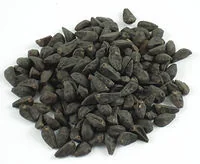
Morning Glory Seeds
The seeds of many species of morning glory contain lysergamide alkaloids (including the psychedelic known as LSA). The seeds are found in many gardening stores, however, it’s worth noting that the seeds from commercial sources are often coated in some form of pesticide or methylmercury which can result in extreme nausea if ingested. Seeds without these pesticides can be purchased cheaply online and are freely available through search engines such as Google.
When using morning glory seeds, the dosage for oral consumption is generally considered to be:
Hawaiian Baby Woodrose Seeds
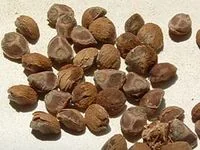
Hawaiian Baby Woodrose is a perennial climbing vine that is native to the Indian subcontinent and was introduced to numerous areas worldwide including Hawaii, Africa and the Caribbean. Hawaiian Baby Woodrose seeds may be consumed for their various lysergamide alkaloids such as LSA. These seeds are found in many gardening stores, however, the seeds from commercial sources are often coated in some form of pesticide or methylmercury which can result in extreme nausea if ingested. Seeds without these pesticides can be purchased cheaply online and are freely available through search engines such as Google.
When using morning glory seeds, the dosage for oral consumption is generally considered to be:
Physical Health Effects, Potential Addiction and Tolerance:
The toxic dosage of LSA is unknown as there has never been a single reported overdose. This suggests that LSA is perfectly safe to simply try on the odd occasion.
However, LSA should not be used on a frequent basis. When used repeatedly over a short period of time, the vasoconstriction effects build up while the psychoactive effects get weaker. If you’re feeling sore legs, this is a sign of the vasoconstriction effects building up in your body. The legs feel sore because not enough blood is getting to the muscles. Your upper leg muscles are the largest, most energy eating muscles in your body, and they will feel sore if blood flow to them is lowered even a little bit. If you’ve taken HBWR seeds, morning glory seeds, or pure LSA and are experiencing sore legs you need to hold off for a while. Let your body get back to baseline before using them again. This is more important with LSA (HBWR, morning glories, etc.). With LSA, it can take up to 3 days of abstinence to get back to baseline.
It’s important to note that LSA is non-habit-forming and that the desire to use it can actually decrease with use. It is most often self-regulating. You also build an almost immediate tolerance to LSA after ingestion, preventing you from experiencing its full effects more often than every 4-7 days (unless you increase your dose significantly).
Legal Issues:
Preparation Methods:
LSA containing seeds can be prepared in a number of different ways. Click the links below for detailed step by step techniques.
Reader Submitted Trip Report:
In Conclusion:
The entirety of the LSA subjective effects breakdown for this particular article was not written by myself but the PsychonautWiki admin known as Cocoanatta. I have tried LSA myself on numerous occasions and can confirm that this article is indeed accurate.
As for the substance itself, although LSA is well known across the psychedelic community, this substance has a pretty bad reputation for causing painful states of nausea, vomiting and vasoconstriction despite the fact that this can be greatly reduced depending on the method of preparation. Alongside of this, LSA is also perceived as a substance which only causes very mild visual and cognitive effects in comparison to other more “classical” psychedelics.
This assumption however is simply untrue. LSA goes just as deep as LSD, mushrooms, ayahuasca or any other psychedelic and you simply need to find the right dosage and extract it correctly. This makes LSA an excellent choice for any psychonaut, especially when considering how cost effective and widely available the natural plant sources are.
Click here for a more comprehensive breakdown.
Onset : 20 - 60 minutes
Duration : 2 - 6 hours
Normal After Effects : 1 - 8 hours
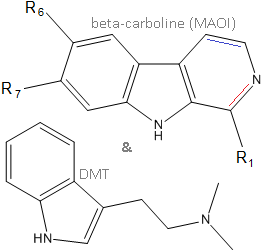
Ayahuasca is any of various psychoactive infusions prepared from a monoamine oxidase inhibitor (MAOI) such as B. caapi (Harmaline) or a reversible inhibitor of monoamine oxidase A (RIMAs) such as syrian rue (Harmine), taken with a brewed dimethyltryptamine (DMT) containing plant species. There are a large variety of these plants but in western society the most commonly used are either Psychotria viridis leaves or Mimosa Hostillis rootbark.
Harmala alkaloids are MAO-inhibiting beta-carbolines. Harmine and harmaline are classed as selective and reversible inhibitors of monoamine oxidase A (MAO-A). This inhibition of MAO-A allows DMT to diffuse unmetabolized past the membranes in the stomach and small intestine, and eventually cross the blood–brain barrier (which, by itself, requires no MAO-A inhibition) to activate receptor sites in the brain. Without RIMAs or an MAOI, DMT would be oxidised (and thus rendered biologically inactive) by monoamine oxidase enzymes in the digestive tract.
Ayahuasca usually comes in the form of a foul tasting brown liquid that has been used by the indigenous tribes of South America since before recorded history. However, it was first discovered by the western world in the 16th century, when Christian missionaries from Spain and Portugal predictably described it as the work of the devil.
Those who undergo the ayahuasca experience report having profound spiritual revelations regarding their purpose on earth, the true nature of the universe, and deep insight as how to be the best person they possibly can. It is nearly always said that people experience profound positive changes in their life subsequent to consuming ayahuasca. In addition, it is often reported that individuals experience gaining access to so called “higher spiritual dimensions” and making contact with various autonomous entities who serve to act as guides or healers.
The ayahuasca experience contains a complex and wide array of effects which based on the predefined potential subjective effects index found here, I will now begin to breakdown and describe.
Physical Effects:
The physical effects of Ayahuasca can be broken down into five components all of which progressively intensify proportional to dosage. These are described below and generally include:
Cognitive Effects:
The head space of ayahuasca is described by many as extremely sober and clear headed in its style when compared to other commonly used psychedelics such as LSD or Psilocin. This is despite the fact that it contains a large number of psychedelic typical and unique cognitive effects.
The most prominent of these typical effects include:
Visual Effects:
Enhancements
Ayahuasca presents a complete array of possible visual enhancements which generally include:
Distortions
As for visual distortions and alterations, effects experienced are detailed below:
Geometry
The visual geometry that is present throughout this trip can be described as more similar in appearance to that of Psilocin than LSD. They can be comprehensively described as structured in their organization, organic in geometric style, intricate in complexity, large in size, fast and smooth in motion, colourful in scheme, glossy in colour, equal in blurred and sharp edges and equal in rounded and angular corners. At higher dosages they are significantly more likely to result in states of level 7B visual geometry over level 7A.
In terms of their manifestation, they are progressive in nature and continuously self-complexify in settings with little or no visual input and disturbances. For example, darkness will cause the geometry to progressively intensify, but this can immediately be reset back down to base level by simply turning on a bright light or actively performing a physical task which requires any level of concentration.
Hallucinatory States
Ayahuasca and other forms of DMT produce a full range of high level hallucinatory states in a fashion that is more consistent and reproducible than that of any other commonly used psychedelic. These effects include:
Auditory Effects:
The auditory effects of ayahuasca are extremely consistent in occurrence in comparison to that of LSD and psilocin and exhibit a full range of effects which commonly include:
Health Effects, Potential Addiction and Tolerance:
Research has been made showing the relative physical safety of DMT.
Ayahuasca, has been studied by multidisciplinary groups in Brazil and other countries and it was shown that in reasonable doses in a careful context, it presents no negative cognitive/psychiatric/physical consequences.
In terms of mental health, the very same study showed that users presented elevated levels of happiness and health. Ayahuasca is not physically addictive, and many users experience a frequency self-regulating quality to the drug. This is despite the fact that the substance holds no real tolerance and can be used on a daily basis if it is desired.
As for the harmine or Syrian rue, it is only dangerous when taken in combination with other drugs and it is not necessary to follow a strict tyramine free diet, which is the case with harmaline. So although RIMAs are generally safer than MAOIs, they still have highly dangerous interactions when combined with almost any antidepressant or stimulant, common migraine medications, certain herbs, or even most cold medicines (including decongestants, antihistamines, and cough syrup) as it can cause potentially lethal serotonin syndrome or hypertensive crisis.
Legal Issues:
DMT has been made illegal in almost every country. The common botanical sources for it, however, are still legal pretty much everywhere. You can even freely purchase DMT containing plants from specialized ethnobotanical shops on the internet. Harmine and harmaline, are also generally legal, including most of its ethnobotanically common plant sources. In Canada, however, harmaline is a Schedule lll drug.
Preparation Methods:
Ayahuasca can be prepared in a number of ways using a variety of different plant sources. For the DMT, the most commonly used ingredients are mimosa hostillis rootbark or acacia rootbark. The harmala alkaloids and inhibitors are usually found within syrian rue seeds or Banisteriopsis caapi leaves. All of these are legal to purchase within most countries and freely available through the use of google.
For the purposes of this article we have developed, linked and listed below 3 formal recipes for both traditional ayahuasca brews and practical modern day equivalents,
Misconceptions:
There appears to be a general consensus among many online psychedelic communities that ayahuasca is simply too powerful for beginners and that even the most experienced of psychonauts should tread lightly. Some people even go as far as saying that you should not undergo the experience without the guidance of a practicing shaman and always within a traditional environment.
I would like to use this section of the article to express the opinion that these viewpoints are misinformed and at times, unnecessarily elitist. Providing the user can handle nausea or a purge free preparation method has been used, ayahuasca is the most perfect starter psychedelic in existence and not in any way more overwhelming than LSD or mushrooms. It can also be taken in any number of environments (no matter how shamanically inappropriate) but as with any psychedelic, it will only take you to its deepest points within silent darkness.
Reader submitted trip reports:
Conclusion:
Ayahuasca is by far my favourite psychedelic. It is extremely easy to make and offers a completely different, but amazing style of trip that needs to be taken much more seriously. If I had to choose a single substance for society to base its civilization around it would be ayahuasca, not LSD and certainly not alcohol.
Click here for a more comprehensive breakdown.