
Disregard Everything I Say
Month
Dosage (oral):
Threshold : < 20 µg
Light : < 80 µg
Common : 80 - 160 µg
Strong : ~ 300 µg
Heavy : > 300 µg
Duration (oral):
Total Duration : 6 - 9 hours
Onset : 30 - 60 minutes
Peak : 3 - 5 hours
Coming down : 3 - 4 hours
After effects : 2 - 5 hours
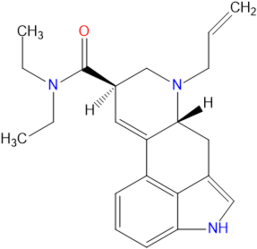
6-allyl-6-nor-lysergic acid diethylamide (abbreviated AL-LAD, also known as Aladdin) is a semi-synthetic hallucinogenic psychedelic drug of the lysergamide family, as described by Alexander Shulgin in the book TiHKAL (Tryptamines i Have Known And Loved).
This substance has little to no history of human usage. However, it has recently become commonly marketed along side of LSZ as a legal alternative to LSD through online research chemical vendors.
In terms of its chemistry, the molecule differs in structure to LSD by the simple replacement of the methyl group with an allyl group at the 6th nitrogen. Lysergamides are distinct from both tryptamines and phenethylamines, although the chemical structure is more similar to a tryptamine than a phenethylamine.
In terms of its pharmacology, AL-LAD acts as a 5-HT2A partial agonist. The psychedelic effects are believed to come from AL-LAD’s efficacy at the 5-HT2A receptors. However, the role of these interactions and how they result in the psychedelic experience continues to remain elusive.
AL-LAD shares many common traits with LSD; it appears to be equal in potency as well as similar in mechanism. However, the progression and duration of effects are compressed due to its metabolic differences.
While the subjective effects are almost identical to that of LSD, AL-LAD is significantly shorter in its duration. In comparison to its structural relative LSZ, it is reported to be more introspective and stoning. It therefore comparatively lies on the opposite end of the spectrum of effects which most lysergamides are capable of producing.
The effects listed below are based upon the subjective effects index and personal experiences of PsychonautWiki contributors. The listed effects will rarely if ever occur all at once but heavier dosages will increase the chances and are more likely to induce a full range of effects.
Physical Effects:
Cognitive Effects:
The cognitive effects of AL-LAD can be broken down into 14 components all of which progressively intensify proportional to dosage. In comparison to other psychedelics such as Psilocin, LSA and Ayahuasca, AL-LAD is significantly more stimulating and fast paced in terms of the specific style of thought stream which it produces and contains a large number of potential effects.
The most prominent of these cognitive effects generally include:
Visual effects:
Enhancements
AL-LAD presents a full and complete array of visual enhancements which generally includes:
Distortions
AL-LAD presents a full and complete array of visual distortions which generally include:
Geometry
The visual geometry that is present throughout this trip can be described as more similar in appearance to that of 2C-B or 2C-I than Psilocin, LSA or DMT. It can be comprehensively described through its variations as primarily intricate in complexity, algorithmic in form, unstructured in organization, brightly lit, colourful in scheme, organic in feel, multicoloured in scheme, flat in shading, soft in its edges, large in size, slow in speed, smooth in motion, round in its corners, unimmersive in depth and consistent in intensity. At higher dosages, it consistently results in states of Level 8A visual geometry over Level 8B.
Hallucinatory States
AL-LAD is capable of producing a full range of low and high level hallucinatory states in a fashion that is significantly less consistent and reproducible than that of many other commonly used psychedelics. These effects include:
Auditory Effects:
The auditory effects of AL-LAD are common in their occurrence and exhibit a full range of effects which commonly includes:
Physical Health Effects, Potential Addiction and Tolerance:
The toxicity and long term health effects of recreational AL-LAD use do not seem to have been studied in any scientific context and the exact toxic dosage is unknown. This is because AL-LAD is a research chemical with very little history of human usage. Anecdotal evidence from people within the psychedelic community who have tried AL-LAD suggests that there is no negative health effects attributed to simply trying this drug at low to moderate doses or using it very sparingly (but nothing can be completely guaranteed).
AL-LAD is non-habit forming and the desire to use it can actually decrease with use. It is most often self-regulating.
An almost immediate tolerance is built to AL-LAD after ingestion, preventing one from experiencing its full effects more often than every 4-7 days unless they increase their dose significantly.
Legal issues:
AL-LAD is currently a legal research chemical in the UK, however it is illegal in the US under the analogue act when sold for human consumption. It is unclear in many countries whether it is legal or not and one should take precaution and assume it is illegal to avoid legal issues.
On June 10th, 2014 the UK ACMD recommended that AL-LAD be specifically named in the UK Misuse of Drugs Act as a class A drug despite not identifying any harm associated with its use.[2]
Conclusion:
AL-LAD induces a worthwhile lysergamide experience which can be described as almost indistinguishable from that of LSD although with a much shorter duration. It is a trip which is equally compatible for both recreational and spiritual settings. I would recommend this substance to anybody who is interested in experiencing a somewhat legal alternative to LSD.
This substance breakdown was written through collaboration between PsychonautWiki contributors Pjosepherum, Josikins and Oscarette. The full article is available here.
Dosage (oral):
Threshold : 5 - 10mg
Light : 10 - 20mg
Common : 20 - 30mg
Strong : 30 - 40mg
Heavy : 40mg +
Duration (oral):
Total Duration : 6 - 8 hours
Onset : 20 - 60 minutes
Initial effects : 15 - 30 minutes
Peak : 3 - 6 hours
Coming down : 3 - 5 hours
After effects : 2 - 5 hours
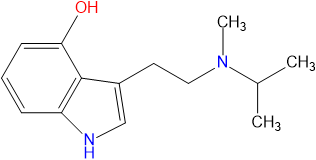
4-HO-MiPT (miprocin, 4-hydroxy-N-methyl-N-isopropyltryptamine, or hats) is an synthetic compound and a lesser-known psychedelic tryptamine. It is thought to be a serotonergic psychedelic, similar to 4-AcO-DMT, LSD and DMT. Its molecular structure and pharmacological effects resemble those of the tryptamine psilocin, which is the primary psychoactive chemical in magic mushrooms.
This substance is relatively uncommon and has only a short history of human use. It was presumably first synthesized by Alexander Shulgin. Its synthesis is described in his book TiHKAL along with reports by people who had ingested the compound. Shulgin’s trials and other anecdotal information suggest that 4-HO-MiPT is similar in activity to psilocin.
In terms of its chemistry, 4-HO-MiPT is the 4-hydroxyl analog of the substituted tryptamine known as MiPT (N-methyl-N-isopropyltryptamine) as well as the isopropyl homolog and structural analog of 4-HO-DMT (Psilocin).
In terms of its pharmacology, 4-HO-MiPT’s psychedelic effects are believed to come from its efficacy at the 5-HT 2A receptor as a partial agonist. However, the role of these interactions and how they result in the psychedelic experience continues to remain elusive.
The effects listed below are based upon the subjective effects index and personal experiences of PsychonautWiki contributors. The listed effects will rarely if ever occur all at once but heavier dosages will increase the chances and are more likely to induce a full range of effects.
Physical Effects:
Cognitive Effects:
The cognitive effects of 4-HO-MiPT are described by many as extremely relaxing, profound and stoning in style when compared to other commonly used psychedelics such as LSD or 2C-B which tend to be energetic and stimulating. It contains a large number of typical and unique psychedelic cognitive effects.
The most prominent of these typical effects generally include:
Visual effects:
Enhancements
4-HO-MiPT presents a full and complete array of possible visual enhancements which generally includes:
Distortions
As for visual distortions and alterations, effects experienced are detailed below:
Geometry
The visual geometry that is present throughout this trip can be described as more similar in appearance to that of Psilocin, Ayahuasca and 2C-E than LSD or 2C-B. It can be comprehensively described through its variations as intricate in complexity, abstract in form, organic in style, structured in organization, brightly lit and multicoloured in scheme, glossy in shading, soft in edges, large in size, slow in speed, smooth in motion, rounded in corners, unimmersive in depth and consistent in intensity. The visuals have a very “natural” feel to them and at higher dosages are significantly more likely to result in states of Level 8B visual geometry over Level 8A.
Hallucinatory States
4-HO-MiPT and its various other forms produce a full range of high level hallucinatory states in a fashion that is more consistent and reproducible than that of many other commonly used psychedelics. These effects generally include:
Auditory Effects:
The auditory effects of 4-HO-MiPT are common in their occurrence and exhibit a full range of effects which commonly include:
Physical Health Effects, Potential Addiction and Tolerance:
The toxicity and long term health effects of recreational 4-HO-MiPT use do not seem to have been studied in any scientific context and the exact toxic dosage is unknown. This is because 4-HO-MiPT is a research chemical with very little history of human usage. Anecdotal evidence from people who have tried 4-HO-MiPT within the psychonaut community suggests that there are no negative health effects attributed to simply trying this drug at low to moderate doses or using it very sparingly (but nothing can be completely guaranteed).
There is no current data for the LD50 of 4-HO-MiPT, but it is thought to be high.
4-HO-MiPT does not seem to be physically addictive and many users experience a self-regulating quality. There seems to be a tolerance build up when used consecutively multiple days in a row which requires one to double their dosage each time to achieve the same effects.
Legal issues:
Conclusion:
4-HO-MiPT induces a generic yet worthwhile tryptamine experience which can be described as almost indistinguishable from that of psilocybin mushrooms and 4-AcO-DMT. It also has the same dosage range to that of 4-AcO-DMT and I would recommend this substance to anybody who is interested in experiencing psychedelia.
This substance breakdown was written through collaboration between PsychonautWiki contributors Josikins and Oscarette. The full article is available here.