
"Transcending this mortal plane through the power of hallucinogen induced nerd rage; Tripping balls in the name of science for the good of the cosmos."
MY SOURCES ARE:
Personal experience and the internet alongside of my own speculation, analyses and conclusions. For all you know I could be lying, so please do some independent research and do not say that I didn't warn you.
PLEASE DISREGARD:
Absolutely everything I say; all pieces of writing and information found within this blog should be considered lies and a work of fiction. Do not ever use anything I've ever said here for anything, ever.
I have, after all, made it very clear that my writings are to be disregarded, as in reality I may well have no idea what I am talking about and do not have any formal qualifications on the subject.
Please point out as many flaws in my reasoning, claims, factual information and grammar as possible.
I love all of you. Thank you for reading.



25C-NBOMe, broken down and described
Dosage (sublingual)
Threshold : 25-150µg
Light : 150-400µg
Common : 450-600µg
Strong : 700-1200µg
Duration
Total Duration : 4 - 6 hrs
Onset : 15 - 120 mins
Coming Up : 30 - 120 mins
Peak : 2 - 3 hrs
Coming down : 1 - 2 hrs
After effects : 5 - 24 hrs
25C-NBOMe can be fatal at heavy doses (as low as 4mg).[1] It is strongly discouraged to take large amounts of this substance or to snort it.
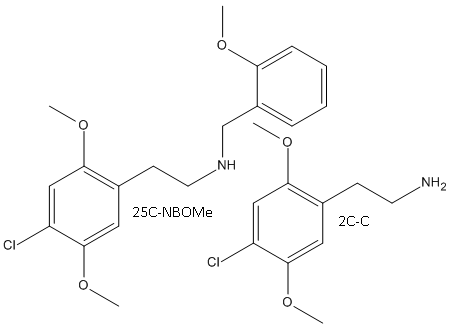
25C-NBOMe or 2C-C-NBOMe is a serotonergic N-benzyl derivative of the substituted phenethylamine psychedelic known as 2C-C.
It has nearly no history of human use prior to 2010 when it first became popular due its ease of purchase from online research chemical vendors.
25C-NBOMe was discovered in 2003 by Ralf Heim at the Free University of Berlin, it differs from 2C-C structurally through a substitution on the amine (NH2) with a 2-methoxybenzyl (BOMe) group as shown in the image above. This change in structure results in roughly a sixteen fold increase in potency when compared to 2C-C, allowing even the most extreme of dosages to fit in liquid form onto tabs and blotter paper (which people often mistake for LSD).
There are, however, methods of differentiating between LSD and adulterants like 25-C-NBOMe with and without test kits.
For example, one of the key differences between 25C-NBOMe and LSD is that this substance is only active when taken through a sublingual or insufflated route. This means that in order to get the full effects, 25C-NBOMe blotter paper must be lightly chewed on within the mouth for 10 - 20 minutes and never immediately swallowed.
Insufflation, however, is not recommended due to the amount of people who have suffered through dangerous and often fatal overdoses due to this route of administration.
The 25C-NBOMe experience contains a complex and wide array of effects which based on the predefined potential subjective effects index found here, I will now begin to breakdown and describe.
Physical effects:
The physical effects of 25C-NBOMe can be broken down into six components all of which progressively intensify proportional to dosage. These are described below and generally include:
- Sublingual numbing - assuming the substance has been taken sublingually, the very first physical effect which a person will notice immediately after sublingual absorption is a strong, unpleasant metallic chemical taste. This is accompanied by a very obvious feeling of general numbness of the tongue and mouth which can stay for up to an hour after the blotter paper has been consumed. This is the key difference when it comes to determining whether your blotter paper contains LSD or one of the NBOMe series.
- Spontaneous tactile sensations - the body high itself can be described as a generally mild, all-encompassing, soft but euphoric tingling sensation. This tingling sensation is also accompanied by spontaneous rushes of euphoria that become longer and more drawn out proportional to the dosage consumed.
- Decreased bodily weight - in terms of the body’s perceived weight, this substance consistently leaves people feeling extremely light, often to the point of total weightlessness.
- Stimulation - in terms of its effects on the physical energy levels of the tripper, 25C-NBOMe is usually considered to be energetic and stimulating, but it can be considered less stimulating when compared to 25I-NBOMe. For most people, this substance induces a unique type of physical stimulation which can be described as feeling extremely energetic but in a way which does not force the tripper to move unless they genuinely choose to do so. For others however, the stimulation can be quite uncontrollable, occasionally resulting in bodily shakes and a grinding of the teeth comparable to that of MDMA and traditional stimulants such as amphetamine, but this is manifested much less consistently when compared to 25I-NBOMe
- Vasoconstriction - it is worth noting that an undetermined percentage of people who experiment with this drug will experience negative physical side effects, such as a temporary difficulty in urinating and vasoconstriction. This is defined as the narrowing of the blood vessels resulting from contraction of the muscular wall of the vessels and is triggered through the way in which 25I-NBOMe’s target receptor (5-HT2A) modulates both vasoconstriction and vasodilation among its many other functions.
- Nausea - as the tripper begins to come up, nausea is not uncommon and can sometimes result in initial vomiting, but passes once this has either happened or the trip begins to fully set in. In comparison to other psychedelics such as psilocin, LSD, 2C-E and 2C-I, this could actually be very considered very mild in its intensity.
Cognitive effects:
The head space of 25C-NBOMe is described by many as remarkably light and underwhelming in comparison to the classical psychedelics. It is not uncommon for people to report feeling that their thought stream has maintained general normality in its specific style throughout low to moderate dosages. At high dosages, however, mild to overwhelming cognitive alterations become present; this dosage seems to be lower in proportion to physical effects when compared to 25I-NBOMe.
The most prominent of these cognitive effects generally include:
- Introspection - this component is consistently manifested only in the context of a non-social setting in which the user is alone.
- Increased empathy, love and sociability - the entactogenic effects range from mild to powerful, but are inconsistently manifested. Entactogenic effects for people who try this substance usually become prominent in the presence of others. These feelings of increased sociability, love and empathy do not seem to be quite as strong or profound as those found within other entactogens (such as MDMA, 2C-B and AMT)
- Acceleration of thought
- Time distortion
- Feelings of fascination, importance and awe
- Conceptual thinking
- Connectivity of thought
- Enhancement of current mind state
- Removal of cultural filter
- Ego suppression, loss and death
Visual effects:
Enhancements
25C-NBOMe presents a full and complete array of possible visual enhancements which generally include:
- Increased visual acuity
- Enhancement of colours
- Enhanced pattern recognition
Distortions
The visual distortions and alterations which are experienced are detailed below:
- Visual drifting (melting, flowing, breathing and morphing) - In comparison to other psychedelics, this effect can be described as highly detailed, slow and smooth in motion, static in their appearance and unrealistic/cartoon like in style.
- Tracers
- After images
- Texture repetition - In comparison to other psychedelics such as LSD or psilocin, this particular visual alteration is significantly more basic and less intricate in style but still distinctively present and seems more intricate in comparison to 25I-NBOMe.
Geometry
The visual geometry that is present throughout this trip is often described as very similar in appearance to that of LSD. They can be comprehensively described as algorithmic in geometric style, intricate in complexity, fine and zoomed out in detail, fast and smooth in motion, structured in shape, colourful in scheme, glossy in colour, sharp around the edges and mostly rounded across their corners. In comparison to other more commonly used psychedelics, they can be described as significantly more intricate than the visual geometry found within 2C-I and most of the 2C-x family in general as well as completely on par with LSD, psilocin and DMT at appropriately high dosages (which seem lower in proportion to the accompanying physical effects when compared to that of 25I-NBOMe).
In terms of their behaviour, 25C-NBOMe’s geometry leads onto Level 7A visual geometry with Level 7B remaining so far unconfirmed within this substance. They also seem to consistently build up in visual intensity when the tripper stares at a central point. This eventually envelops the visual field and creates the sensation that the tripper has broken through into a continuously shifting geometric landscape or structure with a vast sense of immersive physical size attributed to it.
Hallucinatory states
25C-NBOMe is capable of producing a full range of hallucinatory states within the level 1 - 3 range extremely consistently. However, level 4 hallucinatory breakthroughs are reported but very uncommon and inconsistent in comparison to other more commonly used psychedelics such as psilocin, 2C-E and DMT. This can be considered as on par with and identical in behaviour to that of LSD and 25I-NBOMe.
These effects include:
- External hallucinations
- Internal hallucinations - this particular effect commonly contains hallucinations within scenarios, settings, concepts and autonomous entity contact. They are more common within dark environments and can be described as internal in their manifestation, lucid in believability, interactive in style and almost exclusively of religious, spiritual, mystical or a transcendental nature in their overall theme.
Auditory effects:
The auditory effects of 25C-NBOMe are common in their occurrence and exhibit a full range of effects which commonly includes:
- Enhancements
- Distortions
- Hallucinations
Health effects, addiction potential and tolerance:
25C-NBOMe is a very new substance and little is known about its pharmacological or behavioural risks. The LD50 is not known. Some deaths have been attributed to 25C-NBOMe overdose caused by improper handling and uneducated use of this substance. Its recent widespread use suggests that death is primarily caused from overdoses and not from ordinary doses, particularly from insufflation.
The fact that 25C-NBOMe is active in the microgram range is likely a contributing factor since this makes measuring doses significantly more difficult.
It’s worth noting that although many 5-HT2A agonists have documented safety, none of these have been full agonists so their safety data cannot be applied to 25C-NBOMe.
In terms of its addictive potential, 25C-NBOMe has not been studied formally but due to its immediate tolerance build up which lasts up to 2 - 3 weeks after the experience, it is essentially impossible to use this substance compulsively.
Legal Issues:
- UK: The 25x-NBOMe series is under a temporary class drug order, lasting one year from 10th June 2013.
- USA: On Nov 15, 2013, the DEA added 25C-NBOMe to Schedule I using their emergency scheduling powers, making it “temporarily” in Schedule I for 2 years
Conclusion:
The subjective effects breakdown contained within this article was written and contributed by the PsychonautWiki admin known as cocoanatta.
As for the substance itself, 25C-NBOMe and the NBOMe series as a whole are an extremely interesting set of psychedelics but do not quite compare in terms of hallucinatory and cognitive depth if you have access to classical psychedelics such as genuine LSD, DMT and psilocin.
Please let me know if you agree or disagree with any particular points contained within this article by using the comment system below.
Click here for a more comprehensive article.
2C-P, broken down and described
Dosage (oral)
Threshold : 1-3mg
Light : 2-5mg
Common : 6-10mg
Strong : 10-16mg
Heavy : 16+mg
Dosage (insufflated)
Threshold : 0.5-2mg
Light : 1-3mg
Common : 3-6mg
Strong : 5 - 10mg
Heavy : 12+mg
Duration (oral)
Onset : 1 - 3 hrs
Come up : 2 - 4 hrs
Peak : 5 - 8 hours
Come down : 1 - 3 hours
After effects : 3 - 6 hours
Duration (insufflated)
Onset : 1 - 2 minutes
Come up : 20 - 60 minutes
Peak : 4 - 6 hours
Come down : 2 - 3 hours
After effects : 2 - 4 hours
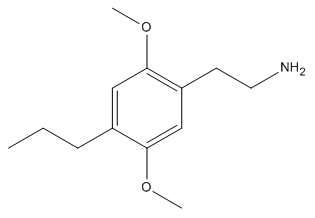
2C-P (2,5-dimethoxy-4-propylphenethylamine) is a synthetically produced psychoactive drug usually sold by online research chemical vendors. The substance itself is classed as a psychedelic phenethylamine of the 2C-x family and was first synthesized by Alexander Shulgin in 1974.
Like many 2c-x substances, this drug is a highly dose sensitive psychedelic known for its entactogenic effects, powerful (yet bright) visuals, and intense body load. It is often described by users as a chemical which is very similar to that of 2C-E yet distinct in its own effects. This drug may be overly intense for those who are not already experienced with psychedelics. This is something which is consistently attributed to its often overwhelmingly powerful effects and extremely long duration of 10 - 20 hours.
The 2C-P experience contains a complex and wide array of effects which based on the predefined potential subjective effects index found here, I will now begin to breakdown and describe.
Physical effects:
The physical effects of 2C-P can be broken down into six components all of which progressively intensify proportional to dosage. These are described below and generally include:
- Spontaneous tactile sensations - The body high of 2C-P is intense but, in comparison to 2C-E or 2C-B, it can be considered mild though is still capable of becoming very powerful and highly physically euphoric. It is similar yet distinct from the body high experienced on 2C-E, 2C-B, and LSD. The sensation itself can be described as intense and will manifest itself in the form of a continuously shifting tingling sensation that travels up and down the body in spontaneous waves. This is coupled by an equally intense yet slightly uncomfortable energetic pins and needles sensation that constantly encompasses a person’s entire body and a slight warm glow that manifests itself much less consistently than the other two physical components. All of these are capable of becoming very physically euphoric but can be described as proportionally intense with the visual and cognitive effects when compared to LSD.
- Stimulation - In terms of its effects on the physical energy levels of the tripper 2C-P is usually considered to be very energetic and stimulating in a fashion that is quite comparable to that of MDMA.
- Sexual arousal - A commonly felt physical component of the 2C-P trip is the way in which it heightens and enhances sexual arousal. When experienced, this sensation is not overwhelming or out of control but simply remains something that the tripper is constantly aware of. If sexual activities of any kind are engaged in, they are found to be immensely more pleasurable beyond anything that could be possible sober with orgasm becoming difficult to reach but completely possible to obtain. When obtained, the orgasm itself is capable of temporarily increasing the effects of the drug. This is most commonly experienced as visual effects dramatically increasing in a short yet powerful burst.
- Increased bodily control
- Enhancement of touch
- Nausea - Mild to extreme nausea is consistently reported when consumed in moderate to high dosages and either passes once the tripper has vomited or gradually fades by itself as the peak sets in.
- Loss of temperature regulation
Cognitive effects:
The head space of 2C-P is described by many as one which is both insightful and relatively normal in its thought processes even at moderate to high dosages.
The total sum of these cognitive components regardless of the setting generally includes:
- Enhancement of current mind state
- Acceleration of thought
- Feelings of fascination, importance and awe
- Time distortion
- Introspection
- Outrospection
- Removal of cultural filter
- Conceptual thinking
- Direct communication with the subconsious
- Ego suppression, loss and death
- Thought loops
- Feelings of interdependent opposites
- Delusions
- States of unity and interconnectedness
Visual effects:
Enhancements
2C-P presents a full and complete array of possible visual enhancements which generally include:
- Increased visual acuity
- Enhancement of colours
- Enhanced pattern recognition
Distortions
As for visual distortions and alterations, effects experienced are detailed below:
- Visual drifting (melting, flowing, breathing and morphing) - In comparison to other psychedelics, this effect can be described as highly detailed, slow and smooth in motion, static in appearance, and unrealistic/ cartoon like in style.
- Tracers
- After images
- Texture repetition
- Colour shifting
- Scenery slicing
Geometry
The visual geometry that is present throughout this trip can be described as more similar in appearance to that of 4-AcO-DMT or ayahuasca than that of LSD, 2C-B, or 2C-I. They can be comprehensively described as structured in their organization, organic in geometric style, intricate in complexity, large in size, fast and smooth in motion, colourful in scheme, glossy in colour, sharp in their edges and equally rounded and angular in their corners. They give off a contradictory natural and synthetic feel to them that at higher dosages are significantly more likely to result in states of Level 7B visual geometry over Level 7A. There seems to be visual geometry that is distinct from 2C-E, psilocin and ayahuasca and can be described as faster moving and more intense in proportion to the present cognitive and physical effects than 2C-E.
Hallucinatory states
2C-P produces a full range of high level hallucinatory states in a fashion that is more consistent and reproducible than that of many other commonly used psychedelics. This holds particularly true in comparison to other substances within the phenethylamine family. These effects include:
- External hallucinations
- Internal hallucinations - In comparison to other psychedelics such as LSD, 2C-P is extremely high in hallucinations embedded within visual geometry. This particular effect commonly contains hallucinations with scenarios, settings, concepts and autonomous entity contact. They are more common within dark environments and can be described as internal in their manifestation, lucid in believability, interactive in style and almost exclusively of religious, spiritual, mystical or a transcendental nature in their overall theme.
Auditory effects:
The auditory effects of 2C-P are more common in their occurrence than many commonly used psychedelics and exhibit a full range of effects which commonly include:
- Enhancements
- Distortions
- Hallucinations
Health effects, addiction potential and tolerance:
The toxicity and long term health effects of recreational 2C-P use does not seem to have been studied in any scientific context and the exact toxic dosage is unknown. This is because 2C-P is a research chemical with very little history of human usage.
Anecdotal evidence from people who have tried 2C-P within the psychedelic community suggests that there are no negative health effects attributed to simply trying this drug at low to moderate doses or using it very sparingly (but nothing can be completely guaranteed).
2C-P does not seem to be physically addictive and many users experience a self-regulating quality even though there is no real tolerance attributed to this drug (meaning that it could potentially be used multiple days in a row if somebody chose to do so). However, due to its slow onset and long duration, usage of this substance in this manner in unlikely to be favourable.
Like 2C-E and unlike many other psychedelics, 2C-P has the ability to be redosed after peaking quite successfully. For most drugs, there will be substantially diminished effects from the second dose, but there is minimal with 2C-P. However, due to the rather long delay before come up and long duration, many users of 2C-P may find this impractical.
Legal Issues:
Possession and sale of 2C-P is unscheduled in most countries.
- UK: 2C-P is a Class A drug.
- USA: 2C-P is a Schedule I drug.
Conclusion:
The subjective effects breakdown contained within this article was written and contributed by the PsychonautWiki admin known as Cocoanatta.
As for the substance itself, this drug is perhaps one of the most interesting 2C-X compounds available today through the online market. It is extremely powerful in its effects and completely comparable with that of other more traditional psychedelic drugs such as LSD.
Click here for a more comprehensive breakdown.
DPH, broken down and described
Dosage:
Threshold : 10 - 150 mg
Light : 150 - 300 mg
Common : 250 - 500 mg
Strong : 450 - 700 mg
Heavy : 650 - 1000 mg
Duration:
Onset : 60 - 120 mins
Duration : 6 - 8 hours
After effects : up to 12 hrs
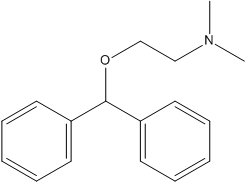
DPH (Diphenhydramine) is a legal and freely available over the counter first-generation antihistamine possessing anticholinergic and sedative properties. It was one of the first known antihistamines, invented in 1943 by Dr. George Rieveschl and usually sold under the brand name of “benadryl”. This substance is available in many forms of generic or store brand medication which are mainly used to treat allergies or as a general sleep aid. When taken in “recreational” doses however, DPH becomes a notorious and extremely powerful deliriant.
Diphenhydramine is classed as an anticholinergic which is functionally similar to tropane alkaloids found within Datura stramonium and other plants in the nightshade family. This substance works via its antagonistic action on acetylcholine receptors. It’s this inhibition of acetylcholine which leads to delirium, sedation and intensely realistic hallucinations along side of some extremely uncomfortable and dysphoric physical side effects.
DPH and other deliriant hallucinogens are generally considered as both physically and psychologically unsafe by the online psychonautic community. This is further backed up by the consistent way in which almost everybody who tries this substance immediately regrets the experience.
Although we strongly discourage ever trying such a drug, the experience itself can be fascinating in itself and worthy of scientific documentation none the less.
In terms of it’s subjective effects, the DPH has a dosage scale unlike anything found within psychedelics or dissociatives. It is not like other drugs in sense of dosage, as a light dose does not equal a light trip. Doses under 300mg induce more of a restless feeling, body high, and muscle relaxation. Doses typically 600mg+ are what make the user enter delirium and begin to see fully formed hallucinations.
Anything in between these two extremes is often a disappointing and uncomfortable experience, characterized with twitching and only very minor hallucinations, mostly in the peripheral vision.
The DPH experience contains a complex and wide array of effects which based on the predefined potential subjective effects index found here, I will now begin to breakdown and describe…
Physical effects:
The physical effects of DPH are usually described as extremely uncomfortable. They can be broken down into nine components all of which progressively intensify proportional to dosage. These are described below and generally include:
- Increased bodily weight - The first noticeable sensation is that of having an extremely heavy body, as if the gravity has been multiplied by a thousand. This makes it extremely difficult and uncomfortable to move.
- Spontaneous tactile sensations - Users commonly report all-encompassing, sharp and extremely painful jolts of electricity that spontaneously manifest themselves in a similar rhythm to hiccups.
- Muscle cramps
- Nausea
- Dizziness
- Restless leg syndrome
- Abnormal heart beat
- Frequent urination
- Difficulty urinating - This can be described as a feeling of concrete blocking your urethra and painfully conflicts with a frequent need to urinate.
The physical effects of DPH and other deliriants are thought to occur when the concentration of acetylcholine in the vagus nerve decreases due to acetylcholine inhibition, leading to the commonly experienced physical dysphoria.
The levels of dysphoria experienced, however, vary between people with a very small percentage of users reporting that they do not seem to experience them at all.
Cognitive effects:
The head space of DPH is described by many as generally negative and dysphoric throughout the trip, generally consisting of extreme paranoia and feelings of impending doom. It is largely confusing and disorienting often leading to a complete inability to communicate or understand normal language. It contains unique cognitive effects found almost exclusively in the deliriant class.
The most prominent of these effects include:
- Depression
- Anxiety
- Thought deceleration
- Suppression of emotion
- Suppression of information processing
- Amnesia
- Suppression of language
- Time distortion
- Paranoia
Visual effects:
Suppression
DPH does not enhance visual stimuli in the way that psychedelics do, instead it tends to decrease visual aptitude both increasing hallucination and degrading vision.
- Decreased visual acuity
- Suppression of pattern recognition
- Blurred vision
Distortions
As for visual distortions and alterations, effects experienced are detailed below:
- Visual drifting (Melting, Breathing, Morphing and Flowing) - In comparison to other hallucinogens, this effect can be described as intricate in complexity, jittery, slow and rigid in motion, static in their permanence, realistic in believability, and interactive in plasticity.
- Visual haze
- After images
Hallucinatory states
DPH and other deliriants are unique in that they offer solid hallucinations which display themselves seamlessly into waking consciousness, similar to fully formed dreams or delusions. In contrast, classical psychedelics and dissociatives have progressive levels of multiple all encompassing sensory effects, before reaching the level of concrete hallucination.
These can literally encompass anything but common manifestations include,
- Black phosphenes
- Spiders and various insects
- Shadow people
- “Hatman”
- Animals and pets
- Human beings, usually behaving completely normally
- Phantom cigarettes, spliffs and bowls
- Phantom water and drinks
- Floating inanimate objects that appear out of nowhere, only to disappear after your hand goes directly through the object while trying to grab hold of it.
- Every day conversations with friends, family members and fictional people that aren’t really there.
The hallucinatory states in DPH and other deliriants are more delirious and uncontrollable than that of any other commonly used hallucinogen. These states alternate between waking external hallucination and internal hallucinatory states.
The effects of such hallucinatory states include two separate components:
- External hallucinations
- Internal hallucinations
Auditory effects:
The auditory effects of DPH are common in their occurrence and exhibit a range of effects which commonly includes:
- Suppression
- Hallucinations
Physical health effects, potential addiction and tolerance:
If taken on any kind of a regular basis, DPH can have some serious but unstudied adverse effects on ones kidneys and result in bladder issues similar to that of ketamine cystitis.
It is assumed non-addictive by most due to the nature of the experience but many people do find themselves coming back to it on a regular basis. This can often lead to addiction and extreme caution should be taken.
Diphenhydramine can become fatal if amounts close to or exceeding 2 grams are consumed and can result in death when combined with most stimulants and MAOI inhibitors. It is worth noting however that a dosage of 1 gram is considered extreme in its strength and could potentially result in a fatal overdose if a person happened to be particularly sensitive to this substance.
In terms of its tolerance, this forms very quickly with DPH trips, meaning that a trip can only occur at full effects every 2-4 weeks.
Available forms:
DPH is available in several different forms over the counter and online.
- Capsules - available over the counter and online. Well-known brands include Benadryl, Benylin, Nytol and Sominex. Many of these products contain other medicines, including dextromethorphan, guaifenesin, and ephedrine. Care should be taken when using these products to ensure that there is no overdose on other medicines in the DPH-containing product.
- Liquid - available over the counter and online. DPH in liquid form can be taken orally or injected. Well-known brands include Benadryl, Benylin, Nytol and Sominex. Many of these products contain other medicines, including dextromethorphan, guaifenesin, and ephedrine. Care should be taken when using these products to ensure that there is no overdose on other medicines in the DPH-containing product.
- Powder - available online. DPH in powdered form can be taken orally, via injection or insufflation.
Legal issues:
DPH is available either over the counter or by prescription in most countries. Some countries however require the purchaser to be over 16, 18 or 21.
- Zambia: Possession and sale is illegal.
Reader submitted trip reports:
Conclusion:
The subjective effects breakdown contained within this article was written by the PsychonautWiki admin known as Cocoanatta.
Nobody is going to stop you from trying this but if you’re completely set on it, at least wait until you have had a large amount of experience being out of your mind on psychedelic and dissociative substances first.
The fact that this substance is completely legal and available to the masses, despite being far more dangerous than comparatively benign psychedelics such as LSD shows that our governments are not concerned with the dangers of drug induced hallucination in itself. They are instead concerned with the secondary effects, namely the drug induced changes of perspective which psychedelics offer but deliriants do not.
Click here for a more comprehensive breakdown.
Some simple experiments with DMT – part 1: are the hallucinations predetermined?
This short article is going to be the first in a mini series of experiments that I’ve devised to test and categorize the true nature of DMT trips and psychedelic hallucinations in general.
I am completely certain that any of my findings apply to the hallucinations found during any high dose psychedelic trip not just this drug specifically but I am using DMT as it’s short duration makes it extremely practical for acting out multiple experiments in a short period of time.
These experiments will eventually involve interviewing and negotiating with entities but first of all I thought it would be more appropriate to establish how the underlying logic and rules of this universe work by testing whether or not the plot of a DMT trip is written out from the start and following an already written script that is predetermined or if it is something that generates as it goes creating for something that the tripper could abruptly change the course of of depending on the way that they choose to behave during the trip. Put simply this would be the same set of differences found between films and videogames as one has a predetermined outcome and the other is completely interactive.
The Experiment:
Testing this should be pretty simple, during every DMT breakthrough I have ever had I have been either standing or floating on the spot but consistently looking directly forward in a state of complete captivation and awe as the plot of the hallucinations unfold infront of me.
This doesn’t necessarily feel like I am stuck in a fixed position but feels more like I am in a state of complete astonishment and bewilderment and therefore simply have no reason to move. But I have definitely noticed that despite the infinite variety and endless possible ways in which a DMT trip could play out I have not once been freely walking around the hallucination and at best I am occasionally moving gracefully forward on what feels like some sort of track.
Determining whether or not this is a product of simply being extremely captivated or a product of DMT trips being predetermined should be simple and could be tested in multiple ways such as simply trying to look in any direction other than straight forward be it straight down at the floor or directly behind me. Another way to test this would be attempting to sprint in the opposite direction of the entities as soon as they form in front of me should also prove it either way and decide once and for all whether or not the DMT flash is following an unchanging script.
The Results:
Having finally gotten to the point where I can smoke dmt and no longer immediately give into complete astonishment this experiment was extremely straightforward and gave me a quick answer to my question.
My first attempt at moving on the other side during a dmt trip gave mixed results, trying to physically move from the spot during the hallucination was completely unsuccessful but I could to an extent look around in front of me. Looking straight down at the floor revealed that I don’t have a body in exactly the same style as when you look down at the floor in a first person shooter game but during this state no matter how much I tried it was impossible to move any of my limbs or body beyond being able to look around directly in front of me. In fact the more I tried the more the trip began to feel as if it was less a fully immersive parallel dimension and more a veil of hallucinations over my eyes as I could suddenly start to feel the chair beneath me again. Physically moving my head in the real world as a last ditch attempt to look in a direction other than straight forward did not translate over as I suspected it might and made the effect of being able to feel that you could not physically move in this universe even more pronounced as the chair beneath you suddenly becomes extremely distinct and obvious proving to me that the plot of a DMT trip is predetermined making it extremely difficult if not impossible to physically move from the spot that the plot of the trip has decided you are going to stand in.
However we did find one thing that extends your field of vision in leaps and bounds but still does not allow for moving from the spot. This may sound strange but it has to be mentioned, providing you have played enough first person shooters or videogames in general to have the control system down to a reflex which I’m sure many of you have if you hold something such as an Xbox 360 controller during a DMT trip you can control the trip in the same way that you would play a first person shooter without even thinking about it by simply using the analogue sticks to look around. This admittedly still confines you into looking mostly forward but it does help significantly and puts humanity in the funny position of teenagers who have grown up playing a large amount of videogames that also happen to be able to handle their shit on extremely high dose psychedelics having a genuine advantage over everybody else when it comes to navigating the DMT flash.
In conclusion I’d say hallucinations are not 100% predetermined but are still definitely fixed to a plot as your thought processes are still completely able to wander and interaction with entities is still possible as holding conversations about topics of your choice does not seem to be restricted but interaction with the plot of these hallucinations through physical means such as sprinting in the opposite direction of an entity when it is trying to teach you its message is not going to happen anytime soon. DMT is more like an interactive film than anything else and all of this to me is evidence that the plot of the trip really is being generated during the waiting room period at the start of the trip instead of during the trip as it happens as this is exactly what it feels like to me at least but I can’t exactly prove any of my own findings to anybody other than myself and friends as all of this is based purely on personal experience making it something that you will have to confirm for yourself if you want proof but in my opinion this is not a problem as if we continue to depend on and wait for the so called “experts” to handle these questions and provide us with answers it is going to be decades before we make any kind of real progress, so screw it. We don’t need them.
But it’s still a shame, without exaggeration these substances have to be one of the single most important things the human race has ever discovered and in a sane world should have been studied rigorously inside and out as soon as they were brought to the attention of modern science. Things are looking good as scientific interest in the study of hallucinogens is gradually increasing over the years but we are still at a point where not nearly enough has been done and this is not something that humanity should have pretty much ignored leaving it to some kid on drugs and his group of retarded stoner friends to try and figure it all out themselves nearly a full century later.
If a person or a group of people with more money, resources and intelligence than me got working on this I think things would finally begin to speed up but for now we are just going to have to do it without them.
The Visual Components of a Psychedelic Experience
This article attempts to break down the visual effects contained within the psychedelic experience into simple, easy to understand titles, descriptions and leveling systems. This will be done without depending on metaphors, analogies or personal trip reports. The article starts off with descriptions of the simpler effects and works its way up towards more complex experiences as it progresses, using image examples wherever possible. This describes not my personal experiences but the universally reported effects that are consistently felt by most if not all psychedelic users.
It is in reference to all of the classical psychedelics and the huge variety of obscure and modern “research chemicals” that are becoming increasingly prevalent.
This particular guide gives image examples wherever possible, breaking the visual hallucinations into four basic categories of which I have come to name; enhancement of vision, distortions, visual geometry and hallucinatory states. I will start with the lower more basic effects and work my way up.
Enhancements - The first category of visual effects can be classified as an overall enhancement of vision. This is consistently reported at the lowest levels of psychedelic experience. It can be generally defined as an overall increase in the level of visual input, attributed to the external environment that a person experiences, and is manifested through 3 separate subcomponents.
Increased visual acuity:
Increased visual acuity is defined as an enhancement of the acuteness or clearness of vision. This results in the visual details attributed to the external environment becoming heightened to the point where the edges of objects become extremely focused, clear and defined. At its highest level one may experience a new-found ability to comprehend the entire visual field at once (including the peripheral vision). In comparison, during sober living, human vision is only able to perceive the small area that a person’s eye is currently focused on.
Whilst under the influence of this component, it is very common for people to suddenly notice patterns and details that they may have never previously appreciated or acknowledged. For example, when looking at sceneries, nature, and every day textures, the complexity and beauty of the visual input suddenly becomes overwhelmingly obvious.

Enhancement of colour:
Enhancement of colour can be defined as the experience of colours becoming extremely bright, vivid and starting to stand out more. During the experience of this component reds will seem “redder”, greens will seem “greener” and all colours will be become much more distinct, powerful and intense than they could ever possibly be during everyday, sober living.

Enhanced pattern recognition:
Enhanced pattern recognition can be described as an increase in a person’s ability to recognize significant imagery (usually faces) within vague stimuli.
This innate ability which human beings possess in everyday life is referred to by the scientific literature as pareidolia and is very well documented. Common examples of this include spotting faces in everyday objects and viewing butts as fantastical objects.
During this experience pareidolia can become significantly more intense and pronounced. For example, scenery may look remarkably like people or objects, every single leaf on a tree may look like many tiny green faces, or butts might appear to be easily recognizable as fantastical objects, all without any visual alterations actually taking place.

Magnification:
Magnification can be described as an enhancement of sight which results in the experience of a portion of the external environment within one’s visual field appearing closer, zoomed in, larger and more defined in proportion to the surrounding environment than it actually is. This is to the point where it allows one to see objects in a high level of detail across greater distances than is possible within everyday life.
At its lower levels, this can allow people to see objects that are within reaching distance as closer than they really are, resulting in a general enhancement of visual capabilities. At its higher levels, this can allow people to see objects as if they were right in front of them across seemingly impossible stretches of distance ranging from between several feet to hundreds of meters. Since this is most likely a physiological impossibility, it suggests that higher level visual magnification may actually be a seamless hallucinatory state which predictively simulates the details within distant visual input in a realistic and convincing manner.
This effect is uncommon but can spontaneously manifest itself for short periods of time under the influence of certain psychedelics such as LSD or Ayahuasca. It is considerably more likely to occur if one spends extended periods of time staring at an object or scene within the distance.
Distortions - The second category of visual effects found within a psychedelic experience is known as a distortion or a visual alteration. These can be generally described as changes in perception attributed to the external environment that are always obviously grounded in reality. These effects are manifested through 6 separate subcomponents.
Visual drifting:
Visual drifting can be described as the experience of objects and scenery appearing to become progressively warped and morphed across the visual field. These alterations gradually increase as a person stares, but are non-permanent and will reset to their normal appearance once a person double takes.
This effect is capable of manifesting itself across 4 different levels of visual intensity. These are defined below as:
- Peripheral - The most basic form of distortion can be described as a ‘wiggling’ of straight lines within the external environment, which occurs exclusively within the peripheral vision and cannot be looked at directly.
- Direct - At this level, the distortions do not necessarily increase in visual intensity but can now be directly looked at within a person’s central line of sight. This partially alters the appearance and form of shapes, objects and sceneries within the external environment, causing them to subtly drift, bend and morph.
- Distinct - This is the level at which distortions become visually powerful enough to drastically alter and transform the shape of specific objects within the external environment, often to the point where they can become unrecognisable in comparison to their original form.
- All-encompassing - At the highest level of visual drifting, the intensity becomes powerful enough to distort not just specific objects beyond recognition, but every single point of a person’s vision and the entirety of the external environment in its whole.
The particular style of this visual effect depends on the specific continuously changing direction, speed and rhythm of the distortion, resulting in a small variety of different manifestations.
Morphing - This effect is completely disorganized and spontaneous in both its rhythm and its direction. It can be described as objects or scenery appearing to gradually change in their size, shape, configuration and general appearance in a limitless number of ways.
Breathing - This effect makes objects or scenery appear to be steadily contracting inwards and expanding outwards in a consistent rhythm, as if the object or scenery was breathing in and out in a similar fashion to the lungs of a living organism.
Melting - It is not unusual for objects and sceneries to be completely or partially melting. They begin at lower doses as a gradual liquidization of objects which causes them to begin to droop, wobble, and slowly lose their structural integrity. This gradually increases until they become impossible to ignore with the lines, textures, and colour between solid objects appearing to melt into one another in an extremely liquid fashion.
Flowing - Flowing, shifting, rippling, or moving surfaces are a strong visual effect that seems to occur almost exclusively on textures (particularly if they are highly detailed, complex, or rough textures). A classic example of this would be wood grain or carpets flowing like a river in a seamless, looped animation. A consistent way to reproduce this visual is to stare at wood grain and lose focus.


Colour Shifting:
Colour shifting can be described as the colours of various objects (particularly brightly coloured or out of place objects) becoming subject to an effect that shifts and changes its appearance through a repeated cycling of colours in a strange and fluid motion across its surface. For example, moss on a rock could physically shift from green to red to blue to any other colour and then back to green again in a very short space of time.

Depth Perception Distortions:
Depth perception distortions can be defined as the experience of both extreme and subtle distortions in depth perception. This is where the depths and layers of the scenery in front of you can become exaggerated, skewed or completely rearranged in their organization. A classic example of this could be the swapping of layers in a scenery. This is where objects in the background come into the foreground and objects in the foreground get pushed into the background.
Another example of skewed depth perception can be described as a complete loss of it. This occurs when the different sections of a scenery unify into a flat 2-Dimensional image regardless of their actual distance from the observer.
Tracers:
Tracers can be described as the experience of trails being left behind moving objects such as people, birds or cars in a manner that is similar to those found in long exposure photographs. They can manifest as exactly the same colour of the moving object which is producing it or can sometimes be a randomly selected colour of their own.
A near consistent way to reproduce this visual effect is to move one’s hand in front of their face or throw an object under the influence of psychedelics.
Tracers can be broken down into 4 basic levels of visual intensity. These are defined below as:
- Transparent - The most basic form of tracer can be described as an almost completely transparent after image which disappears quickly and drags shortly behind moving objects.
- Translucent - At this level, tracers increase in their length to become at least roughly half as long as the distance across the visual field which the object it is following has moved. In terms of clarity, the tracers shift from barely visible to distinct and partially transparent in colour.
- Opaque - At this level, tracers become completely solid in appearance and opaque in their colour with distinct and sharp edges to their shape which draw a clear contrast between the tracer itself and the background behind it. They become equal in length to the distance across the visual field which the object it is following has moved in and can remain in the air for up to several seconds.
- All-encompassing - The highest level occurs at the point when a person’s visual field has become so sensitive to the creation of tracers that the entirety of it smudges and blurs into an all-encompassing tracer at the slightest movement of the eye. This can make it extremely difficult to see unless the eyes are kept still and remains in the air indefinitely or until one moves their eyes and double takes.
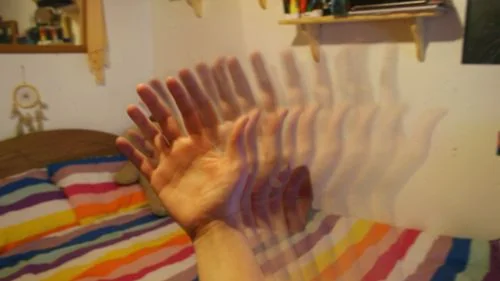
More Examples: Here.
Symmetrical texture repetition:
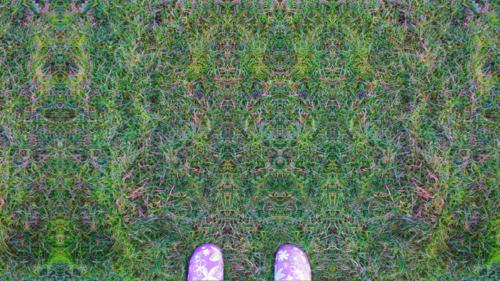
Symmetrical texture repetition can be described as a distinct visual alteration which specifically manifests itself through rough textures such as grass, carpets, asphalt, tarmac, towels, bathroom rugs, gravel, general bracken, dense vegetation, fallen leaves, tree bark and more.
It can be described as the texture becoming mirrored repeatedly over its surface in an extremely intricate and symmetrical fashion that is consistent across itself. This maintains the same level of detail no matter how closely one attempts to look at the distortion.
As these repeating textures are generated, they begin to give rise to a huge array of abstract forms, imagery and patterns embedded within and across the symmetry and are often complemented by the simultaneous experience of enhanced pattern recognition.

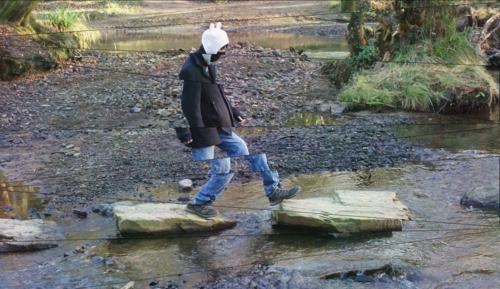
Scenery slicing can be described as an effect which only occurs spontaneously and rarely sustains itself for more than several seconds. It makes the visual field appear as if it has been cut into separate slices with some sort of razor blade in a remarkably clean fashion. These separate slices then proceed to drift slowly away from their original position before disappearing and resetting to normality. The organisation of these slices show great variety and can be as simple as three separate sections or as complex as multiple intricate slices of a moving interlocking spiral or any other possible design.
Geometry -
Geometry can be described as the experience of a person’s field of vision being partially or completely encompassed by fast-moving, kaleidoscopic, and indescribably complex geometric patterns, form constants, shapes, fractals, structures and colour.
Geometry never stands still at any point and remains extremely fast-changing and self-transforming in terms of its shape and style. During this process, the geometry naturally drifts laterally or radially across the visual field to create overlapping webs of many arising and decaying geometric patterns, all of which are visible within a single perceptual frame.
There are eight different levels of visual geometry, each one increasingly complex and incomprehensible. These are defined and documented below:
- Visual Noise – This is the most basic level of geometry and can be experienced in a completely sober state. It can be described as visual noise or static combined with random light and dark red regions that can be seen under the eyelids.
- Motion and Colour – This level is also easily obtainable without hallucinogens and can be described as the appearance of unstructured regions of fleeting flashes and butts of colour.
- Partially Defined Geometry - At this level complex indescribable shapes and patterns begin to show themselves. However, the patterns can be described as strictly 2-dimensional. Geometry at this level is fine, small, and zoomed out in size with a dark colour palette that limits itself to only a few different shades such as blacks, reds and dark purples. They are displayed in front of both the open and closed-eye visual field across a flat veil of geometry, but are significantly more detailed with the eyes closed or within dark environments.
- Fully Defined Geometry – This is the level where the detail in which the geometry displays itself becomes profoundly complex but remains strictly 2-Dimensional. At this point the geometry becomes large in size and extremely intricate in detail with a colour palette that is limitless in its possibilities. They are displayed on both the open and closed-eye visual field across a flat veil of geometry that floats directly in front of the eyes, remaining significantly more detailed with the eyes closed or in dark environments.
- 3-Dimensional Geometry – At level five, the geometry will become fully 3-dimensional in its shape and position across the visual field. This adds a new layer of visual complexity and leaves them sprawled out across the surfaces, walls, objects and furniture of one’s environment instead of displaying themselves across a basic and flat veil in front of one’s visual field.
- Partially Overriding Visual Perception – At this point the geometry has become so intense, vivid and bright that it has begun to block out and replace the external world. At level six the environment begins to be replaced by geometry, with objects and scenery transforming into sprawling masses of geometry or simply being blocked out and covered by them in a manner that impairs the use of one’s normal vision.
- Fully Overriding Visual Perception – As the geometry continues to become more intense, vivid and bright it now completely blocks out and replaces the external world as one’s sense of normal sight becomes completely impaired. This creates the sensation that one is no longer within the external environment but has “broken through” into another reality.
- Level 8A and Level 8B - Once the geometry reaches its eighth and final level, there is not one singular pinnacle of visual geometry but two. It seems that depending on subtle environmental factors and the substance consumed, geometry is capable of forking off into two separate versions of its highest possible level. This means that level eight geometry will have to be separated into two distinct categories of equal intensity. These are known as levels 8A and 8B. Once visual geometry reaches level 8A or 8B, it begins to become structured and organized in a way that presents genuine information to the person experiencing it far beyond the preceding seven levels. This happens through the experience of innately understood geometric representations that feel as though they depict specific concepts and neurological components that exist within the brain. At this point, concepts can be seen as not just embedded within one’s closed or open-eye visual field, but simultaneously felt through indescribably complex physical and cognitive sensations.
8A - Exposure to entirety of neurological structure -
The experience of level 8A can be described as the feeling of being exposed to an infinite mass of geometry comprised entirely of innately readable geometric representations which simultaneously convey every single internally stored concept, memory, and neurological structure stored within the subconscious mind all at once. This results in a profound and overwhelming sensation which is consistently interpreted by people who undergo it as experiencing the entirety of existence, everything, the universe, all that there ever was and all that there ever will be in a single instant.
This experience is not just perceived as visual geometric data but also physically felt in an incomprehensible level of detail throughout every point across itself as complex cognitive and tactile sensations. These sensations convey an equal amount of innately understandable information as that which is experienced through one’s sense of vision and occur simultaneously alongside of it.
At the lower side of level 8A, this effect is something that fluctuates wildly and remains neither constant nor consistent in its intensity. Instead it is temporarily triggered by the experience of a concept. For example, if somebody were to say the word “internet” to a person who is currently undergoing this state, they would see the mind’s concept of the internet immediately manifested in a geometric form amidst the very centre of their visual field. This form quickly branches out from itself in a fashion similar to an ineffable spider diagram. It expands to envelop the concepts which one associates with the internet and then branches out again to include the concepts one associates with those before repeating the process of branching out further to represent the concepts associated with these ad infinitum. Within 2 - 3 seconds, this exponentially expands within a sudden perceptual flash to include every single internally stored concept within the subconscious memory banks of one’s mind simultaneously.
Once this occurs, the sensory overload temporarily disconnects one from their external environment and results in simultaneous ego death before re-stacking them back into reality, until something triggers the process again (usually immediately). The effect snaps trippers in and out of the reality repeatedly and the process is triggered continuously. It’s worth noting however that at this level it can to a certain extent be held at bay through continuous physical movement. This is because movement stops the process from branching out into everything by not giving the effect the time it needs to lock onto a concept.
As dosage is increased, the process becomes easier and easier to trigger whilst extending in its length and duration. This eventually results in a stable state of complete disconnection from the external environment alongside of sustained ego death and a lasting sense of experiencing the entirety of one’s neurological structure.
8B - Exposure to inner mechanics of human consciousness -
The experience of level 8B can be described as the feeling of being exposed to a mass of geometry comprised entirely of innately readable geometric representations which feel as if they convey the organization, structure, framework and inner mechanics of the underlying programming behind all conscious and subconscious neurological processes. This effect is consistently interpreted by those who undergo the experience as perceiving the inner workings of either the universe, consciousness or reality.
At the lower end of level 8B geometry, the experience manifests itself as becoming and being able to physically feel and visually perceive the organization and structure of the underlying programming behind one’s current conscious thought stream. This is presented to trippers in the form of a fast-moving and infinite web or network that contains innately understood and thought stream relevant geometric representations of specific and abstract concepts embedded into each and every one of the connecting points across itself. The experience of these innately readable geometric representations consistently triggers one to visualize and physically feel the concept perfectly through highly detailed conceptual thinking. The ever-shifting network follows the pace and rhythm of one’s internal dialogue perfectly. This creates and manifests new connections in a way that is both physically felt through a powerful sensation and seen embedded within one’s visual field every time any piece of new insight or knowledge is gained.
At the higher end of level 8B geometry, the effect retains its lower levels (described above) but expands itself to include the experience of visually perceiving (through innately readable geometric representations) the architecture of subconscious mind neurological processes outside of one’s normal daily perception.
This experience is not just perceived as visual geometric data, but also physically felt in an incomprehensible level of detail throughout every point across itself as complex cognitive and tactile sensations. These sensations convey an equal amount of innately understandable information as that which is experienced through one’s sense of vision and occur simultaneously alongside of it.
Level 8B geometry is capable of bestowing specific pieces of information onto trippers regarding the nature of reality and human consciousness through the simple experience of them. These specific pieces of information are always immediately felt and understood to be a profound unveiling of an undeniable truth at the time, but afterwards are often found to be ineffable due to the limitations of human English or simply nonsensical due to the disorientation of the accompanying cognitive effects.
Occasionally, however, genuine lessons or coherent messages are innately interpreted through the experience of becoming and descending down into the subconscious faculties of the brain. It’s extremely important to note, however, that the scientific validity of these lessons are very uncertain and should never be immediately accepted as fact without an extremely thorough and sober analysis.
Click the image below for a large gallery of examples of visual geometry that have been sourced from psychedelic art across the internet.
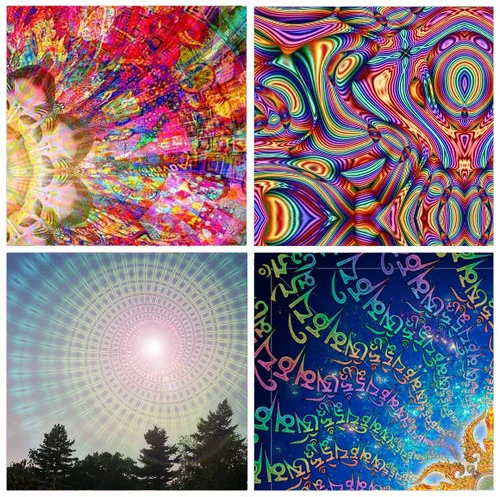
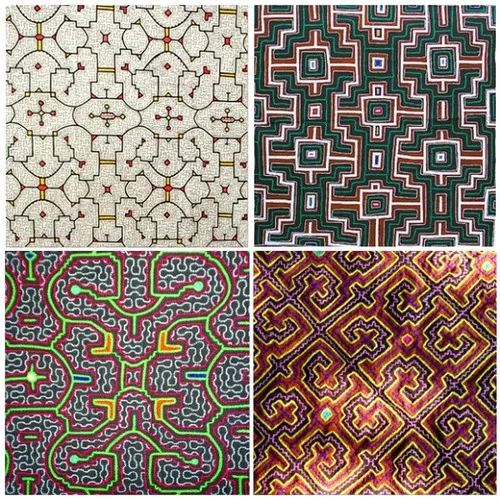
Click the image below and to the left for a large gallery of anthropological examples of psychedelic visuals. The Shipibo people are a large tribe in the amazon rain forest whose culture is heavily involved with ritualized ayahuasca use. These textiles patterns are deliberately made by the Shipibos as artifacts of ayahuasca hallucination, capturing the specific styles of repeating forms better than most modern psychedelic artwork.
Another extremely common component within visual geometry are fractals. These are a concept that exists within mathematics and can be described as complex patterns that repeat infinitely into themselves allowing for the same self similar image to be found no matter how far you zoom into any part of the image. Below is a collection of psychedelic fractals similar in appearance to those found with visual geometry. Click the image below to open up a gallery of examples.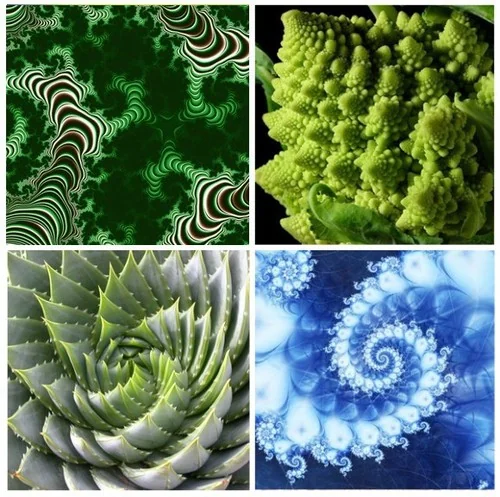
 More Examples: Here.
Hallucinatory states - The fourth sensory effect is perhaps the most profound subjective sensory effect that the psychedelic experience has to offer. They are manifested as 2 distinct effects which come in a variety of differing intensity’s.
External hallucinations:
External hallucinations within psychedelics can be described as visual transformations of specific parts of environment into other concepts. They are progressive in nature, which means they form by arising from patterns or objects and then, over a period of seconds, by drifting, smoothing or locking into an entirely new appearance of still or animated objects, people, animals, concepts, places or anything you could possibly imagine. This is greatly enhanced and fuelled by the separate visual effect of enhanced pattern recognition, causing vague stimuli (which already looks vaguely like abstract concepts due to our inbuilt sense of pareidolia) to transform into extremely detailed versions of what they were already perceived as.
The process of smoothing or locking, which transformations seem to be generated through, requires some minimal amount of focus and concentration to sustain. Losing concentration for an instant can cause the image to fade away or shift into another image.
Holding the eyes still will increase the intensity of the progressive transformation.
Transformations:
Transformations can be described as visual transformations of specific parts of one’s external environment into other concepts. For example, people who undergo this effect will often report seeing parts of the environment shifting into completely different objects with a huge variety in potential artistic styles and differing degrees in terms of the quality of their detail and animation. These hallucinations are progressive in nature, which means they form by arising from patterns or objects and then, over a period of seconds, by drifting, smoothing or locking through a liquid process of self-transformation into an entirely new appearance of still or animated objects, people, animals, concepts, places or anything one could possibly imagine. This is greatly enhanced and fuelled by the separate visual effect of enhanced pattern recognition, causing vague stimuli (which already looks vaguely like abstract concepts due to an inbuilt sense of pareidolia) to transform into extremely detailed versions of what they were already perceived as.
The process of drifting, smoothing or locking (which transformations seem to be generated through) requires some minimal amount of focus and concentration to sustain. Losing concentration for an instant can cause the image to fade away or shift into another image. Holding the eyes still will increase the intensity of the progressive transformation.
Internal hallucinations:
Internal hallucinations can be described as the perception of imagery and scenes which are experienced exclusively with closed eyes and not within the external environment around oneself.
At lower levels, internal hallucinations begin with imagery which does not take up the entirety of one’s visual field and is distinctively separate from its background. These can be described as spontaneous moving or still images of scenes, objects, people, animals, concepts, places or anything one could possibly imagine. They are manifested in varying levels of detail ranging from ill-defined and cartoon-like in nature to completely realistic. They rarely holdform for more than a few seconds before fading or shifting into another image and commonly include:
everyday objects, living things, plants, animals, insects, architecture, structures, shapes, atoms, molecules, complex mathematical formulae/concepts, linguistic concepts, mechanisms, technology, machine creatures, self-replicating machines, people, faces, eyes, body parts, organs, food, cultural references, fictional characters, logos, religious symbolism, creatures, monsters, demons, mythology, furniture and more.
As these states of imagery become increasingly elaborate (proportional to dosage), they eventually become all-encompassing, fully-fledged 3D hallucinations which surround the person in a fashion similar to dreams. This creates the feeling that one has “broken through” into another reality. The things which occur within this perceived alternate reality can be anything but generally fall under common archetypes such as contact with autonomous entities, imagined landscapes and scenarios that can seem so unlike anything previously experienced that they are, in all probability, untranslatable into English.
The content of these experiences are often described to feel transcendental, mystical, spiritual and religious in nature, regardless of the tripper’s theistic beliefs. It is not uncommon for people to report that higher levels of internal hallucination feel infinitely “more real” than anything the person has previously experienced throughout everyday sober living.
Overall, the degrees of intensity can be broken down into five simple levels:
- Enhancement of mental visualization - The lowest level of internal hallucination can be defined as a distinct enhancement of the heightened state of mental visualization that one drifts into when simply daydreaming or using the imagination. It can be described as a short-term detachment from one’s immediate surroundings, during which a person’s contact with reality is blurred and partially substituted by an extremely ill-defined fantasy. The generation of the details of this internal visualization are partially autonomous in nature but mostly controlled by the content of one’s current thought stream.
- Partially defined imagery - This level of internal hallucination generally consists of partially defined, blurred and faded imagery within one’s peripheral vision.
- Fully defined imagery - As the vividness and intensity increases, the imagery eventually becomes fully defined and realistic enough in its appearance, detail and size and starts to display itself within the tripper’s direct line of sight behind closed eyelids.
- Partially defined breakthroughs - As the vividness and intensity further increases, the imagery eventually becomes fully defined, realistic and all encompassing enough in their appearance, detail and size that they begin to display themselves as random flashes of spontaneous scenarios similar to dreams. Although all encompassing, at this level they are partially to completely blurred and transparent in appearance with the tripper’s physical body still feeling connected to the real world. These will usually disappear or shift into another hallucination after a short period of time but are capable of becoming fully grounded and long-lasting in their manifestation.
- Fully defined breakthroughs - Once the internal hallucinations become sufficiently elaborate they eventually become all-encompassing, permanent, ever-shifting alternate realities which appear completely realistic, extremely detailed and highly vivid in their appearance. They also occur along side of accompanying relevant auditory and tactilehallucinations as well as the sensation of a complete disconnection from the physical body.
In terms of the general stylistic appearance of this state, it can range from hallucinations which are stylized and comprised of a condensed geometry-based material or they can be completely solid and realistic in how they look. This particular state can be broken down into three distinct subcomponents.
Autonomous entities -
Autonomous entities can be described as the visual experience of perceived contact with entities or beings which appear to be sentient and autonomous in their behaviour. This is a shared subjective effect component that can manifest as a result of both external and internal hallucinations.
Autonomous entities seem to act as the inhabitants of a perceived independent reality. They are generally expectant of the tripper’s sudden appearance into their realm and often interact with them in various ways. The behaviour of a typical entity can vary wildly and seems to depend heavily on the tripper’s current emotional mind state. For example, although more often than not they will act as loving, kind intelligences, teachers or healers in certain contexts, they are equally capable of acting as indifferent, uncaring or even as malicious tormentors.
Entities can literally take any form but common subconscious archetypes are definitely present and commonly include:
Perfectly ordinary human beings, shadow people, bodiless super intelligent humanoids, aliens, elves, animal beings, giant spheres, insectoids, beings of light, plants, robotic machines, gods, goddesses, demons, fantastical creatures, and more.
Regardless of appearance, there are distinctly different types of entity which one may encounter, each of which represent a particular subsection of one’s own consciousness and can be identified primarily through their personality but also their appearance. These are broken down into 3 separate categories below:
- Representations of the self - The simplest form of entity can be described as a mirror of one’s own personality. It can take any visible form but clearly adopts an identical vocabulary and set of mannerisms to one’s own personality when conversed with.
- Representations of the subconscious - This category of entity can take any visible form but adopts the personality of what seems to be a conscious controller behind the continuous generation of the details regarding one’s current experience and the management of one’s own perspective, personality and internally stored model of reality. When conversed with, this category of entity posses abilities which allow them to directly alter and manipulate one’s current experience and to heal past traumas. They usually adopts an attitude which wants to teach or guide the tripper and will operate under the assumption that they know what is best for them.
- Representations of specific concepts - This category of entity is by far the most varied type in terms of its visual form and immediately perceivable personality. It can be identified as a simulated sentient representation of any internally stored concept and adopts an appropriate personality to fit this to an amazing degree of accurate detail. For example this specific concept could include people you have met throughout your life, fictional characters or symbolic representations of abstract concepts such as emotions or key parts of one’s own personality.
When communicated with through spoken word, the level of coherency in which these entities can communicate with is highly variable but can be broken down into 4 distinct levels. These are listed below as:
- Silence - This level can be defined as a complete unresponsiveness from the side of the entity and an incapability of speech despite their obvious presence within the hallucination.
- Partially defined incoherent speech - This level can be defined as audible linguistic conversational responses and noises which sound like words but do not contain any real content or meaning beyond a vague sense of emotional intent.
- Fully defined incoherent speech - This level can be defined as audible linguistic conversational responses and noises which contain fully defined and understandable words but often lack grammatical structure or general coherency.
- Fully defined coherent speech - This level can be defined as audible linguistic conversational responses and noises which contain fully defined and understandable words as well as a fully defined grammatical sentence structure and general coherency which conveys its point on a level on par with the tripper’s own intellect.
Autonomous entities may also communicate with trippers via a combination of telepathy, visual linguistics, mathematics and morphing coloured structures of different textures. This complex visual language is innately readable and capable of expressing pure meaning in a level of detail far beyond that of standard human English.

Landscapes, sceneries and settings -
Settings, Sceneries, and Landscapes can be described as a shared subjective effect component that manifests as a result of both external and internal hallucinations.
These can be defined as the experience of the setting in which the plot of an external and internal hallucination occurs. These settings manifest with infinite variety.
When explored, the geography of these settings is capable of rendering itself as static and coherent in organization but will usually result manifest as a non-linear, nonsensical and continuously ever-changing layout which does not necessarily obey the rules of everyday physics. In terms of the chosen locations, appearance and style of these settings, they seem to be selected at random and are often entirely new and previously unseen locations. They do, however, play a heavy emphasis on replicating and combining real life locations stored within the tripper’s memories, especially those which are prominent within one’s life and daily routine. Aside from this they commonly include:
planetary systems, galaxies, quasars, jungles, rain forests, deserts, ice-scapes, cities, natural environments, caves, space habitats, vast structures, civilizations, technological utopias, ruins, machinescapes, rooms and other indoor environments, neurons, DNA, atoms, molecules, mitochondria, incomprehensible geometry based landscapes and more.
At other points they act as something which is flown over but are also often experienced through the act of autonomous entities, directly manipulating what you can see and view and intentionally propelling trippers in different directions at disorienting speeds. This forces them to view or pass directly through macroscropic and microscopic scale settings, including both previously experienced landscapes and previously unexperienced landscapes.
Alterations in perspective - Alterations in perspective can be described as a shared subjective effect component that manifests as a result of both external and internal hallucinations. This experience can be defined as an alteration in terms of the perspective in which a hallucination is perceived through. In just the same way as literary plots, these can be experienced through four alternate vantage points which are described and listed below:
- 1st person - This is the most common form of perspective and can be described as the perfectly normal experience of perceiving the scenario from the perspective of one’s everyday self and body.
- 2nd person - This can be described as the experience of perceiving the hallucination from the perspective of an external source of consciousness such as another person, an animal or an inanimate object.
- 3rd person - This is essentially an out-of-body experience and can be described as perceiving the hallucination from a perspective which is floating above, below, behind, or in front of one’s physical body.
- 4th person - This the least common form of perspective and can be described as the experience of perceiving the hallucination from the perspective of multiple or even infinite vantage points simultaneously.
Scenarios and plots - Each of the above components are randomly shuffled and spliced into any number of an infinite variety of potential plots and scenarios. These may be positive or negative to experience and are difficult to define in a comprehensive manner in much the same way that we cannot predict the plot of abstract literature and films. They can however be broken down into extremely basic occurrences which generally entail visiting some sort of setting or a number of them which contain within them interactive, multiple, or lone characters. Alongside of these, completely unpredictable plot devices and events force the tripper to become involved within the specific scenario of the particular trip.
These scenarios and plots can be linear and logical with events that occur in a rational sequence which lead onto each other through cause and effect. They are equally likely however to present themselves as completely nonsensical and incoherent. This means that the plot will occur with spontaneous events which are capable of ending, starting and changing between each other repeatedly in quick succession and as they please. The plots themselves can either be entirely new experiences that are unlike anything experienced within the real world, old experiences such as accurate memory replays or a combination of the two.
In terms of the amount of time in which they are experienced, hallucinatory plots and scenarios usually feel as if they are being experienced in real-time. This means that when 20 seconds have been felt to have passed within the hallucination, the exact same amount of time will have passed in the real world. At other points, however, distortions of time can make themselves present, resulting in plots and scenarios that can feel as if they literally last days, weeks, months, years, or even infinitely long periods of time.
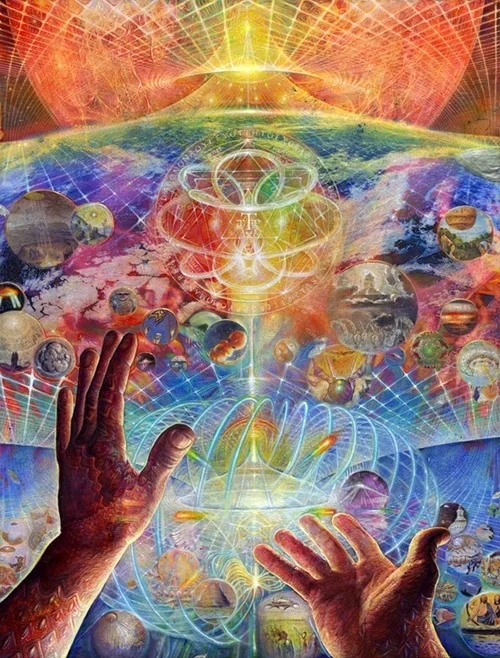
Miscellaneous, Unique and Rare visual effects:
Although there are many universally experienced visual components of a psychedelic experience, you should not allow this guide to give you preconceived notions for two separate reasons. The first reason is that although these descriptions have been carefully worded and extremely thought out, text and images they will never come close to the real experience, the real thing is incomprehensible, logic defying and impossible to translate into two dimensional images and words. The unenglishable factor is one of the few things that all psychonauts can all agree on when it comes to the psychedelic experience.
The second reason is that the psychedelic experience is still a subjective experience and not by any means confined and limited to these visual components. As spontaneous visual effects which are not described anywhere within this article will manifest themselves into trips on the odd occasion. These effects can be anything and usually occur at higher doses. Unique visual effects are completely personal to you and something that nobody else on the planet has ever seen before or will ever likely get to experience again. So remember, do not limit your perception to the components described above, because there is more to the psychedelic experience than words can ever say.
CLICK THE LINK BELOW TO READ THE NEXT SECTION OF THIS 3 PART ARTICLE: