
"Transcending this mortal plane through the power of hallucinogen induced nerd rage; Tripping balls in the name of science, for the good of the cosmos."
MY SOURCES ARE:
Personal experience and the internet alongside of my own speculation, analyses and conclusions. For all you know I could be lying, so please do some independent research and do not say that I didn't warn you.
PLEASE DISREGARD:
Absolutely everything I say; all pieces of writing and information found within this blog should be considered lies and a work of fiction. Do not ever use anything I've ever said here for anything, ever.
I have, after all, made it very clear that my writings are to be disregarded, as in reality I may well have no idea what I am talking about and do not have any formal qualifications on the subject.
Please point out as many flaws in my reasoning, claims, factual information and grammar as possible.
I love all of you. Thank you for reading.



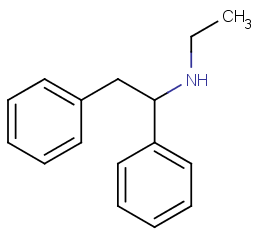
Ephenidine, broken down and described
Dosage (oral)
Threshold: 50 - 75mg
Light: 75 - 110mg
Common: 110 - 150mg
Strong: 150 - 200mg
Heavy: > 200mg +
Duration (oral)
Total duration: 5 - 7 hours
Onset: 10 - 30 minutes
Ephenidine (N-Ethyl-1,2diphenylethylamine) is a dissociative NMDA receptor antagonist and anesthetic drug of the phenethylamine chemical class. It has similar effects to that of the arylcyclohexylamine and morphinan classes of dissociatives.
This compound induces a state referred to as “dissociative anesthesia”
and is used as a recreational drug. Very little is known about this
substance, but it has recently become freely available through online research chemical
vendors where it is being sold as a designer drug. Due to the lack of
research regarding the substance, all discussion regarding the
pharmacology of it is purely based on its structure and subjective effect similarities to other piperidine dissociatives such as diphenidine and methoxphenidine.
In terms of its chemistry, ephenidine is a molecule of the diarylethylamine class. It contains a substituted phenethylamine skeleton with an additional phenyl ring bound to Rα. An ethyl chain is bound to the terminal amine RN of the phenethylamine. Ephenidine is structurally analogous to diphenidine and MXP, but is not a piperidine dissociative. Ephenidine shares a diphenylethylamine skeleton with diphenidine and MXP, but lacks a piperidine substitution.
In terms of its pharmacology, no formal studies have been carried out. However, ephenidine is thought to act as an NMDA receptor antagonist due to its structural similarities to diphenidine. NMDA receptors allow for electrical signals to pass between neurons in the brain and spinal column; for the signals to pass, the receptor must be open. NMDA receptor antagonists close the NMDA receptors by blocking them. This disconnection of neurons leads to loss of feeling, difficulty moving, and eventually the famous “hole.” This compound induces considerable stimulation at higher doses which suggests that it might function as a serotonin, dopamine and noradrenaline reuptake inhibitor in a similar manner to other dissociatives.
The effects listed below are based upon the subjective effects index and personal experiences of PsychonautWiki contributors. The listed effects will rarely (if ever) occur all at once, but heavier dosages will increase the chances and are more likely to induce a full range of effects.
Physical effects:
The subjective physical effects of ephenidine can be broken down into
several components which progressively intensify proportional to
dosage. These are described below and generally include:
- Tactile disconnection
- Spontaneous tactile sensations - The ephenidine body high is a soft and pleasurable tingling sensation which is motionless and all-encompassing with no specific location.
- Stimulation - This compound provides stimulating effects at lower dosages which are less intense than that of diphenidine or methoxphenidine.
- Tactile suppression - This partially to entirely suppresses one’s sense of touch, creating feelings of numbness within the extremities. It is responsible for the anaesthetic properties of this substance.
- Motor control loss - A loss of gross and fine motor control alongside of balance and coordination is prevalent within the ephenidine experience and becomes especially strong at higher doses. This means that one should be sitting down before the onset (unless one is experienced) in case of falling over and injuring oneself.
- Decreased bodily weight - This creates the sensation that the body is floating and has become entirely weightless. This effect is strangely stimulating and encourages physical activities at low to moderate doses by making the body feel light and effortless to move.
- Physical autonomy
- Increased heart rate
Cognitive effects:
The general head space of ephenidine is often described as particularly euphoric and clear-headed in comparison to that of DXM and ketamine. The specific cognitive effects can be broken down into several separate subcomponents which are listed and described below:
- Depersonalization
- Derealization
- Consciousness disconnection
- Memory suppression (ego death)
- Thought deceleration
- Information processing suppression
- Time distortion
- Euphoria
- Introspection
- Déjà vu
- Conceptual thinking
- Compulsive redosing
- Anxiety suppression
- Disinhibition
- Amnesia
- Unity and interconnectedness
Visual effects:
Suppressions:
This substance does not enhance visual stimuli; instead, it tends to degrade and decrease visual aptitude in a variety of ways which generally include:
- Visual disconnection - This eventually results in the ephenidine equivalent of the famous “k-hole” or, more specifically, holes, spaces and voids alongside of structures. However, it is worth noting that particularly heavy dosages must be consumed to reach the deepest state of this component in comparison to other more classical dissociatives such as ketamine or methoxetamine.
- Visual acuity suppression
- Double vision - This component is prevalent at moderate to heavy dosages and makes reading impossible unless one closes an eye.
- Pattern recognition suppression - This effect generally occurs at higher dosages and makes one unable to recognize and interpret perceivable visual data.
Distortions:
Ephenidine exhibits a full array of dissociative distortions and alterations in visual perception which generally includes:
- Drifting (melting, flowing, breathing and morphing) - In comparison to other dissociatives, this effect is more prominent than ketamine, MXE, diphenidine and methoxphenidine. The visual drifting is simplistic, slow and smooth in motion, static in appearance and unrealistic/cartoon-like in style.
- Perspective distortions
- Scenery slicing
Geometry:
The visual geometry found within ephenidine can be described as very distinct and psychedelic when compared to that of ketamine, MXE, methoxphenidine and diphenidine. It is considerably less detailed than that of DXM. It does not extend beyond level 5 and can be comprehensively described through its variations
as simplistic in complexity, algorithmic in style, synthetic in feel,
unstructured in organization, dimly lit in lighting, multicoloured in
scheme, glossy in shading, soft in edges, small in size, slow in speed,
smooth in motion, equal in rounded and angular corners, immersive in
depth and consistent in intensity.
Hallucinatory states:
At high doses, ephenidine can produce a full range of high level hallucinatory states in a fashion that is less consistent and reproducible than that of many other commonly used psychedelics. These effects include:
- Internal hallucinations (autonomous entities; settings, sceneries, and landscapes; alterations in perspective and scenarios and plots) - In comparison to other dissociatives, this effect can occur at heavy dosages, but is considerably less common than the same effect found within psychedelics and deliriants. It can be comprehensively described through its variations as delirious in believability, fixed in style, equal in new experiences and memory replays in content, autonomous in controllability and solid in style.
Auditory effects:
The auditory effects are common in their occurrence and exhibit a range of effects which commonly includes:
Physical health effects, potential addiction and tolerance:
The toxicity and long-term health effects of recreational ephenidine use have not been studied in any scientific context and the exact toxic dosage is unknown. This is because ephenidine is a research chemical with very little history of human usage. Anecdotal evidence from people who have tried ephenidine within the psychonaut community suggests that there are no negative health effects attributed to simply trying this drug at low to moderate doses or using it very sparingly (but nothing can be completely guaranteed).
There is a very strong tolerance build up with ephenidine which results in the need to consume increasingly large doses in order to achieve the same level of effects. This should reset to baseline after 1 - 2 weeks. There may be some addictive potential, but this is still unknown.
Legal issues:
Ephenidine is currently a legal grey area drug worldwide and is
freely available through the use of online research chemical vendors.
However, this does not guarantee anyone to be immune from legal
prosecution should they be found in possession of this substance as the
legality is likely to vary from country to country.
Conclusion:
In conclusion, ephenedine is a deeply profound dissociative which presents a full range of effects at high enough doses. Although it is not an MXE replacement, it is perhaps the best novel dissociative to recently arrive on the legal research chemical scene and is superior to that of diphenidine or MXP in my opinion.
This substance breakdown was written through collaboration between PsychonautWiki contributors Kaylee, PJosepherum, Josikins and Oscarette. The full article is available here.
 fuckedupintelligence likes this
- toxiks likes this
- w45ted reblogged this from disregardeverythingisay
- w45ted likes this
- mirandology likes this
- avialaeandapidae reblogged this from disregardeverythingisay
- butterflymcqueen11 likes this
- emotionalintell likes this
- mayraaddiction likes this
- ashortlifeofhorror likes this
- catthemarauder likes this
- breadsblog likes this
- hawaiianpunch likes this
- wardamnjoshypants likes this
- boo-mobile likes this
- ca-posterchild likes this
- cackster likes this
- disregardeverythingisay posted this