 Disregard everything I say. Every bit of writing here can be considered a work of fiction. Do not ever use anything I've ever said here for anything ever and if you do you are doing so at your own legal risk as I am not responsible for anything that may or may not happen to you. I did after all tell you to disregard everything I say as in reality I actually have no idea what I'm talking about and shall continue to be a retarded teenager with an Internet connection. Please point out as many flaws in my reasoning, claims, factual information and grammar as possible. MYSOURCESARE: Personal Experience, the Internet and nowhere I could just be making things up so don't say I didn't warn you.
The Potential Negative Effects of MDMA and How to Counteract Them
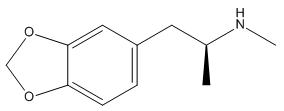
I recently added a comprehensive health effects, potential addiction, and tolerance as well as a legal issues section to everyone of my specific substance guides. I wanted to add this article to specifically include with the MDMA health section; since there was so much information and preventative tips, it was necessary to make it an article on its own. This was so all the information was in one simple place, so people no longer have to trawl through random forum posts. Once again, this article is not written by me, but the same friend of mine who wrote the previous article on “An Explanation of the Effect of Hallucinogens upon the Nervous System".
Negative Effects on Health
Serotonin syndrome occurs when there is an excess of serotonergic activity in the central nervous system (CNS). Serotonin syndrome can often be overcome by resting in a cooler environment. However, occasionally it will turn into a medical emergency, which can be fatal. If dangerously excessive amounts of MDMA are taken, serotonin syndrome may occur.
- Autonomic
Excessive sweating, high body temperature, high blood pressure, increased heart beat, pupillary dilatation, nausea, diarrhoea, shivering.
- Neuromotor
Twitching, restlessness, tremor, in-coordination rigidity, teeth chattering, reduced opening of jaw, seizures.
- Cognitive-behavioural
Confusion, agitation, anxiety, persistent elevated/irritable mood, insomnia, hallucinations, headache.
Dehydration can occur when taking MDMA; this happens when not enough fluid is consumed to replenish that already lost. MDMA can cause excessive sweating, diarrhoea and hyperthermia on its own, which can exacerbate the dehydration. To prevent dehydration occurring, fluids should be drunk before thirst is felt. Thirst is the preliminary indicator of dehydration. As many ions/electrolytes (essential for many bodily functions) in the body are lost while on MDMA, the best fluids to drink are sports/energy drinks, or water with a tablespoon per litre of table salt added but normal water will always suffice regardless. This restores the electrolytes lost via sweating or diarrhoea.
It is also important to regulate the amount of fluid consumed. If too much is drunk, hyponatremia (water intoxication) can occur. This interferes with the sodium levels, making them lower than normal levels. Symptoms include include nausea and vomiting, headache, confusion, lethargy, fatigue, appetite loss, restlessness and irritability, muscle weakness, spasms, or cramps, seizures, and decreased consciousness or coma. To prevent this occurring, fluid must be drunk at the correct rate, ensuring you sip the water at a slow rate:
During active e.g. dancing: between 250ml and 500ml every hour.
When inactive: around 250ml every hour.
MDMA interferes with the body’s ability to regulate temperature. This is because it causes vasoconstriction, where the blood vessels closest to the skin constrict, preventing the body from ridding itself of excess heat. Hyperthermia can occur, which is where the body overheats. This can be controlled by staying hydrated and taking breaks from physical activity. If hyperthermia occurs, cease physical activity immediately, and apply cool (but not freezing cold) flannels to the forehead, chest and groin.
Improving the MDMA Experience
Taking supplements before/after taking MDMA is known as pre/post-loading. There are a number of supplements that can improve the MDMA experience and help with some of the negative effects and neurotoxicity.All these, apart from the SSRIs (prescription only) are cheap and freely available through Google, Amazon, and local health food stores.
5-HTP: This is the precursor to serotonin, and taking it after taking MDMA helps restore levels of serotonin in the body. Due to the depletion of serotonin after taking MDMA, a comedown is often felt the next day or upon ‘coming-down’. Symptoms are very similar to depression, and can include impaired attention, focus, and concentration, as well as drive and motivation, aches and pains, exhaustion, and feelings of sadness. Taking 5-HTP can help relieve these effects, by replenishing serotonin.
SSRIs: If you have access to SSRIs (specific serotonin reuptake inhibitors), these can be taken after a buzz to help restore serotonin levels also. However, taking them before an MDMA buzz appears to dull the buzz.
Magnesium: There is a nerve in the jaw called the trigeminal nerve, which is responsible for innervating the jaw. This nerve is especially sensitive to changing levels of (among other things) serotonin. This causes the jaw to clench and the teeth to grind, known as bruxism or “gurning". Magnesium can be taken before MDMA, and acts as a muscle relaxant.
Vitamin C: Vitamin C has been proven to be effective when combating neurotoxicity of MDMA.
Pre/Post-Loading Recipe
One Hour Before
100mg of Magnesium
1000-2000mg of Vitamin C
After
200mg of 5-HTP
Another effect caused by MDMA is the release of anti-diuretic hormone (ADH). ADH is responsible for regulating urination. If more ADH is released, urination will become difficult. This, coupled with the vasoconstriction, makes urination almost impossible. If heat is applied to the genitals, especially when male, this helps reduce the vasoconstriction, and make urination easier.
MDMA can be taken safely without using any of these supplements, and most dangers generally come from overuse, over a long period of time, or unnecessary excessive doses. The information above can be used to seriously diminish the negative health effects and sometimes notoriously unavoidable comedown that is experienced for some in the days after taking MDMA.
An Explanation of the Effect of Hallucinogens upon the Nervous System at the level of the Neurone
This article is intended to be a detailed explanation of how hallucinogens affect the brain, via the inhibition and excitation of neurotransmitters in the nervous system. This article is not written by me, but an extremely close friend of mine who is significantly more knowledgeable when it comes to science, and specifically chemistry. She is also my editor and grammar-checker, as well as scientific advisor and participator in 100% of the field of research that has gone into the previous several specific substance guides which have been posted on this website.
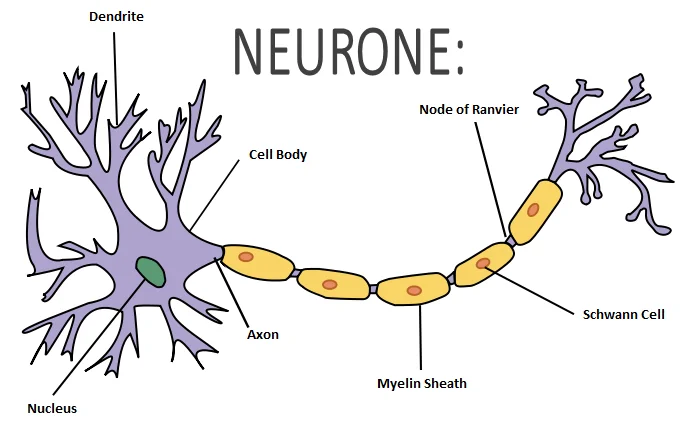 A neurone is a cell that carries electrical impulses. Information is processed and transmitted by the nervous system in the form of electrical and chemical signals. The neurone primarily comprises of a cell body, an axon and dendrites. The axon is a nerve fibre that carries electrical signals away from the cell body, to the end of the neurone. The end of the neurone then connects to the dendrites on the cell body of the next neurone, via a synapse. Drugs cause their effects due to their action on the neurones in the nervous system.
A nerve impulse is a self-propagating wave of electrical disturbance that travels along the surface of the axon membrane. This electrical disturbance comprises of a temporary reversal of the electrical potential difference; not an electrical current. The axon is usually negatively charged compared to the outside of the axon, and this is known as the resting potential, the value of which is usually around -65mV. When a stimulus is received, a reversal in electrical potential difference is caused, and this is known as the action potential (normally around +40mV).
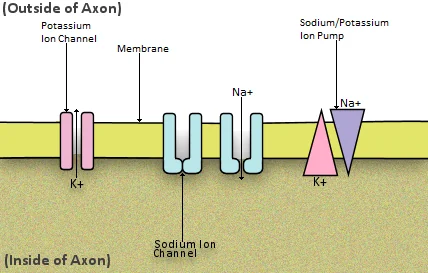
To begin, the inside of the axon is negatively charged, compared with the outside of the axon. The change in potential difference, that is needed to fire off an action potential, is controlled by the movement of sodium and potassium ions in and out of the axon. An ion is a positively or negatively charged molecule. This movement occurs via the action of ion pumps and channels. The ions cannot just diffuse in and out of the axon uncontrollably; this diffusion is prevented by a membrane around the axon. Periodically placed along the membrane are proteins that act as channels for ions to pass through. Sodium gated channels and potassium gated channels open and close to allow the ions to pass through only at specific times. Sodium-potassium pumps transport Na+ and K+ in and out of the axon.
The inside of the axon starts at around -65mV compared to the outside of the axon. An action potential is reached when the axon is at +40mV compared to the outside of the axon. This value of +40mV is reached by the movement of sodium and potassium ions in and out of the axon. Sodium-potassium pumps transport 2K+ into the axon for every 3Na+ transported out of the axon. Both sodium and potassium are in the forms of positive ions here. However, more sodium is removed from the axon compared to the potassium brought. This means the overall electro negativity is decreasing in the axon, and the axon is getting closer to reaching the potential difference of +40mV. Sodium ions then begin to diffuse back into the axon naturally, and potassium ions diffuse back out. At this stage however, potassium gated channels are open, whereas sodium gated channels are closed. This means the K+ can diffuse out faster than the Na+ can diffuse back into the axon. This increases the potential difference further between the inside and the outside of the axon.
Once an action potential has been established, it “moves” along the axon in a neurone. The action potential doesn’t move in a physical sense of the word; the reversal of electrical charge is instead reproduced at different points along the axon, in a “Mexican wave” effect. One point in an axon will become depolarised (depolarisation is a change in a cell’s membrane potential, making it more positive, or less negative), and this depolarisation is a stimulus for the next region of the axon to depolarise. As the next region depolarises, the previous region returns to normal and repolarises.
Eventually, the action potential will reach the end of an axon, known as a synaptic knob. A synapse occurs at a point where the axon of one neurone meets the dendrite of another neurone.
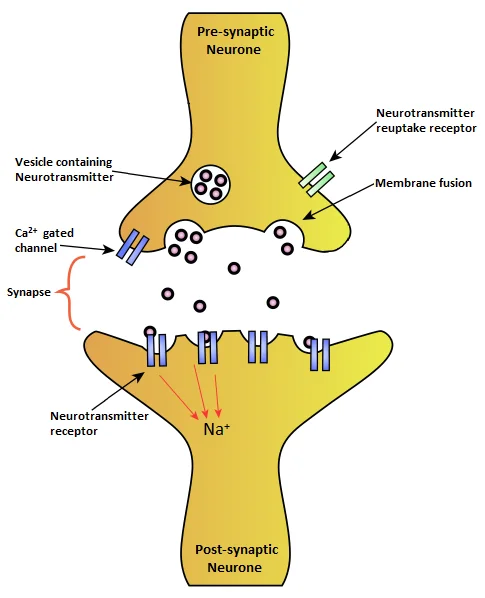
When an action potential reaches the synaptic knob, the calcium ion channels open, and Ca2+ enters the synaptic knob. As the Ca2+ enters, the vesicles containing the neurotransmitters fuse with the membrane of the pre-synaptic neurone, and the neurotransmitters are released into the synapse. The neurotransmitter molecules attach to the receptors on the sodium ion channels, which allow Na+ ions to diffuse into the post-synaptic neurone. This influx of Na+ generates a new action potential in the post-synaptic neurone. An enzyme is then released into the synapse that breaks the neurotransmitters down into small, precursor molecules. These fragments are reabsorbed by receptors on the pre-synaptic neurone, and they are then used to remake the neurotransmitters. The neurotransmitters are then ready to release when a new action potential reaches the pre-synaptic neurone. This reabsorbing prevents the neurotransmitters from continuously binding with the sodium ion channels on the post-synaptic neurone, and firing off repeated new action potentials.
Neurotransmitters can have one of two effects. Excitatory neurotransmitters/receptors make it more likely that a new action potential will fire off. Inhibitory neurotransmitters/receptors make it less likely that a new action potential will fire off. Many drugs work by affecting the way neurotransmitters work. There’s a handy table listing the effects of different neurotransmitters right here.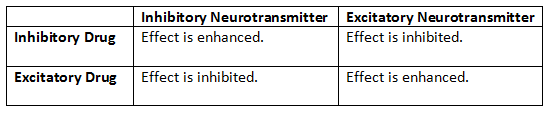 Drugs can stimulate the nervous system by creating more action potentials in the post-synaptic neurone. They can do this by mimicking a neurotransmitter, stimulating the release of more neurotransmitter, inhibiting the re-uptake receptor on the pre-synaptic neurone or by inhibiting the enzyme that breaks down the neurotransmitter. Agonists are chemicals that bind to a receptor and trigger a response, often by mimicking the neurotransmitter.

Drugs are also capable of inhibiting the nervous system by creating fewer action potentials in the post-synaptic neurone. This can be done by inhibiting the release of neurotransmitter, or blocking receptors on the sodium/potassium ion channels. This reduces the body’s response to impulses. Antagonists work by blocking or dampening signals of agonist drugs/neurotransmitters.
The Action of Different Drugs on the Nervous System
Psychedelics mostly act on serotonin receptors, and act as full or partial agonists. LSD, LSA, psilocin, DMT, mescaline and the 2Cx family all work as partial agonists. The table below shows a few of the commonly known psychedelics, and their action on receptors. The 5HT receptor system acts via the neurotransmitter of serotonin, D1 acts via dopamine, and the A-2 system acts via noradrenaline. 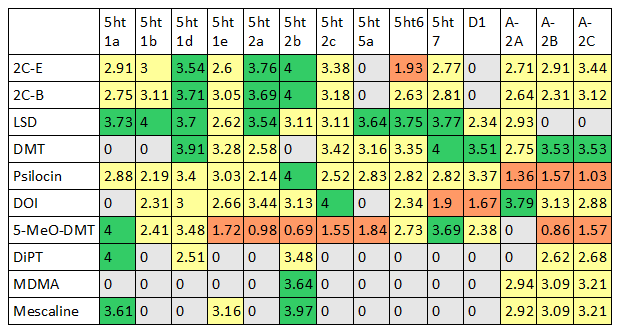 The scale is from 0 to 4, with 4 being the highest affinity. The chart above is colour coded with a traffic light system. Green refers to an affinity of 3.5-4, representing a very high affinity. Yellow is 2-3.5, representing medium affinity. Orange is below 2. Any value that is orange/below 2 should be disregarded, as the affinity isn’t high enough to cause any great effect. Grey is 0, meaning no affinity at all to the receptor.
The current scientific consensus is that the 5HT-2A receptor is the one targeted by drugs responsible for psychedelic experiences. However, drugs like mescaline and MDMA are both capable of inducing psychedelic experiences on par with that of psilocin and LSD, but show no affinity to the 5HT-2A receptor.
LSD, for example, works by fitting into the receptors on the post-synaptic neurone. It has a higher affinity than serotonin itself for the serotonin receptors, specifically 5HT receptors, and therefore prevents serotonin binding to the receptors by competing with it.
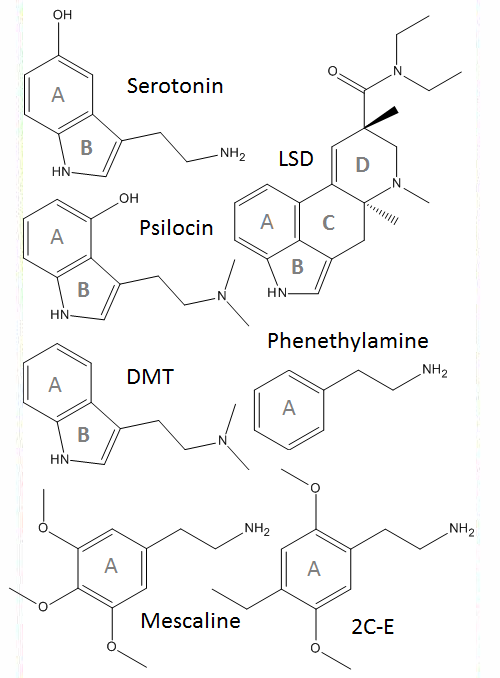
The diagram above shows the structural similarities between the psychedelics. The three classes (phenethylamines, lysergamides and tryptamines) all contain the same chemical rings, which have been labelled. A represents the benzene ring, which all three classes contain. B represents the pyrrole ring, in both tryptamines and lysergamides. A and B together form the indole ring. C (cyclohexane) and D are only contained in the lysergamides, possibly contributing to its potency.
Dissociatives act as non-competitive NMDA receptor antagonists, meaning they inhibit glutamate molecules. Glutamate is the neurotransmitter responsible for telling the body when it’s “awake", for building up memories and for regulating awareness, mood and movement. NMDA receptors allow for electrical signals to pass between neurones in the brain and spinal column; for the signals to pass, the receptor must be open. NMDA receptor antagonists close the NMDA receptors, by preventing the glutamate from binding to it. This disconnection of neurones leads to loss of feeling, difficulty moving,and eventually the k-hole. It is also this disconnection that causes the anaesthetic properties of dissociatives.
PCP, MXE and ketamine fall into the arylcyclohexylamine class of chemicals, which possess NMDA receptor antagonist properties. DXM/DXO fall into the morphinan class of chemicals. Nitrous oxide, however, is unique, due to being an inorganic molecule. Another inorganic dissociative is xenon, which is also an NMDA receptor antagonist. However, information on recreational use is limited.
Deliriants are antagonists towards the cholinergic receptors, blocking the neurotransmitter acetylcholine. Acetylcholine is the neurotransmitter responsible for regulating the sleep cycle, dreaming alertness, and for building memory. The prolonged suppression of cholinergic activity and REM sleep due to deprivation or amphetamine abuse creates psychotic episodes which may be defined as bursts of dream activity erupting spontaneously into waking states. Deliriants could therefore be considered to trigger a similar state by blocking acetylcholine and suppressing cholinergic system activity. Causing trippers to begin dreaming whilst maintaining full conscious awareness. Deliriants are known for causing people to have no memory of their experience, tying in with their anticholinergic effects. Anticholinergics are split into two class; anti-muscarinic (act on muscarinic acetylcholine receptors) and anti-nicotinic (act on nicotinic acetylcholine receptors). Anti-muscarinic drugs include DPH, scopolamine and atropine. They are all competitive antagonists, meaning they bind to the receptor, but do not activate it.
Atypical drugs don’t fit into the three basic hallucinogen categories, and act in a number of different ways. MDMA is an entactogenic drug that works as a re-uptake inhibitor targeting serotonin receptors. This leads to the prevention of the re-uptake of the serotonin. More serotonin in then in the synapse, so the receptors on the post-synaptic neurone continue to be fired off. Serotonin is known for its control of mood, often being referred to as “the happy chemical", along with dopamine. Muscimol is a GABA agonist. Salvia is a k-opioid receptor agonist. The k-opioid receptor is responsible for altering the perception of pain, consciousness, gravity, fear, mood and motor control. This explains the sensations of intense gravity, painful tingling and paranoia during Salvia trips. Ibogaine is 5HT-2A agonist, an NMDA antagonist and the k-opioid receptor agonist. The tryptamine core of ibogaine causes the affinity to the 5HT system.
This section has described the chemistry and neuroscience at the basic level of the neurone. However, I intend to write a second part to this article, which describes in detail the effects of hallucinogens, and specifically psychedelics, on specific parts of the brain, and how this translates into the subjective components of the psychedelic experience.