 Disregard everything I say. Every bit of writing here can be considered a work of fiction. Do not ever use anything I've ever said here for anything ever and if you do you are doing so at your own legal risk as I am not responsible for anything that may or may not happen to you. I did after all tell you to disregard everything I say as in reality I actually have no idea what I'm talking about and shall continue to be a retarded teenager with an Internet connection. Please point out as many flaws in my reasoning, claims, factual information and grammar as possible. MYSOURCESARE: Personal Experience, the Internet and nowhere I could just be making things up so don't say I didn't warn you.
The Potential Negative Effects of MDMA and How to Counteract Them
I recently added a comprehensive health effects, potential addiction, and tolerance as well as a legal issues section to everyone of my specific substance guides. I wanted to add this article to specifically include with the MDMA health section; since there was so much information and preventative tips, it was necessary to make it an article on its own. This was so all the information was in one simple place, so people no longer have to trawl through random forum posts. Once again, this article is not written by me, but the same friend of mine who wrote the previous article on “An Explanation of the Effect of Hallucinogens upon the Nervous System".
Negative Effects on Health
Serotonin syndrome occurs when there is an excess of serotonergic activity in the central nervous system (CNS). Serotonin syndrome can often be overcome by resting in a cooler environment. However, occasionally it will turn into a medical emergency, which can be fatal. If dangerously excessive amounts of MDMA are taken, serotonin syndrome may occur.
- Autonomic
Excessive sweating, high body temperature, high blood pressure, increased heart beat, pupillary dilatation, nausea, diarrhoea, shivering.
- Neuromotor
Twitching, restlessness, tremor, in-coordination rigidity, teeth chattering, reduced opening of jaw, seizures.
- Cognitive-behavioural
Confusion, agitation, anxiety, persistent elevated/irritable mood, insomnia, hallucinations, headache.
Dehydration can occur when taking MDMA; this happens when not enough fluid is consumed to replenish that already lost. MDMA can cause excessive sweating, diarrhoea and hyperthermia on its own, which can exacerbate the dehydration. To prevent dehydration occurring, fluids should be drunk before thirst is felt. Thirst is the preliminary indicator of dehydration. As many ions/electrolytes (essential for many bodily functions) in the body are lost while on MDMA, the best fluids to drink are sports/energy drinks, or water with a tablespoon per litre of table salt added but normal water will always suffice regardless. This restores the electrolytes lost via sweating or diarrhoea.
It is also important to regulate the amount of fluid consumed. If too much is drunk, hyponatremia (water intoxication) can occur. This interferes with the sodium levels, making them lower than normal levels. Symptoms include include nausea and vomiting, headache, confusion, lethargy, fatigue, appetite loss, restlessness and irritability, muscle weakness, spasms, or cramps, seizures, and decreased consciousness or coma. To prevent this occurring, fluid must be drunk at the correct rate, ensuring you sip the water at a slow rate:
During active e.g. dancing: between 250ml and 500ml every hour.
When inactive: around 250ml every hour.
MDMA interferes with the body’s ability to regulate temperature. This is because it causes vasoconstriction, where the blood vessels closest to the skin constrict, preventing the body from ridding itself of excess heat. Hyperthermia can occur, which is where the body overheats. This can be controlled by staying hydrated and taking breaks from physical activity. If hyperthermia occurs, cease physical activity immediately, and apply cool (but not freezing cold) flannels to the forehead, chest and groin.
Improving the MDMA Experience
Taking supplements before/after taking MDMA is known as pre/post-loading. There are a number of supplements that can improve the MDMA experience and help with some of the negative effects and neurotoxicity.All these, apart from the SSRIs (prescription only) are cheap and freely available through Google, Amazon, and local health food stores.
5-HTP: This is the precursor to serotonin, and taking it after taking MDMA helps restore levels of serotonin in the body. Due to the depletion of serotonin after taking MDMA, a comedown is often felt the next day or upon ‘coming-down’. Symptoms are very similar to depression, and can include impaired attention, focus, and concentration, as well as drive and motivation, aches and pains, exhaustion, and feelings of sadness. Taking 5-HTP can help relieve these effects, by replenishing serotonin.
SSRIs: If you have access to SSRIs (specific serotonin reuptake inhibitors), these can be taken after a buzz to help restore serotonin levels also. However, taking them before an MDMA buzz appears to dull the buzz.
Magnesium: There is a nerve in the jaw called the trigeminal nerve, which is responsible for innervating the jaw. This nerve is especially sensitive to changing levels of (among other things) serotonin. This causes the jaw to clench and the teeth to grind, known as bruxism or “gurning". Magnesium can be taken before MDMA, and acts as a muscle relaxant.
Vitamin C: Vitamin C has been proven to be effective when combating neurotoxicity of MDMA.
Pre/Post-Loading Recipe
One Hour Before
100mg of Magnesium
1000-2000mg of Vitamin C
After
200mg of 5-HTP
Another effect caused by MDMA is the release of anti-diuretic hormone (ADH). ADH is responsible for regulating urination. If more ADH is released, urination will become difficult. This, coupled with the vasoconstriction, makes urination almost impossible. If heat is applied to the genitals, especially when male, this helps reduce the vasoconstriction, and make urination easier.
MDMA can be taken safely without using any of these supplements, and most dangers generally come from overuse, over a long period of time, or unnecessary excessive doses. The information above can be used to seriously diminish the negative health effects and sometimes notoriously unavoidable comedown that is experienced for some in the days after taking MDMA.
MDMA, broken down and described
Onset : 20 - 70 minutes
Duration : 3 - 5 hours
Normal After Effects : up to 24 hours
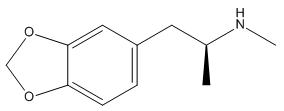
MDMA (3,4-methylenedioxy-N-methylamphetamine) is an entactogenic drug of the phenethylamine and amphetamine family. It was first synthesized in 1912 by the chemist Anton Köllisch as a potential medicine for the stopping of abnormal bleeding. Over the following 65 years, MDMA was largely forgotten about, with the first reports of it being used recreationally dating back to 1970. It was finally scheduled as a controlled substance in 1985 when its use began to spread out to mainstream society and rave culture.
MDMA acts as a releasing agent of the neurotransmitters known as serotonin, dopamine and norepinephrine, the neurotransmitters in charge of pleasure, motivation and focus. It does this by inhibiting the reuptake and reabsorption of the neurotransmitters after they have performed their function of transmitting a neural impulse. Essentially allowing them to accumulate and be reused, causing physically stimulating and euphoric effects.
Many people across online psychedelic community’s seem to think that reports of MDMA’s psychedelic effects are an outright myth but these are simply claims from people who have not experienced it for themselves. It does produce extremely powerful psychedelic effects and hallucinations under the right circumstances, particularly at high doses and especially when combined with marijuana. These effects are on par with Mushrooms and LSD and unlike anything found on commonly used psychedelics. Not presenting themselves consistently but just as readily induced within people even if they have no previous experience with tripping on traditional psychedelics. They can happen at any point throughout an MDMA buzz but seem to be much more common during the comedown.
I will now describe and breakdown the consistent subjective effects that are experienced during such a trip…
Physical effects:
The body high of MDMA is extremely euphoric and overwhelming. It can only be described as an intensely pleasurable, energetic and tingling sensation that encompasses your entire body. At it’s highest level this becomes so overwhelming that people find themselves writhing and trembling on the floor in complete ecstasy. Accompanied by an overall enhancement of tactile sensations such as touching, hugging, kissing and sex.
It is extremely stimulating, encouraging people to move around, run, dance, climb and generally engage in physical activities. Eventually becoming so stimulating that remaining completely still and motionless becomes difficult or impossible, as the body begins to involuntarily shake and vibrate, resulting in an extreme unsteadiness of the hands and a general lack of motor control. A persons eyeballs may even begin to spontaneously wiggle back and forth in a rapid motion at higher doses, causing vision to become blurry and temporarily out of focus. A feeling can be described as a bizarrely pleasurable release of pent up energy.
As with all stimulants, jaw clenching and a grinding of the teeth is an almost universal experience, there is a nerve in the jaw called the trigeminal nerve, which is responsible for innervating the jaw. This nerve is especially sensitive to changing levels of serotonin. Something that if not properly prepared for can result in an involuntary minor to serious shredding of the tongue and cheek walls. It can easily be counteracted however by the use of chewing gum, something that is considered essential to all MDMA users.
Dry mouth and dehydration are also a universal experience with MDMA and a product of increased heart rate and the extreme motivation to engage in strenuous physical activities that it induces. While it is important to avoid becoming dehydrated, especially when out dancing in a hot environment, there have been a number of users suffering from water intoxication through over drinking. Something that can easily be avoided by manually limiting the amount of water that you are drinking and making sure to only sip at liquids unless you are genuinely dehydrated.
It is also worth noting that higher doses of MDMA result in an overall difficulty when it comes to urination, an effect that is completely temporary and harmless. Occurring due to MDMA’s promotion of the release of anti-diuretic hormone (ADH). ADH is responsible for regulating urination. Put simply, if more ADH is released, urination becomes less forthcoming. The best way to deal with this is to relax and wait patiently, avoiding forceful exertion at all costs.
Cognitive effects:
The thought patterns, behavioral effects and mental processes triggered by MDMA are easily it’s most defining and famously therapeutic feature. It is a head space which is characterized by,
- Greatly accelerated and stimulated thought patterns
- Emotional euphoria and feelings of extreme happiness
- A sense of general well-being and contentedness
- Decreased negative emotion and behavior such as stress, anxiety, fear, and paranoia
- Increased sociability and feelings of communication being easy or simple
- Increased urge to communicate with others
- Increased empathy and feelings of closeness or connection with others
- Reduced insecurity, defensiveness, and fear of emotional injury
- Decreased irritability, aggression, anger, and jealousy
- A sense of increased insightfulness and introspection
The most profound of these effects are the ones regarding sociability, increased empathy and a desire to communicate with others. These effects are so strong that they provide a specific set of positive and therapeutic changes in perception that can last from weeks to a lifetime after the experience. If substances such as Mushrooms and LSD are for solving personal problems, MDMA is for solving interpersonal problems.
There is no other substance that creates such strong feelings of love, and empathy for the people around you, making it extremely powerful in mending preexisting emotional disputes and reinventing the bonds between friendships and romantic partners. A feeling that is triggered by the complete breakdown of unnecessary cultural and social boundaries that hold us all back. Allowing people to truly express their emotions and understand the perspectives of other people whilst maintaining full control over their actions. With time and repeated use however, this effect becomes severely diminished as the perspective it instills becomes fully grounded and already in place, making people feel merely stimulated and euphoric with no new found urges to communicate with others. It’s because of this that when used for it’s mentally therapeutic as opposed to physical effects, it should used sparingly as the magic quickly disappears with overuse.
Once the peak effects begin to diminish and a person starts to come down, feelings of mental exhaustion begin to take over. A feeling that can only be described as a hazy and relaxing stupour, which at higher doses can manifest itself as a complete and temporary loss of ego and short term memory. It is usually here where a person decides to go to sleep, but it can be used as an excellent opportunity to explore ego death without necessarily being accompanied by disorientating psychedelic visuals.
Visual effects:
The visuals experienced with MDMA are just as powerful as any classic psychedelic when they hit you. They can be described as similar to LSD in terms of their fast kaleidoscopic movement. While still playing much more of an emphasis on imagery and structures within the closed eye visuals than anything found within a typical LSD trip. Making them surprisingly closer in terms of appearance to mushrooms and Ayahuasca but with a synthetic and somehow almost menacing feeling. Following a sinister and ominous style with a colour scheme to them that generally consists of greys and blues. Although I would definitely describe these visuals as consistently sinister and ominous I am not speaking of them in a negative way. This just seems to be the style of these visuals when compared to traditional psychedelics and has never bothered me or any of my friends.
At extremely high doses of MDMA level 6 psychedelic visuals and the sensation of experiencing the entire universe at once eventually become present. This is not something I have experienced personally but has been reported by a friend who ended up taking a very large dosage, causing him to vomit and momentarily collapse on the floor.
The distortions experienced with MDMA are felt at low to moderate doses and fairly common, usually described as a general enhancement of visual acuity, accompanied by extremely minor distortions such as tracers. Many people also report that objects within the visual field become somehow fluffier or smoother around the edges.
The hallucinations and imagery experienced with MDMA induce extremely vivid and realistic hallucinatory states. Capable of producing open eye hallucinations that happen at proportionally low levels of intoxication when compared to traditional psychedelics. What I mean by this is that while the classical psychedelics only produce vivid 3D hallucinations at the highest levels of breakthrough psychedelic experience, MDMA on the other hand can spontaneously produce them on rare occasions when a person is feeling close to sober. Or when they have fully come down off of the drug. These are usually completely solid and not made out of condensed visuals as with DMT or Mushrooms, usually laid out over your external environment in a fashion that shares characteristics with deliriants.
MDMA hallucinations usually seem to be completely random in nature, devoid of the spiritual and religious undertones that are near universal with classical psychedelics. Often following plots of events that you would expect to happen in real life and seamlessly blending in with the external environment. For example people could be casually holding objects or performing actions which you would expect them to in real life before disappearing and dissolving under further inspection. Common examples of this include seeing people wearing glasses when they are not and mistaking objects in the peripheral vision as human beings. Occasionally these can become spontaneous hallucinatory scenarios, briefly detaching you from the external world before placing you back into it moments later. Generally consisting of random objects, people, places and nonsensical plots.
Auditory effects:
The experience of audio hallucinations on MDMA is extremely common, usually occurring at the end of the night and almost always consisting of memory replays from the previous several hours. Commonly manifesting themselves as spontaneous clips of the music that was played and garbled voices of the people that were spoken too. These can become as loud in volume as the level of noise heard at any rave or house party and can occasionally become complex enough to manifest themselves as intricate, previously unheard and completely coherent songs or symphonies of any style.
Hypnagogic Scenarios:
One of MDMA’s unique psychedelic effects are something that only presents itself once a person has comedown and decided to go to sleep. It’s at this point where the brain natural hypnagogia (the state between waking and sleep) seems to become vastly potentiated. This places you in extremely vivid scenarios that play out somewhat like a film. These can be hallucinations of anything and are often nonsensical but are usually memory replays associated with the people, places and events of the past several hours. In terms of the general plot and how they look, these scenarios are easy to recall immediately after wards, but what was said by the people in them is always impossible.
Although these scenarios become increasingly elaborate as you get closer to falling asleep, once it finally happens, dreams do not seem to be potentiated in any noticeable way.
Potential mechanisms behind these effects:
There are two potential mechanisms through which MDMA could trigger psychedelic experiences under certain circumstances.
The first stems from the way in which our bodies process MDMA. Studies testing the blood and urine of people under the influence of MDMA have shown that 7% of it seems to metabolized into MDA. A drug that is classed as a psychedelic and entactogenic drug of the phenethylamine and amphetamine family. MDA is an extremely powerful and visual psychedelic, perhaps accounting for the closed and open eye visuals experienced at high doses of MDMA.
A second likely candidate is in my opinion the most probable cause for the unique hallucinations and hypnagogic scenarios that can occasionally be experienced. This mechanism stems directly from the way in which MDMA affects the brain, which is as a releasing agent of serotonin, norepinephrine, and dopamine. Increased amounts of dopamine have been shown by scientific studies to trigger both dreaming and schizophrenic delusions. MDMA hallucinations and hypnogogic scenarios could there fore be considered dopamine triggered dreams that are manifested while conscious.
Tips on inducing these effects:
If you want to help induce these effects I suggest you take whatever you consider to be a moderate-strong dose for your tolerance. For me this seems to be around 0.6g +. Make sure you have pure MDMA and not miscellaneous pills of an undetermined nature. If this is combined with a bong and a large amount weed psychedelic effects almost always occur.
This generally seems to do it for most people but since MDMA seems to be a strange sort of selective psychedelic it may not for others. I and others have tripped when we haven’t smoked weed just a few times but have consistently tripped when we have. Every damn time.
Conclusion:
MDMA is an entactogen first and a psychedelic second, best used for resolving interpersonal problems, strengthening bonds and hard core recreational partying. It’s psychedelic properties are extremely unique and interesting, something that I take advantage of and deliberately attempt to induce every time I happen to be taking this substance.
It’s important to keep in mind however, that the over use of this substance can result in severe neurotransmitter depletion and serotonin syndrome, it is because of this that I recommend you do your research before even considering the use of this drug. Coming from personal experience, it should never be used more than once a month or preferably no more than a couple of times a year, if you are looking to get the most out of this drug. We will be posting a comprehensive set of instructions on greatly minimizing the potentially harmful effects of MDMA using freely available serotonin supplements, magnesium and vitamins very soon. Allowing it to be vastly potentiated, used with greater frequency and with fewer side effects.