
"Transcending this mortal plane through the power of hallucinogen induced nerd rage; Tripping balls in the name of science, for the good of the cosmos."
MY SOURCES ARE:
Personal experience and the internet alongside of my own speculation, analyses and conclusions. For all you know I could be lying, so please do some independent research and do not say that I didn't warn you.
PLEASE DISREGARD:
Absolutely everything I say; all pieces of writing and information found within this blog should be considered lies and a work of fiction. Do not ever use anything I've ever said here for anything, ever.
I have, after all, made it very clear that my writings are to be disregarded, as in reality I may well have no idea what I am talking about and do not have any formal qualifications on the subject.
Please point out as many flaws in my reasoning, claims, factual information and grammar as possible.
I love all of you. Thank you for reading.



MXE, broken down and described
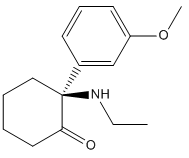 Onset : 20 - 60 minutes
Duration : 2 - 6 hours
Normal After Effects : 2 - 48 hours
MXE or Methoxetamine is a recently discovered dissociative with little to no history of human usage, first spotted by the authorities for sale on a number of websites in November 2010. It is a chemical of the arylcyclohexylamine class and a derivative of ketamine, thought to behave as an NMDA receptor antagonist and dopamine reuptake inhibitor, though it has not been formally profiled pharmacologically. It is a product of intelligent drug design, deliberately created to be sold on the grey market as an online research chemical.
Although it does have potential adverse physical and psychological side effects when used without caution. It is in my opinion, the most genuinely interesting research chemical created so far, taking it’s users to impossibly deep states of detachment and incredibly rich hallucinations. The base components of which I will begin to break down and describe now…
Body high:
The methoxetamine body high is not characterized by an increase in sensory input to the body as with most hallucinogens, but is actually something that could only be described as the complete opposite of this feeling. As a user increases their dosage, the only physical sensation that makes itself proportionally apparent is a feeling of a cold, mechanical numbness, which at higher doses is capable of becoming completely anesthetic like in its effects. This is accompanied by feelings of physical detachment that start out as sensations of being removed from the body, autonomy and a slight lack of motor control. Ending with complete a disconnection from the physical senses and out of body experiences.
Head space:
As feelings of being disconnected from the body increase, the mind begins to detach itself simultaneously, resulting in bizarre mental states of dissociation. These can be described at lower levels as feelings of detachment from the external environment, making the world seem as if it were being watched through a TV, a dream or just intrinsically unreal in some way. Creating a feeling of being mentally withdrawn from the environment, allowing people to look at their lives from an almost third person perspective and analyze it without bias, surprisingly resulting in an enjoyable state of deep introspection and a profound drunkenness.
As the detachment increases, the ego becomes severely suppressed and inhibited, impairing cognitive functioning and suppressing the short term memory until it begins to struggle or become completely incapable of holding onto a normal thought for any length of time.
Besides generic feelings of extreme mental intoxication normally found at these levels of ego suppression, MXE has the extremely unique effect of making films and TV shows become ridiculously immersible, to the point where you become so carried away that you begin to think it is genuinely happening in front of you. Despite the fact that you cannot even begin to follow the plot, feeling to me like the cognitive functioning of the ego has been stripped away to the point where it can no longer distinguish between what is real, and what is simply playing on a screen in front of it. An effect that also translates over to a few specific videogames.
Now I hate including cultural references in my writings and I apologize in advance, but the greatest specific example of this is high dose MXE trips combined with flying through landscapes on Minecraft creative mode. Literally feeling as if you are flying in the most realistic way and an incredible experience. One that works equally as well if somebody else takes control of the game and plays for you, still feeling as if you are still the only person playing. This seems to work across all people at the appropriate dosage. For a video of the specific game play that I am talking about click here.
Visual effects:
At lower levels of dissociation, the visual effects of MXE are extremely simplistic and shallow. Generally manifesting themselves as blurred and double vision and only becoming deep once a person has been almost or completely disconnected from their body and sensations.
Starting with the dissociative equivalent of visuals, which can be described as morphing geometric patterns which are super imposed onto a black background. Feeling not as if they are on a veil in front of your vision as with LSD or mushrooms but instead completely surrounding and encasing your visual field. They are extremely simplistic and slow moving in comparison to other dissociative visuals such as DXM. Only presenting themselves when the eyes are closed and often appearing to be comprised of many tiny interlocking woven lines. These do not seem to increase in complexity as a person reaches higher levels of dissociation, but are instead taken over by and replaced once complete and total disconnection of the body is reached. Causing trippers to slip into what the online dissociative community commonly refers to as “the M-hole”. These are completely solid and physical structures of a vast scale. A common characteristic among all of the dissociatives but can be described as particularly monolithic and ominous in appearance with this substance, especially when compared to the likes of ketamine and DXM.
These structures take a huge variety of forms but can be described as spires, towers, tear drops, columns, cubes and shapes of any kind that are huge in size and often thousands of miles wide. They alternate between each other by morphing in a comprehensible, consistent way or by panning out of view until another structure takes its place. As a tripper’s dosage increases to states of level 4 dissociation, the amount of detail in which these structures are seen and felt increases proportionally. This continues until the sensation of seeing the entire universe condensed into an infinitely intricate form becomes present. This is accompanied by the sudden realization that you are the structure you are staring down upon.

Above is my amateur attempt at replicating a generic MXE space with a simplistic structure.
As disconnection increases to even further levels of dissociation, hallucinatory states not unlike those found within common psychedelics come into play, these are extremely diverse imagined scenarios in which contact with autonomous entities are completely possible. They look perfectly solid in appearance, with reports of memory replays and becoming god seeming to be common across a large percentage people who choose to explore MXE this deeply.
Perspective distortions:
The perspective distortions on MXE do not seem to feel particularly different from those found on other commonly used dissociatives such as DXM and Ketamine. Most commonly including, alice in wonderland syndrome, the feeling of becoming impossibly giant or tiny in size. Changes in noise volume, sounds seeming either extremely loud or very quiet and muffled. As well as distortions in distance, making specific objects or the entire external environment seem physically closer or further away.
Conclusion:
In conclusion, MXE is one hell of a drug, it is an extremely weird trip and not for the faint hearted. Capable of taking people to worlds so unlike anything found with psychedelics yet still freely available across the internet through grey market research chemical vendors. Being legal in every country in world, short of the United Kingdom, Russia and japan. With a quick google search for the term “MXE vendor”, “methoxetamine vendor” or other similar phrases usually being sufficient to find a supplier in the top 3 or 4 links. It is also freely available in any desired quantity in the countries of which it has been made illegal, you just have to search a little harder.
It is definitely worth noting however that MXE does have a dark side to it, with potentially addictive effects for those who are lacking in self control. Often resulting in compulsive redosing during high level trips in which the user is unaware of their own actions, something that can easily be avoided by not keeping the MXE close at hand and manually limiting your use of the substance. It’s because of this that I would recommend doing as much research as you possibly can before even considering the consumption of this drug, as daily use could potentially lead to the same bladder problems that are associated with chronic Ketamine use.
LSD, broken down and described
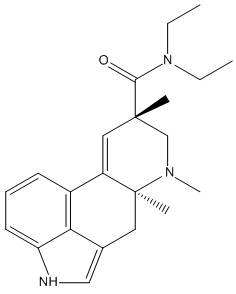
Onset : 60 - 120 mins
Duration : 6 - 12 hrs
Normal After Effects : 2 - 5 hrs
LSD or Lysergic acid diethylamide, is a semisynthetic drug of the lysergamide psychedelic family. It was first synthesized by Albert Hoffmann in 1938 from ergotamine, a chemical derived from ergot, a grain fungus that typically grows on rye. In pure form it is a colourless, odourless, and mildly bitter solid.
LSD is typically delivered orally, usually in liquid form or on a substrate such as absorbent blotter paper which can be taken by simply chewing on or swallowing.
It is one of the most potent drugs in the world, meaning that extremely small amounts are needed for the effects to show. A single dose of LSD may be between 100 and 500 micrograms - an amount which is roughly equal to one-tenth the mass of a grain of sand.
The mechanism that produces the psychedelic effects of LSD is a direct result from its action as a 5-HT2A serotonin receptor agonist in the brain, a mechanism of action shared by all other hallucinogenic tryptamines and phenethylamines.
The trip can be broken down into a few base components which I will now begin to describe…
Physical effects:
The body high of LSD is extremely euphoric. It can only be described as an intensely pleasurable, energetic tingling sensation that encompasses your entire body. It is not usually felt over every square inch of the skin but manifests itself in the form of a continuously shifting tingling sensation that travels up and down the body spontaneously in fast moving waves. This feeling is accompanied by an overall enhancement of the pleasure derived from tactile sensations.
At its highest level this becomes so overwhelming that people find themselves writhing on the floor in complete pleasure. It can be extremely stimulating, encouraging trippers to move around, run, dance, climb and generally engage in physical activities.
Once Level 6a visuals are reached, an intense sensation of suddenly becoming aware of and being able to feel every single nerve ending across a persons entire body all at once is consistently present.
LSD also unlocks complete control over the physical body in trippers. With many people finding that they have complete control of the movement of every tiny little muscle throughout their body, which can be individually moved with the tiniest precise mental triggers. Once a person gets to grips with the initial sensation, this can cause people to become extremely nimble and physically in control, giving them a profoundly primal sense of being put back in touch with the animal body.
In terms of the physical discomfort experienced on this substance, mild nausea is occasionally reported when consumed in moderate to high dosages and either passes instantly once the tripper has vomited or gradually fades by itself as the peak sets in.
Cognitive effects:
The head space of LSD is one of extreme mental stimulation and a powerful enhancement of a persons current mental state, resulting in overwhelmingly positive experiences for the mentally stable and prepared, whilst creating terrifying, paranoia ridden experiences for the unstable and unprepared.At low to high doses, there are constant waves of extremely quick and profound thought that stem from an acceleration of thought as opposed to the increased fluidity of thought found with mushrooms. These feel like a flooding of rapid fire, creative and insightful thoughts in very quick succession.
The introspective effects of LSD are extremely profound and similar to the states of personal problem solving found on Mushrooms but are considerably more focused. They generally manifest themselves in any context but become overwhelmingly more powerful and life changing when the tripper is alone without the external influence of others. This state can be described as distinct levels of accelerated thought that consistently direct themselves towards an unbiased analysis of the self and ones actions, leading people to therapeutic and mentally beneficial changes in their perspective on themselves and the world around them.
In comparison to other psychedelics, LSD is by far one of the most efficient triggers for states and feelings of profundity out of the classical psychedelics. It consistently provides people with intense feelings of love, awe and reverence for life, nature and the universe around them. This often becomes grounded as a permanent and new perspective that can last anywhere from weeks to a lifetime after the trip. At its highest state, this results in the feeling that the present situation is profound and that your entire life has been building up to this single moment. This can be described as the feeling that you have been on a train your entire life and are finally getting off of it.
For most people, the ego suppression, loss and death with this substance is completely proportional to the intensity of the visual experience. Simple ego suppression is felt at levels 1 - 4 visual experiences, ego loss felt at 4 - 5 visual experiences and ego death only being felt at the highest point of level 6 visual experiences.
LSD can also produce distortions in the users perception of the passage of time, leading to an illusion of moderate to extreme time dilation. This feels as if it stems from the fact that during an LSD trip, such huge amounts of experience are packed into extremely short periods of time in comparison to normal sober living.
Visual effects:
The visuals found with LSD in comparison to other psychedelics are described by most as much more vibrant, mathematical, clean, digital, colourful, cartoon like and angular, with sharp corners and bolder outlines. These visuals are quite lacking in structure and do not generally solidify and form into shapes of objects as with more hallucinogenic psychedelics such as mushrooms. They are extremely fast moving and kaleidoscopic. Mostly, they are based on fractals and complex geometry with bright and vivid colours.
As the visuals increase, they consistently take people straight to states of Level 6a psychedelic experience and the sensation of becoming and feeling everything within the entire universe all at once.
Imagery of things, people, objects and places are occasionally present within the visuals, but never become elaborate enough to form into fully fledged 3D hallucinations. LSD seems to be completely devoid of true visionary hallucinations, with things such as entity contact being so rare it is completely unheard of.
The distortions found on LSD are extremely cartoon like and unrealistic, but all encompassing and complex none the less with the capability of distorting the external environment until it is completely unrecognisable. In comparison to other psychedelics, such as mushrooms, they are extremely fleeting, immediately resetting to normal levels with the slightest double take or movement of the eye.
Open eye transformations of objects and people into unrealistic and alternate things are common, usually playing off of and exaggerating pre-existing features within the object that is transforming.
Auditory effects:
The most common audio hallucination that people experience are ones of heard memory replays from the previous several hours. These commonly manifest themselves as spontaneous clips of the music that was played and garbled voices of the people that were spoken too. This is heard at lower levels as not coming from within the brain but as sounds embedded within real sounds across the external environment such as within the sound of the wind, cars and general background noise.
True auditory hallucinations which sound as if they are coming from within the brain and are more spontaneous in their noise type are generally uncommon.
A powerful enhancement of auditory perception is however consistently induced within every trip, resulting in noise suddenly becoming extremely loud, clear and crisp with a new-found ability to pinpoint the exact location and direction of sounds within the external environment. This is something which triggers levels of increased music appreciation that are simply unreachable during sober living, experienced in the form of music sounding “wider” and a profound ability to comprehend every single piece of noise throughout each separate layer of complex songs in a level of detail that is simply not possible sober. The profound sensation of being able to fully understand the emotional intent of the music being listened to is also present, resulting in states of ecstatic euphoria and mental involvement when this drug is combined with any enjoyable music of a tripper’s personal preference.
Health effects, potential addiction and tolerance:
Similar to other psychedelic drugs, there are relatively few physical side effects associated with LSD acute exposure. Various studies have shown that in reasonable doses in a careful context, it presents no negative cognitive, psychiatric or toxic physical consequences of any sort. The median lethal dose or dosage at which 50% of participants die (LD50) of LSD for human beings has never been reached in any setting and is predicted to be roughly 12,000 micrograms, based on studies involving rats whereas the active dosage is between 100 and 500 micrograms. This means that assuming a person has unusually potent tabs, each of which are 200 micrograms in strength each. They would have to consume at least 60 of them to reach a potentially lethal dosage. Keep in mind that your average tab of LSD, found on the street is 100 micrograms or less in strength and any thing stronger than this is particularly rare.
It’s important to note that LSD is non-habit-forming and that the desire to use it can actually decrease with use, it is most often self-regulating. You also build an almost immediate tolerance to LSD after ingestion, preventing you from experiencing its full effects more often than every 4-7 days, unless you increase your dose significantly.
Legal Issues:
- LSD is Schedule I in the United States, according to the Controlled Substances Act of 1970.[112] This means LSD is illegal to manufacture, buy, possess, process, or distribute without a DEA license.
- In Canada, LSD is a controlled substance under Schedule III of the Controlled Drugs and Substances Act. Every person who is found in possesion of LSD is entitled to imprisonment for a term not exceeding 3 years. Possession for purpose of trafficking is an indictable offense punishable by imprisonment for 10 years.
- In the United Kingdom, LSD is a class ‘A’ drug. This means possession of the drug without a license is punishable with 7 years imprisonment and/or an unlimited fine, and trafficking is punishable with life imprisonment and an unlimited fine.
The United Nations Convention on Psychotropic Substances (adopted in 1971) requires its parties to prohibit LSD. Hence, it is illegal in all parties to the convention, which includes the United States, Australia, New Zealand, and most of Europe. However, enforcement of extant laws varies from country to country. Medical and scientific research with LSD in humans is permitted under the 1971 UN Convention.
If you want to try LSD you will have to find it through a street dealer or order it online through many various vendors which I can not legally ever mention the name of.
Conclusion:
LSD was the first psychedelic I ever tried and the first psychedelic I ever fully explored. It has benefited me and the people around me in so many personal ways through its deep states of introspection. It is amazingly therapeutic but eventually loses its novelty due to its complete lack of hallucinatory states and consistent unchanging visuals in a way that other psychedelics such as mushrooms simply do not. LSD is a psychedelic that eventually loses its magic, becoming something which can be better enjoyed as an enhancer of recreational activities. Thanks to its long lasting, stimulating and euphoric nature, it is probably the best psychedelic for this purpose.
Psilocin (mushrooms), broken down and described
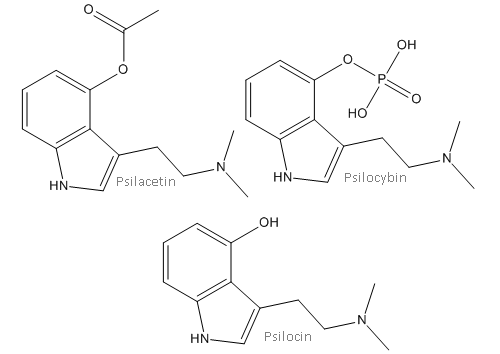
Onset : 60 - 120 minutes
Duration : 2 - 6 hours
Normal After Effects : up to 8 hours
Threshold : .25 - 1 g
Light : 1 - 2.5 g
Common : 2.5 - 3.5 g
Strong : 3.5 - 5 g
Heavy : 5 g +
(Mushrooms)
Threshold : 10 mg
Light : 20 mg
Common : 30 mg
Strong : 40 mg
Heavy : 50 mg +
(Psilacetin / 4-AcO-DMT)
Psilocin is a naturally occurring tryptamine psychedelic found within approximately 190 separate species of mushroom, and growing on every continent across the planet. Psychedelic mushrooms have been in use since before recorded human history, with their depiction being found on cave art and famously used by the native people of Mesoamerica for religious and shamanic purposes.
There are two separate chemicals found within mushrooms in roughly equal amounts, both classed as substituted tryptamine alkaloids and serotonergic psychedelic drugs, but it’s important to note that only Psilocin is directly active. The other substance, Psilocybin, is instead a pro-drug of the pharmacologically active substance Psilocin and converted directly into it within the liver. Once the molecule has been converted into Psilocin, it acts as a partial agonist for several serotonergic receptors. Psilocin has a high affinity for the 5-HT2A serotonin receptor in the brain, where it mimics the effects of serotonin (5-hydroxytryptamine, or 5-HT).
In an identical fashion, Psilacetin or 4-AcO-DMT is a pro-drug to Psilocin. This is a drug that is commonly sold as a synthetic grey area tryptamine analogue through online research chemical vendors. It has become increasingly popular over the past several years and is experientially indistinguishable from normal mushrooms. It fits into all of the descriptions of Psilocin effects perfectly, which I will now begin to describe.
Physical effects:
The body high of Psilocin is that of a soft and often overwhelming tingling sensation across the body that is capable of becoming physically euphoric at higher doses. It is incredibly relaxing and results in a mostly lethargic state. This usually causes a tripper to want to sit down on a comfortable spot and enjoy the trip, instead of engaging in physical activities. If physical activities such as dancing are forcibly engaged in however, Psilocin can become almost as energetic as stimulating psychedelics such as LSD and the 2Cx family.
These feelings are also accompanied by a constant urge to yawn, a runny nose and an involuntary shedding of tears that occurs regardless of a person’s current emotional perspective.
Cognitive effects:
The head space of Psilocin has a very obvious stoning effect to it that can be described as vaguely similar to weed. This feels extremely mellow and relaxed but can result in confusion and disorientation when taken in inappropriately complex environments. This is something that can result in easily avoidable irrational, negative and paranoid states for those who undergo the experience without being aware of this in advance.
At high doses, despite an overall relaxation of a person’s thought patterns throughout the duration of the trip, there are constant waves of extremely stimulated and profound thinking. These feel like a flooding of creative and insightful thoughts in quick succession but are spontaneously surpassed by waves of equal intensity and duration which result in the opposite, general thought suppression and mental intoxication.
The overall theme of a person’s thought patterns are directed equally towards states of deep introspection and personal problem solving, as well as states of outrospectiveness. Trippers often find themselves contemplating the society they live in, the nature of existence, their place in the universe and other general philosophical thoughts.
As dosage increases, ego suppression eventually leads onto ego loss or death, resulting in a complete failure of the short term memory. This can lead onto extremely delusional scenarios and false memories, which can be both positive or negative depending on the circumstances. Throughout these states, it is normal to become completely incapable of following conversation. The unstable often find themselves thinking that they are “going insane” or “dying”, but stable people discover profound but ineffable secrets with heavy religious and transcendental undertones. These are almost always forgotten afterwards but generally cause trippers to temporarily believe that nothing is ever going to be the same again and that the history of the human race or the entire cosmos will be forever changed from this point forward, with a new, transcendental beginning of some description finally being upon us.
Visual Effects:
The visuals are generally described by most as soft, rounded and somehow organic and natural looking geometry, with slightly more earthy colours of browns, reds and greens. The visuals are not as fast moving or mathematical as LSD and change by means of flowing, swirling and morphing into themselves to create new and constantly changing geometric forms. These visuals are high in structure, spontaneously morphing into structured forms and objects made of a condensed closed eye visual based material.
As the visuals increase proportionally to the dosage, ego death is eventually triggered. This occasionally, but not always, gives way to level 6A psychedelic visuals and a feeling of experiencing the entire universe all at once. More often than not however, Psilocin leads onto level 6B psychedelic visuals; a feeling which can generally be described as becoming completely disconnected from the self and falling into something which is only ever interpreted as the source of all existence. This is a place that feels as if you have entered the very inner workings of the universe, with the underlying source code of existence and the true nature reality presenting itself to you in the most incomprehensible manner.They are very high in imagery, which increase in elaborateness until they have become fully fledged 3D hallucinatory scenarios.
The distortions are significantly more solid on Psilocin in comparison to other psychedelics. They look more believable and are a little more permanent than those found on LSD and the 2Cx series, meaning they are more likely to stay put and not reset if you double take.
The imagery and hallucinations are extremely prevalent in comparison to substances such as LSD and can be described as completely alien in nature, following almost science fiction themes and plots regarding the future of humanity and our place within the universe. I would hypothesize that these themes stem from from the fact that the head space of Psilocin forces people to consider future and potential possibilities which manifests itself directly into the hallucinations.
Auditory effects:
The most common auditory hallucination experienced with Psilocin is hearing your subconscious thoughts and desires being placed onto others. This is often in the form of hearing phrases, statements and messages embedded within music and the things other people say to you; these often feel as if they are completely convincing and real at the time, but become easier to spot with experience.
Health effects, addiction potential and tolerance:
The toxicity of psilocybin, psilacetin and psilocin is extremely low. In rats, the median lethal dose (LD50) of Psilocybin when administered orally is 280 milligrams per kilogram (mg/kg). Psilocybin comprises approximately 1% of the weight of Psilocybe cubensis mushrooms, and so nearly 1.7 kilograms (3.7 lb) of dried mushrooms, or 17 kilograms (37 lb) of fresh mushrooms, would be required for a 60-kilogram (130 lb) person to reach the 280 mg/kg LD50 value of rats. Based on the results of animal studies, the lethal dose of psilocybin has been extrapolated to be 6 grams, 1000 times greater than the effective dose of 6 milligrams.
There are no known long term physical effects from ingestion of mushrooms containing Psilocybin and Psilocin.
Keep in mind that psychedelic mushrooms are non-habit-forming and that the desire to use them can actually decreases with use. They are most often self-regulating. You also build an almost immediate tolerance to them after ingestion, preventing you from experiencing their full effects more often then every 4-7 days, unless you increase your dose significantly.
Legal issues:
- Psilocybin and psilocin are listed as Schedule I drugs under the United Nations 1971 Convention on Psychotropic Substances.
- Psilocybin mushrooms are regulated or prohibited in many countries, often carrying severe legal penalties (for example, the U.S. Psychotropic Substances Act, the UK Misuse of Drugs Act 1971 and Drugs Act 2005, and the Canadian Controlled Drugs and Substances Act).
- On November 29, 2008, The Netherlands announced it would ban the cultivation and use of psilocybin-containing fungi beginning December 1, 2008.
- The UK ban on fresh mushrooms (dried ones were illegal as they were considered a psilocybin-containing preparation) introduced in 2005.
- New Mexico appeals court ruled on June 14, 2005, that growing psilocybin mushrooms for personal consumption could not be considered “manufacturing a controlled substance” under state law. However it still remains illegal under federal law.
- 4-ACO-DMT is unscheduled in the United States. It may be considered an analog of psilocin.
- 4-ACO-DMT could also be considered illegal in the UK under the Misuse of Drugs Act 1971. O-Acetylpsilocin is an ester of psilocin, to which it metabolizes. This means that it potentially carries the same penalty as any Class A drug.
If you want to try Psilocin despite the legal issues you have multiple options. You can purchase them through a street dealer, grow them yourself using this guide here or you can pick them fresh in your local area during the correct season if you know where to look for them.
If you want to try 4-ACO-DMT despite the legal issues, you can find it for sale through the power of google. It sold online to the masses through various research chemical vendors who I cannot legally mention the names of.
Conclusion:
Psilocin is my favourite psychedelic, best used in silent darkness and in high doses to fully release their hallucinatory effects. They are slightly more capable of producing bad trips in people who are inexperienced with psychedelics, as they can be a little more confusing. However, they are extremely rewarding in terms of their head space, allowing for extremely deep philosophical thoughts and realizations that I have not found with any other substance.
A Scientific Explanation of the Psychedelic Experience
This article is my attempt at providing the most scientifically accurate and factually legitimate explanation of the psychedelic experience as I possibly can. It is a complete overhaul of my previous sensory filter article and I have done my best to provide citations with the correct formatting to supporting studies every step of the way.
My understanding of this topic has recently increased greatly since I have started deliberately reading up on neuroscience in general, so I will try my hardest to supply as much solid evidence for as I possibly can. But if you know more about these things than I do and want to contribute ideas of your own or debate mine please do so. Any help with this would be great as my knowledge of neuroscience barely extends beyond what Wikipedia has managed to teach me over the past few months.
I have to admit though, this article relies on both scientific studies and my personal experience with psychedelics. Which I personally cannot prove to people unless they have tried the substances themselves.
Regardless, please point out flaws in my logic, evidence and grammar as I am sure there are plenty of them. In return I will continuously update this article until it becomes as accurate as I can possibly make it.
How drugs work – Antagonists vs Agonists:
In pharmacology there are two basic categories that all drugs fall under. These two possible types of substance are known as either agonists or antagonists.
There are of course subgroups to these two main categories, but for the sake of keeping this article as simple as possible I am only going to give a basic rundown.
Put simply, an agonist is a chemical that binds to a receptor and produces a biological effect. These compounds usually mimic the structure of an endogenous neurotransmitter and fit into its same receptors. Their neurophysiological effect on behavior can be either stimulatory or inhibitory, depending on the function of the neurotransmitter that they mimic. For examples amphetamines are neurophysiologically excitatory because they structurally mimic dopamine which is a neurotransmittor that stimulates behavior.
In contrast however, GABA-ergic neurons are inhibitory, so GABA agonists such as benzodiazepines usually inhibit neural activity and behavior causing muscle relaxant and sedative-like effects.
On the opposite end of this spectrum, an antagonist is a molecule that binds to a receptor but does not produce a biological effect. These compounds are inactive so instead block or inhibit the actions of specific neurotransmitters and agonists. For example, NMDA receptor antagonists (such as ketamine) block the receptor that allows for the transfer of electrical signals between neurons in the brain, and in the spinal column creating for its dissociating and anesthetic-like effects. On the other hand, since GABA-ergic systems across the brain are inhibitory, GABA antagonists therefore usually stimulate behavior.
Psychedelics – their chemistry and receptor target sites:
In this article, the use of the term “psychedelic” will be in reference to three structural groups:
- chemicals that are chemically and pharmacologically similar to psilocin and DMT.
(the tryptamine hallucinogens) - chemicals that are chemically and pharmacologically similar to LSD and LSA.
(the lysergamide hallucinogens). - chemicals that are chemically and pharmacologically similar to Mescaline, DOI and the 2C family.
(the phenethylamine hallucinogens)
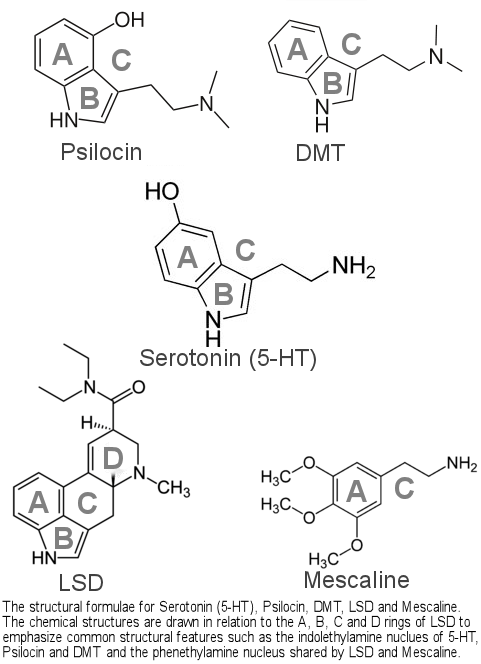
These three groups of chemicals have shared pharmacological targets and produce extremely similar behavioral effects (discussed later). Hence, it makes sense to group them together. The three groups of drugs are known in the literature as the serotonergic psychedelics, as they are all characterized with a method of action strongly tied to the serotonin neurotransmitter. Serotonin (often referred to as 5-HT, short for its full chemical name 5-hydroxytryptamine) is a naturally occurring neurotransmitter which is tied to appetite, sleep, memory, learning, mood, behavior, depression, positive mood, certain involuntary muscle control, and countless other functions, many of which are not yet fully understood.
This puts psychedelics in a class known as Serotonin receptor agonists, because they excite our 5-HT receptors. More specifically, they hold a particular affinity with a subset of our 5-HT receptors known as the 5-HT2a receptors. It’s 5-HT that the classic psychedelics have been shown to mimic, to the point where the structural similarities between these three groups to serotonin can be seen at a mere passing glance as the comparison image below demonstrates.
It is likely that the 5-HT2a receptor is the primary site of action for psychedelics for many reasons and this claim is backed up by a large body of evidence. The first evidence that psychedelics act via the 5-HT2 receptor was published in the paper by Glennon et al., (1983). This paper, using a drug discrimination task, trained rats to discriminate between the phenethylamine psychedelic DOM and a placebo in a two-lever operant choice task. Successfully demonstrating that when rats were administered doses of mescaline, LSD and 5-MeO-DMT, they still chose the DOM stimulus lever. This heavily suggests that the effects of DOM can be generalized to both indole and other phenethylamine hallucinogens, but not other 5-HT receptor agonists which the rats were also exposed to. It was also shown in the same study that this stimulus generalization was consistently blocked by the 5-HT2 receptor antagonist, ketanserin, showing that these three psychedelic compounds must involve those sub-populations of serotonin receptors that are blocked by ketanserin (i.e. 5-HT2 sites).
Glennon et al., (1984) then reported that the affinity of various hallucinogens for 5-HT2 subtypes, but not for other receptors, was tightly correlated with the drugs’ ED50 in human usage and rat drug discrimination experiments.
ED50 is a pharmacological term that simply means the dosage at which a drug begins to show effects in 50% of the population using it. This is a correlation that has been shown multiple times (Sanders-Bush et al., 1988) alongside a large number of agonist/antagonist experiments (reviewed by Nichols, 2004) and it is due to this consistent evidence that the scientific consensus has generally agreed on 5-HT2 receptor subtypes as the primary site of action of psychedelics.
Now that we know which receptors are responsible for the psychedelic experience, it makes sense that to understand how psychedelics affect consciousness we must first assess the location of these 5-HT2 receptors. This is something that has been studied using what is known as immunocytochemistry to localize 5-HT2a receptors in tissue samples. Immunocytochemistry or IHC is the process of staining antigens (e.g., proteins) in cells of a tissue section, by exploiting the principle of antibodies binding specifically to antigens in biological tissues and attaching them to a marker such as a fluorescent dye. Jakab and Goldman-Rakic (1998) examined macaque brains using this technique and found dense 5-HT2A receptors throughout all cortical regions, specifically in areas heavily involved in consciousness and sensory processing or more specifically the frontal, prefrontal, temporal and occipital cortices.
Besides these, it has also been shown that 5-HT2a receptors are contained within multiple parts of the thalamus which is an area at the top of the brain stem with functions that include relaying sensory and motor signals to the cerebral cortex, along with the regulation of consciousness, sleep, and alertness. Pompeiano et al., 1994 used yet another method of tissue staining known as in situ hybridization to show that the reticular, lateral geniculate nuclei of the thalamus all contain 5-HT2a receptor mRNA. These two areas are both involved in the relaying of information from sensory organs to their appropriate cortex and have been heavily speculated to play a large role in the psychedelic experience (Lambe & Aghajanian, 2001; Marek et al., 2001).
Now that the general distribution of 5-HT2a receptors has been established, we can begin to infer how psychedelics affect consciousness in greater detail by assessing the function of these neurological components and how they react when exposed to serotonergic psychedelics, as shown by various scientific studies.
The effects of psychedelics on different regions of the brain and how this translates into the psychedelic experience:
One of the most important areas of the brain that psychedelics have an affect on via means of 5-HT2a excitation are on the pyramidal neurons of the brain.
Pyramidal neurons are a type of neuron that are distributed all across the brain in the cerebral cortex. The cerebral cortex is a sheet of outer neural tissue that surrounds roughly two thirds of our entire brain mass. It is the most highly developed part of the human brain and is responsible for sensing and interpreting input and maintaining cognitive function via the four basic lobes that comprise it. These lobes are:
- the Temporal lobes - involved with auditory perception, and language processing.
- the Occipital lobe - involved with vision.
- the Parietal lobe - involved in the reception and processing of sensory information from the body.
- the Frontal lobe - involved with consciousness, decision-making, problem solving, and planning.
This cerebral cortex is divided into 6 different cortical layers, each of which contain a characteristic distribution of neuronal cell types and connections with other cortical and subcortical regions. It is at layer five however where the densest collection of pyramidal cells are found.
The medial prefrontal cortex (mPFC) is a part of the frontal lobe that is specifically in charge of complex cognitive behavior, personality expression, decision making and the orchestration of thoughts and actions in accordance with internal goals. 5-HT2a receptor activation of the prefrontal cortex’s pyramidal cells has been shown by multiple studies to cause sharp increases in the amplitude and especially frequency of spontaneous excitatory postsynaptic currents (EPSCs) from within these cells (Aghajanian & Marek, 1997; Aghajanian & Marek, 1999; Marek & Aghajanian, 1999; Marek & Aghajanian, 1998).
The cells that were most excited within the mPFC were layer five pyramidal neurons. Areas where applying 5-HT to the cortical slices produced the most robust EPSPs when recording from layer five pyramidal cells, closely matches the distribution of 5-HT2A receptor, i.e. layer one and especially layer 5a Goldman-Rakic & Aghajanian, (2000).
As reviewed above, the mPFC cells that seem to be excited most by application of 5-HT2a receptor agonists are layer five pyramidal neurons. Layer five pyramidal neurons across the brain have diverse intracortical projections and importantly, project to many non-specific thalamic nuclei. They are unique in the fact that they mediate multiple pathways of sensory processing and perceptual feedback analysis, and in a theory reviewed by Jones (2002) have been implicated in the binding of separate sensory stimuli into a discrete conscious event.
By activating layer five pyramidal cells’ coritco-cortical and corticalthalamic projections, psychedelics cause the spread of high-frequency oscillations to areas that would not normally be activated. Agonism, disinhibition and excitation in layer five recurrent circuits would therefore necessarily lead to multisensory frame aliasing errors, feedback synesthesia, and eventual perceptual/ sensory overload. This provides a neurological basis for an explanation to two out of the four different categories of sensory effects that are found in varying levels of intensity and style across all of the classical psychedelics.
The first of these two separate sensory effects manifests itself in multiple ways but is recognizable as what the psychedelic community has named as “visuals”. Visuals can be described as the sensation of a person’s field of open and closed eye vision being partially or completely encompassed by fast-moving kaleidoscopic and indescribably complex geometric patterns, form constants, shapes, fractals, structures and colour. Common descriptions of visuals are generally along the lines of the geometry being fractal representations of repeating forms, embedded within each other. This geometry commonly includes vast and intricate form constants that among many other things, take the style of webs, grids, checkerboards, spirals and funnels in a huge variety of colours.
These visuals never stand still at any point and are extremely fast changing in terms of their shape and style within themselves. This happens whilst they are naturally drifting laterally or radially across the visual field to create overlapping webs of many arising and decaying geometric patterns, all of which are visible within a single perceptual frame.
When experienced, visuals somehow have a deep sense of profoundness and importance attributed to them, and feel as if they are perfectly fitting geometric representations of your current mind state. For simple examples of this, visuals consistently fit a person’s mood, becoming bright, colourful and somehow happy in appearance when a person is in a positive state and becoming dark and ominous if a person is in a negative state.
It’s because of this, among other things, that I have been led to believe that visuals are the experience of the brain’s pyramidal neurons becoming agonised and therefore erratic and excitable sending off information they normally wouldn’t. This leads to the electric signal in these neurons to “bleed” and soak into other pyramidal neurons including neurons that are directly adjacent to them and elsewhere across the cerebral cortex. This creates several different effects but most notably causes information from pyramidal neurons within the prefrontal cortex and from other sensory cortices to leak into visually connected pyramidal cells within the occipital lobe. The visual cortex then attempts to interpret this as visual information creating random noise which higher brain functions attempt to constrain meaning upon. This idea essentially means that visuals are the literal exposure of a person’s conscious faculties to the brains subconscious neurological structure. This is something that is backed up by not just the way psychedelics have been shown to affect the brain through scientific study, but by the analysis of the behavior of it’s subjective experience.
Visuals start at lower levels of tripping, as geometric patterns that increase in intensity, eventually begin encompassing and overwhelming your entire visual field. As the amount of neurological structure that is experienced increases proportionally with dosage, the amount of information from across the cerebral cortex that a person is exposed to eventually increases to something near 100%, leading to a person being exposed to the organization of the entirety of their mind at once. This is consistently described as feeling as if you are experiencing everything in the universe simultaneously in a single instant. It is described as profound and infinite in size. As this is happening, the vast data stream of neurological structure and geometry that is experienced begin to destroy the ego through complete sensory and perceptual overload, which is exactly why the psychedelic community has come to call this state ego-death.
This results in an altered state in which you are conscious, but your short term memory has been destroyed, making you completely incapable of maintaining functional, linear thought. Since this sensory overload increases proportionally with dosage it can be thought of as a set of scales. As visuals go up, the ego goes down, and vice-versa. Due to this, once the level of neurological exposure hits 100% and a person starts to feel one with the universe, the ego becomes proportionally eradicated due to the brain’s pyramidal neurons no longer being able to process data efficiently, because of the extreme excitation and perceptual overload. This gives rise to the highest possible level of psychedelic experience.
It’s also worth mentioning that visuals increase in intricacy and intensity relative to the amount of a persons current sensory input, something that one would expect if visuals are the result of neurological / sensory information being rooted through our visual cortex.
For example, adrenaline and physical exertion seem to cause a proportional increase in visual intensity across all people. More personally, I have unintentionally triggered spontaneous ego-death well after the peak of a trip simply by leaving my quiet bedroom and stepping outside into the harsh winds and rain of British winter on more than one occasion. I would hypothesize that such things are the result of increased sensory input leading to a higher amount of information being available for routing through the visual cortex and therefore leading to greater amounts of perceptual and sensory overload.
However, if any of this is true on a neurological level, It would simply make sense that this would be experienced in other forms through different senses, as there is no reason that erratic and excitable pyramidal neurons would favor sending irrelevant information to visually connected cells over any other area within the brain.
In my opinion, although in a form that is not nearly as complex and earth shattering as visuals to experience, these definitely exist and are quite common, but not as universal an experience. The two other commonly reported sensory equivalents that seem to stem from the same mechanism are what I and others refer to as “audio effects” and “body high” or “body load”.
Audio effects are a distinct category of and completely separate from audio hallucinations which I will go into later. They can generally be described as hearing noises such as; reverb, tones, and general sound effects, that often seem to follow and fit thought patterns and processes. Common examples of these include pitches and notes that increase in intensity the harder you concentrate or hearing the sounds of an all consuming tone during the initial come up of DMT. They can also be experienced in the form of sounds such as soft purring or multiple tones and phasers, but they are essentially limitless in their possibilities in and completely rhythm-less in tune. I find these sorts of audio effects to be extremely common on DMT and have seen multiple people under the influence of Ayahuasca comment on the fact that they can hear a gentle humming of white noise in the background, as if you can hear the very mechanics of your brain at work.
It’s through my personal experience and reasoning, along with scientific data, which has made me come to the conclusion that audio effects are essentially the heard equivalent of visuals, working through the exact same mechanism as visuals, but with the neurological structure pouring over into a person’s temporal lobe and audio cortex, as opposed to their visual cortex.
The final lobe of the cerebral cortex which I have yet to relate to the psychedelic experience is the paretial lobe. This lobe is in charge of touch and the processing of sensory information from the body and is undoubtedly exposed to erratic electrical signals and information from pyramidal neurons just as our audio and visual cortex are. This is what I think results in the distinct and often overwhelming physical sensations found on the peak of a psychedelic trip that people generally refer to as a body high, which can be described as euphoric tingling sensations and random sensory noise felt through every nerve ending across the entire body.
Hopefully, I have adequately made my case above that these three distinct and separate sensory effects stem from the same mechanism and can therefore be categorized under that same mechanism accordingly. I am now going to go into how this very same pyramidal neuron excitation results in a completely different class of hallucination through an extremely similar but alternative mechanism.
The second visual effect that I am going to explain is what the psychedelic community refers to as distortions. This category of sensory effect is a very common one and behaves in a completely different fashion to visuals. Instead of fast moving geometric shapes that seem to appear from nowhere, distortions are open eye alterations and changes in perception attributed to the external environment. They are always obviously grounded in reality and begin at lower doses as a wiggling or drifting of straight edges and depth in the visual field. At higher doses they become impossible to ignore with the lines, textures and color between solid objects appearing to bend, swirl, or melt into one another. Often until the original object becomes completely unrecognizable. They are most commonly manifested as objects and scenery in your visual field, acting as if they are morphing, melting, bending, changing colour, vibrating and wiggling. Moving objects will have distinct and colourful tracers left behind them, while textures will also appear to physically creep across themselves; an effect which is most commonly seen on carpets and wood grain. Depth perception will become distorted in such a way that objects in the background may move into the foreground and vice versa, or depth perception can be lost entirely as a persons entire visual field flattens into a single unified image. Every visual distortion builds up and increases in intensity when stared at, but immediately resets to its original state once you double take.
Just as you would expect, distortions are not limited to a single sense but can be found with both a visual and an auditory equivalent. Audio distortions are not a universal experience but can happen spontaneously on any psychedelic. They are more common on some than others however, being particularly common on the 2C* phenethylamine family, mescaline and high doses of harmine. At lower doses they can be described as the experience of an echo or murmur rising in the wake of each sound. These increase proportionally with dosage up until the fairly simple experience of music having continuous reverb and sounds beginning to bounce across your brain as they replay continuously.
A combination of observing the behavior of visual and auditory distortions and looking at the neurological evidence has led me to the conclusion that they are generated by the same pyramidal neuron excitation as visuals. As pyramidal neurons are excited and begin to erratically send out information, it makes sense that at lower dosages, before pyramidal neurons gain the signal strength to fire information across to the other parts of the brain across the cerebral cortex, that they would only have the strength to send information to adjacent and nearby similarly excitable pyramidal neurons. This would create a system of cycled information as signals leak from their original source into nearby cells are then “fired off” again back into the original source of the signal, which due to it’s excitability would proceed to send out the same information once again, causing a continuous loop. Each time the original signal is reprocessed on top of itself, the original signal would become more degraded than before. This creates for sensory inaccuracies that continuously build up onto themselves through a system of recursive looping.
This explains why distortions increase when stared at, but reset when looked away from. It’s because still and out of focus eyes allow the loop to continue undisturbed, but new input immediately breaks it. It also provides an explanation for distortions happening at lower doses to visuals, as the mechanism behind it only requires pyramidal neurons to be capable of reaching the adjacent cells around them and no further. The fractal effects found within visuals however are closely related to this recursive visual looping.
For those who don’t know, fractals are patterns that repeat into themselves allowing for the same self similar image to be found no matter how far you zoom into any part of the image. They are an extremely common component embedded within the geometric patterns of closed eye visuals. Within mathematics, fractals are generated through recursive formulas that infinitely repeat an image over itself in a self similar way. Therefore, it would make sense that the fractals you see within the visuals are extremely similar self repeating recursive systems. These fractals are created because your brain’s recursive looping system is reinterpreting the same stimuli multiple times, causing the geometry to flower out into the fractals that the psychedelic community is extremely familiar with.
The third sensory effect that I am going to explain the neurological basis behind and the subjective experience of, is perhaps the most profound subjective sensory effect that the psychedelic experience has to offer. This sensory effect is known as a hallucinatory state, beginning at lower doses as imagery embedded within the visuals which can be described as spontaneous moving or still scenes, objects, people, animals, flowers, places or anything you could possibly imagine. They are often formed out of visuals themselves and are displayed in varying levels of detail ranging from “cartoonish” in nature to completely realistic, rarely holding form for more than a few seconds before fading or shifting into another image.
On certain psychedelics, such as LSA, ayahuasca and harmine, the imagery is manifested as an exact visual representation of whatever you are currently thinking about in your minds eye, turning abstract ideas into a concrete image. This particular manifestation of imagery only happens on psychedelics that allow you to slip into different variations of an extremely similar trance-like state; a state that is simply not found within any of the stimulating psychedelics.
As these states of imagery become increasingly elaborate (proportional to dosage), they eventually become all encompassing fully-fledged 3D hallucinations. These could be anything but generally fall under common archetypes such as induced mystical states, contact with autonomous entities, imagined landscapes, spirit dimensions and situations that seem so unlike anything previously experienced that they are in all probability untranslatable into English. Hallucinations often feel extremely mystical, spiritual and religious in nature regardless of the trippers theistic beliefs and it’s not uncommon for people to report that high level psychedelic hallucinations feel infinitely “realer” than anything the person has previously experienced.
For multiple reasons, it seems to me that these hallucinations are caused when high dose psychedelics trigger dreaming in fully conscious trippers. My reasoning for this is based not just on the behaviour of the experience itself but various studies which support similar conclusions. First of all, it’s definitely worth noting that psychedelic hallucinations look and feel exactly like extremely vivid dreams. The feelings of amnesia commonly felt after strong DMT trips are identical to that of the extremely familiar feeling of not being able to remember a vivid dream immediately after you have woken up. In fact, it is not uncommon for people to recognize places from within past dreams during states of psychedelic hallucination.
My second line of reasoning to support this is that the imagery seen within closed eye visuals (the state before hallucinations) feel exactly like triggered states of hypnagogia.
Hypnagogia is the state before fully-fledged dreams when a person is between being awake and falling asleep. It’s here where many people experience mild hallucinations, imagery and a fluid association of ideas. In fact, hypnagogia is thought to be characterized and based on a mental function, known as “auto-symbolism”, which are a person’s thoughts and ideas being made to manifest in their minds eye, identical in sensation to states found on multiple psychedelics.
Hallucinatory states however can be shown to be states of triggered conscious dreaming through more than just casual observation. This is because it has been demonstrated through neurological studies that psychedelics activate parts of the brain heavily associated with dreams and schizophrenia, besides creating the visual and perceptual alterations described above. Activation of 5-HT2a and 5-HT1a receptors in the medial PFC (mPFC) has been shown to have downstream effects on dopaminergic activity through descending projections to the ventral tegmental area (VTA) (Bortolozzi, A. 2005). This means that through increasing the firing rate of dopamine neurons in the VTA, dopamine release is triggered (Roser Cortés, and Francesc Artigas. 2009).
The VTA is in charge of dopamine release throughout the brain which is a neurotransmitter associated with pleasure seeking and motivation. It is also associated with symptoms of schizophrenic delusions when dopamine it is over produced within the brain. In fact, the most effective medications for treating patients with schizophrenia are those that prevent dopamine from binding to dopamine receptors. It’s also worth noting that amphetamine, cocaine and similar drugs which all directly increase levels of dopamine in the brain can cause symptoms which include bizarre and vivid dreams and those present in psychosis, particularly after large doses or prolonged use. This is often referred to as “amphetamine psychosis” or “cocaine psychosis,” but may produce experiences virtually indistinguishable from the positive symptoms associated with schizophrenia.
This is important because studies have shown that dopamine is the very neurotransmitter that triggers not only psychosis, but dreaming as well (Gottesmann C. (2002), Mark Solms. (2000)) , which provides an excellent and extremely likely neurological basis for the hallucinations and delusions experienced during a psychedelic trip grounded in states of triggered dreaming.
The fourth and final sensory effect that I am going to explain on both a subjective and neurological level is the complete loss of sensory filtering that occurs across all psychedelic compounds on extremely low doses. A loss of sensory filtering is the first sensory alteration that occurs with psychedelics and is noticeable at what could be referred to as threshold doses. These low level effects can be described as an increased bodily awareness alongside a complete enhancement of the senses most notable for our sight, sound and touch.
For visual perception specifically this can be described as the experienced of brightened colors, sharper edges and the ability to comprehend your entire visual field, including your peripheral vision. A common example of this is the sensation of staring at complex scene such as a tree and comprehending the exact position of all of its branches in your visual field all at once, instead of just the simple few that are in focus.
For audio perception this can be described as a heightened awareness of sound in general. An extremely similar ability to comprehend every layer of complex sounds, and the precise position and direction from which they are coming from in your surroundings is also present. A common example of this is the greatly enhanced music appreciation that stems directly from this effect.
For tactile perception this can be described as an enhancement of physical sensation whilst being able to feel and comprehend every nerve ending across the entire surface of your skin. On certain psychedelics, particularly LSD, this is accompanied by greatly increased bodily awareness and control, resulting in the ability to trigger movement in muscles across your body with a sense of control simply not found during sober living.
A loss in the brain’s ability to effectively filter out irrelevant sensory input resulting in an enhancement of the senses during a psychedelic experience is backed up by numerous neurological findings. Many large scale theories of psychedelic action involve their effects on the thalamic reticular nucleus (TRN). The TRN is seen to work as a filter for transmission of information from the thalamus to the cortex (reviewed by Guillery & Harting, 2003). It essentially regulates the filtering of incoming stimuli to discriminate from irrelevant background stimuli and is the physical location of the brains sensory filter. TRN neurons are nearly exclusively GABA-ergic, meaning that they are self inhibitory. It’s because of this that in a model proposed by Vollenweider and Geyer (2001) activation of 5-HT2a receptors on TRN neurons could activate them in the same way that 5-HT2a receptors activate GABA-ergic neurons in the cortex, and hence decrease the ability of the TRN to gate information flow effectively, resulting in a complete loss of sensory filtering and a loss of focus as the conscious faculties are exposed to a huge data stream of “irrelevant” information.
Now that I’ve covered all four groups of sensory effects that are universally experienced during a psychedelic trip, I am going to explain the neurological basis behind one of the most common and interesting mental effects of the psychedelic experience.
This effect is the deep and overwhelming sense of appreciation, profundity and importance attributed to a persons external environment that is felt during a psychedelic experience. It commonly makes every day objects seem absolutely fascinating and nature seem overpoweringly beautiful and deeply important.
The basis for this mental component of the psychedelic experience can be found in the locus coeruleus. The locus coeruleus (LC) has been reffered to as the “novelty centre” (Sara, S. J. 1995). It uses the neurotransmittor known as noradrenaline to focus your attention on something important, such as an attack, before the sensory information reaches your cortex. It has been shown that psychedelics posses an ability to alter the firing of the locus coeruleus (LC) and greatly increase the amount of noradrenaline it produces (Rita J Valentino. 1996). Systemic administration of either phenethylamine or indole hallucinogens to anaesthetized animals causes a 5-HT2a receptor dependent decrease in the spontaneous activity of the LC, but an increase in activity evoked by sensory stimulation (Aghajanian, 1980; Rasmussen & Aghajanian, 1986; Rasmussen et al., 1986).
It seems highly likely then that the increase in sensory evoked LC firing could produce some of cognitive effects induced by hallucinogens, such as extremely attentive states and ordinary objects appearing fascinating.
In Conclusion:
Large sections of this may be based on personal experience, but I’d like to think that based on my extremely basic understanding of how the human brain works this does seem to be how the sensory components of a psychedelic experience are generated and I challenge you to debate me at any point.
To further express my ideas on how this works simply I have created the chart below. The concepts on it show what I’m trying to express and each part depends on the component to its left and leads on to the components to its immediate right. You’re going to have to click to enlarge I’m afraid.

Sources:
GLENNON, R.A., YOUNG, R. & ROSECRANS, J.A. (1983). Antagonism of the effects of the hallucinogen DOM and the purported 5-HT agonist quipazine by 5-HT2 antagonists. Eur J Pharmacol, 91, 189-96. http://www.ncbi.nlm.nih.gov/pubmed/6617740
GLENNON, R.A., TITELER, M. & MCKENNEY, J.D. (1984a). Evidence for 5-HT2 involvement in the mechanism of action of hallucinogenic agents. Life Sci, 35, 2505-11. http://www.ncbi.nlm.nih.gov/pubmed/6513725
SANDERS-BUSH, E., BURRIS, K.D. & KNOTH, K. (1988). Lysergic acid diethylamide and 2,5-dimethoxy-4-methylamphetamine are partial agonists at serotonin receptors linked to phosphoinositide hydrolysis. J Pharmacol Exp Ther, 246, 924-8. http://www.ncbi.nlm.nih.gov/pubmed/2843634
NICHOLS, D.E. (2004). Hallucinogens. Pharmacol Ther, 101, 131-81. http://www.ncbi.nlm.nih.gov/pubmed/14761703
JAKAB, R.L. & GOLDMAN-RAKIC, P.S. (1998). 5-Hydroxytryptamine2A serotonin receptors in the primate cerebral cortex: possible site of action of hallucinogenic and antipsychotic drugs in pyramidal cell apical dendrites. Proc Natl Acad Sci U S A, 95, 735-40. http://www.pnas.org/content/95/2/735.abstract
POMPEIANO, M., PALACIOS, J.M. & MENGOD, G. (1994). Distribution of the serotonin 5-HT2 receptor family mRNAs: comparison between 5-HT2A and 5-HT2C receptors. Brain Res Mol Brain Res, 23, 163-78. http://www.sciencedirect.com/science/article/pii/0169328X94902232
LAMBE, E.K. & AGHAJANIAN, G.K. (2001). The role of Kv1.2-containing potassium channels in serotonin-induced glutamate release from thalamocortical terminals in rat frontal cortex. J Neurosci, 21, 9955-63. http://www.jneurosci.org/content/21/24/9955
MAREK, G.J., WRIGHT, R.A., GEWIRTZ, J.C. & SCHOEPP, D.D. (2001). A major role for thalamocortical afferents in serotonergic hallucinogen receptor function in the rat neocortex. Neuroscience, 105, 379-92. http://www.ncbi.nlm.nih.gov/pubmed/11672605
AGHAJANIAN, G.K. & MAREK, G.J. (1997). Serotonin induces excitatory postsynaptic potentials in apical dendrites of neocortical pyramidal cells. Neuropharmacology, 36, 589-99. http://www.ncbi.nlm.nih.gov/pubmed/9225284
AGHAJANIAN, G.K. & MAREK, G.J. (1999). Serotonin, via 5-HT2A receptors, increases EPSCs in layer V pyramidal cells of prefrontal cortex by an asynchronous mode of glutamate release. Brain Res, 825, 161-71. http://www.sciencedirect.com/science/article/pii/S000689939901224X
MAREK, G.J., WRIGHT, R.A., SCHOEPP, D.D., MONN, J.A. & AGHAJANIAN, G.K. (2000). Physiological antagonism between 5-hydroxytryptamine(2A) and group II metabotropic glutamate receptors in prefrontal cortex. J Pharmacol Exp Ther, 292, 76-87. http://www.ncbi.nlm.nih.gov/pubmed/10604933
JONES, E.G. (2002). Thalamic circuitry and thalamocortical synchrony. Philos Trans R Soc Lond B Biol Sci, 357, 1659-73. http://www.ncbi.nlm.nih.gov/pubmed/12626002
Bortolozzi, A., Díaz-Mataix, L., Scorza, M. C., Celada, P. and Artigas, F. (2005), The activation of 5-HT2A receptors in prefrontal cortex enhances dopaminergic activity. Journal of Neurochemistry, 95: 1597–1607. doi: 10.1111/j.1471-4159.2005.03485.
http://onlinelibrary.wiley.com/doi/10.1111/j.1471-4159.2005.03485.x/abstract?systemMessage=Wiley+Online+Library+will+be+disrupted+on+25+August+from+13%3A00-15%3A00+BST+%2808%3A00-10%3A00+EDT%29+for+essential+maintenance
Pablo Vázquez-Borsetti,Roser Cortés, and Francesc Artigas. (2009). Pyramidal Neurons in Rat Prefrontal Cortex Projecting to Ventral Tegmental Area and Dorsal Raphe Nucleus Express 5-HT2A Receptors. (DISCUSSION > FUNCTIONAL IMPLICATIONS). http://www.ncbi.nlm.nih.gov/pmc/articles/PMC2693622/#__sec9title
Gottesmann C. (2002). The neurochemistry of waking and sleeping mental activity: the disinhibition-dopamine hypothesis. http://www.ncbi.nlm.nih.gov/pubmed/12109951
Mark Solms. (2000). Dreaming and Rem sleep are controlled by different brain mechanisms. Behavioral and Brain Sciences 23 (6):843-850 http://philpapers.org/rec/SOLDAR
GUILLERY, R.W. & HARTING, J.K. (2003). Structure and connections of the thalamic reticular nucleus: Advancing views over half a century. J Comp Neurol, 463, 360-71. http://www.ncbi.nlm.nih.gov/pubmed/12836172
VOLLENWEIDER, F.X. & GEYER, M.A. (2001). A systems model of altered consciousness: integrating natural and drug-induced psychoses. Brain Res Bull, 56, 495-507. http://www.ncbi.nlm.nih.gov/pubmed/11750795
Vankov, A., Hervé-Minvielle, A. and Sara, S. J. (1995), Response to Novelty and its Rapid Habituation in Locus Coeruleus Neurons of the Freely Exploring Rat. European Journal of Neuroscience, 7: 1180–1187. http://onlinelibrary.wiley.com/doi/10.1111/j.1460-9568.1995.tb01108.x/abstract;jsessionid=DF78BCFD33EBFB9FCAE0CA502DA9ED63.d01t04?deniedAccessCustomisedMessage=&userIsAuthenticated=false
Sandra M Florin-Lechner, Jonathan P Druhan, Gary Aston-Jones, Rita J Valentino. (1996). Enhanced norepinephrine release in prefrontal cortex with burst stimulation of the locus coeruleus. Brain Research Volume 742, Issues 1–2, 2, Pages 89–97. http://www.sciencedirect.com/science/article/pii/S0006899396009675
AGHAJANIAN, G.K. (1980). Mescaline and LSD facilitate the activation of locus coeruleus neurons by peripheral stimuli. Brain Res, 186, 492-8. http://www.ncbi.nlm.nih.gov/pubmed/7357465
RASMUSSEN, K. & AGHAJANIAN, G.K. (1986). Effect of hallucinogens on spontaneous and sensory-evoked locus coeruleus unit activity in the rat: reversal by selective 5-HT2 antagonists. Brain Res, 385, 395-400. http://www.ncbi.nlm.nih.gov/pubmed/3096493
RASMUSSEN, K., GLENNON, R.A. & AGHAJANIAN, G.K. (1986). Phenethylamine hallucinogens in the locus coeruleus: potency of action correlates with rank order of 5-HT2 binding affinity. Eur J Pharmacol, 132, 79-82. http://www.ncbi.nlm.nih.gov/pubmed/3816969
These charts were found here and draw data from hundreds of studies on how hallucinogens like psilocybin and ketamine affect the brains of healthy people - as well as people suffering from depression and other disorders to produce various subjective experiences.
This was done to show that the classical psychedelics such as Psilocybin (0.015–0.027 g per kg, by mouth) and dissociatives such as Ketamine (6–12 μg per kg per min, intravenously) produce a set of overlapping psychological experiences that can be measured.
In my opinion this is an excellent visual comparison of Psychedelics and Dissociatives. It was measured by using what is known as the “5DASC rating scale” which is described in detail here.
The scales indicate the percentage scored of the maximum score.
For those of you who might be interested,
This is simply a post to show my readers the articles that I have planned for the futiew