
"Transcending this mortal plane through the power of hallucinogen induced nerd rage; Tripping balls in the name of science for the good of the cosmos."
MY SOURCES ARE:
Personal experience and the internet alongside of my own speculation, analyses and conclusions. For all you know I could be lying, so please do some independent research and do not say that I didn't warn you.
PLEASE DISREGARD:
Absolutely everything I say; all pieces of writing and information found within this blog should be considered lies and a work of fiction. Do not ever use anything I've ever said here for anything, ever.
I have, after all, made it very clear that my writings are to be disregarded, as in reality I may well have no idea what I am talking about and do not have any formal qualifications on the subject.
Please point out as many flaws in my reasoning, claims, factual information and grammar as possible.
I love all of you. Thank you for reading.



MXE, broken down and described
Threshold : 8 - 20 mg
Light : 20 - 40 mg
Common : 40 - 60 mg
Strong : 50 - 100+ mg
(oral ingestion)
Onset : 20 - 60 minutes
Duration : 2 - 6 hours
Normal After Effects : 2 - 48 hours
Click here for a more comprehensive breakdown.
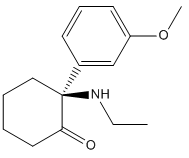
Methoxetamine (MXE) or 3-MeO-2-Oxo-PCE is a chemical of the arylcyclohexylamine class which acts as hallucinogenic dissociative.
This substance was originally developed as a research chemical through the use of intelligent drug design. An interesting and detailed interview with the anonymous chemist who invented this substance can be found here. It is a chemical derivative of Ketamine that also contains structural features of phencyclidine (PCP) and 3-MeO-PCP.
MXE has almost no history of human usage prior and was first identified by the European Monitoring Centre for Drugs and Drug Addiction, which monitors the Internet for new psychoactive substances within the European Union, in November 2010. By July 2011, they had identified 58 websites selling the compound, at a cost of 145–195 euros for 10 grams. Today it is used as a recreational drug and an entheogen, rarely sold on the streets and almost exclusively obtained as a grey area research chemical through the use of online vendors.
In terms of its chemistry, MXE is classed as an arylcyclohexylamine drug. The Ar group is methoxybenzene in MXE. The nitrogen has one substituted ethyl group and there is an acetyl group attached at carbon R2.
In terms of its pharmacology, MXE acts as an NMDA receptor antagonist. NMDA receptors allow for electrical signals to pass between neurones in the brain and spinal column; for the signals to pass, the receptor must be open. NMDA receptor antagonists close the NMDA receptors by blocking them. This disconnection of neurones leads to loss of feeling, difficulty moving, and eventually the famous “hole”.
MXE also acts as a dopamine-reuptake inhibitor and a serotonin reuptake inhibitor with µ-opioid affinity and typical dissociative effects. This provides an explanation for its euphoric and often stimulating effects.
The effects listed below are based upon the subjective effects index and personal experiences of PsychonautWiki contributors. The listed effects will rarely if ever occur all at once but heavier dosages will increase the chances and are more likely to induce a full range of effects.
Physical effects:
The subjective physical effects of MXE can be broken down into nine components all of which progressively intensify proportional to dosage. These are described below and generally include:
- Tactile disconnection
- Spontaneous tactile sensations - The MXE body high is a sharp, pleasurable tingling sensation which is location specific to the hands, feet and head.
- Tactile suppression - This partially to entirely suppresses one’s own sense of touch, creating feelings of numbness within the extremities. It is responsible for the anaesthetic properties of this substance.
- Physical autonomy
- Motor control loss - A loss of gross and fine motor control alongside of balance and coordination is prevalent within MXE and becomes especially strong at higher dosages. This means that one should be sitting down before the onset (unless they are experienced) in case of falling over and injuring oneself.
- Euphoria - This results in feelings of physical euphoria which range between mild pleasure to powerful all-encompassing bliss.
- Decreased bodily weight - This creates the sensation that the body is floating and has become entirely weightless. This effect is strangely stimulating and encourages physical activities at low to moderate dosages by making the body feel light and effortless to move.
- Dizziness - Although uncommon, some people report dizziness under the influence of MXE.
- Nausea - It’s worth noting that high dose MXE trips can sometimes result in nausea and vomiting at the peak of trip. For most people, this is surprisingly not as unpleasant as they would initially expect due to the accompanying detachment from the physical senses.
Cognitive effects:
The general head space of MXE is often described as particularly euphoric and clear headed in comparison to that of DXM and Ketamine. The specific cognitive effects can be broken down into 8 separate subcomponents which are listed and described below:
- Consciousness disconnection
- Ego suppression, loss and death
- Time distortion
- Euphoria
- Introspection
- Deja-Vu
- Personal bias suppression
- Conceptual thinking
- Direct communication with the subconscious
- Unity and interconnectedness
Visual effects:
Suppression
This substance does not enhance visual stimuli; instead it tends to degrade and decrease visual aptitude in a variety of ways which generally includes:
- Visual disconnection - This eventually results in the MXE’s equivalent of the famous “K-hole” or more specifically, holes, space and voids alongside of structures.
- Visual acuity suppression
- Double vision - This component is prevalent at moderate to heavy dosages and makes reading impossible unless one closes an eye.
- Pattern recognition suppression - This effect generally occurs at higher dosages and makes one unable to recognize and interpret perceivable visual data.
Distortions
MXE exhibits a full array of dissociative distortions and alterations in visual perception which generally includes:
Geometry
The visual geometry found within MXE can be described as very dark and bland when compared to that of Ketamine or DXM and often consists of many tiny interlocking and woven lines. It does not extend beyond level 4 and can be comprehensively described through its variations as simplistic in complexity, algorithmic in style, synthetic in feel, unstructured in organization, dimly lit in lighting, multicoloured in scheme, glossy in shading, soft in edges, small in size, slow in speed, smooth in motion, equal in rounded and angular corners, immersive in depth and consistent in intensity.
Hallucinatory states
At high dosages, MXE can produce a full range of high level hallucinatory states in a fashion that that is less consistent and reproducible than that of many other commonly used psychedelics. These effects include:
- External hallucinations (Autonomous entities, Settings, sceneries, and landscapes, Alterations in perspective and Scenarios and plots) - In comparison to other dissociatives, this effect can occur at heavy dosages but is extremely infrequent in comparison to the same effect found within deliriants. It can be comprehensively described through its variations as delirious in believability, autonomous in controllability and solid in style. The most common theme for this effect to follow is one of experiencing and talking to friends around oneself when they are not actually present.
- Internal hallucinations (Autonomous entities, Settings, sceneries, and landscapes, Alterations in perspective and Scenarios and plots) - In comparison to other dissociatives, this effect can occur at heavy dosages but is considerably less common than the same effect found within psychedelics and deliriants. It can be comprehensively described through its variations as delirious in believability, fixed in style, equal in new experiences and memory replays in content, autonomous in controllability and solid in style.
Auditory effects:
The auditory effects of MXE are common in their occurrence and exhibit a range of effects which commonly includes:
Potential health effects, addiction and tolerance:
The toxicity and long term health effects of recreational MXE use do not seem to have been studied in any scientific context and the exact toxic dosage is unknown. This is because MXE is a research chemical with very little history of human usage. Anecdotal evidence from people who have tried MXE within the community confirm that there do not seem to be any negative health effects attributed to simply trying this drug at low to moderate doses or using it sparingly (but nothing can be completely guaranteed).
In terms of MXE tolerance, this can take weeks to build up for some, but for others it can take a single night of heavy use. Once a physical tolerance to MXE has set itself in, it can often take a month or more to reset itself.
MXE has a fairly high potential to be abused. It does not seem to physically addictive, but can become habit-forming as there is no real tolerance attributed to this drug, meaning that it could potentially be used multiple days in a row if somebody chooses to do so. There have been multiple reports across the internet of people becoming seriously addicted daily users of this substance so serious precautions and considerations should be taken before trying this substance.
Reports of compulsive redosing during high dose trips resulting in overdoses have also been reported. This can be prevented by keeping MXE far away from oneself when tripping. Addiction can be avoided by manually limiting one’s usage of the drug. It’s worth noting, however, that as with most hallucinogens, most users note that the desire to use them can actually decrease with use.
In terms of its long term health effects, when used repeatedly and with excess for extended periods of time, MXE seems to exhibit almost identical bladder and urinary tract problems to those found within Ketamine but to a lesser extent. This is because MXE is 4 times as potent as ketamine so significantly less of drug needs to be consumed. Symptoms of Ketamine-induced cystitis can become extremely serious and can described as:
- Urinary frequency - Urinary frequency is the need to empty the bladder every few minutes.
- Urinary urgency - This can be described as a sudden, compelling need to urinate.
- Urinary pressure - This is experienced as a constant sensation of fullness in the bladder that is unrelieved by urination.
- Pelvic and bladder pain - Pain can develop suddenly and severely, particularly as the bladder fills with urine.
- Hematuria - Hematuria is visible blood in the urine.
- Incontinence - This is the leakage of urine.
All of these, however, can easily be avoided by simply not using MXE on a daily or even weekly basis and manually limiting your usage of the substance.
Legal Issues:
- Germany: Possession, production and sale is illegal.
- Japan: Possession, production and sale is illegal.
- Russia: Possession, production and sale is illegal.
- Switzerland: Possession, production and sale is illegal.
- UK: MXE is a Class B drug.
Elsewhere in the world, however, MXE is completely uncontrolled and unscheduled. If you want to try this substance, a quick google search for the term “MXE vendor”, “methoxetamine vendor” or other similar phrases is usually sufficient to find a supplier in the top 3 or 4 links. It is also freely available in any desired quantity in the countries of which it has been made illegal, you just have to search a little harder.
Conclusion:
In conclusion, MXE is one hell of a drug. It is an extremely weird trip and not for the faint-hearted. It is, in my opinion, the most genuinely interesting research chemical created so far, taking its users to impossibly deep states of detachment and incredibly rich hallucinations. MXE is capable of taking people to worlds so unlike anything found within psychedelics yet still freely available across the internet through grey market research chemical vendors.
It is definitely worth noting, however, that MXE does have a dark side to it with potentially addictive effects for those who are lacking in self-control; it can easily be abused.