 Disregard everything I say. Every bit of writing here can be considered a work of fiction. Do not ever use anything I've ever said here for anything ever and if you do you are doing so at your own legal risk as I am not responsible for anything that may or may not happen to you. I did after all tell you to disregard everything I say as in reality I actually have no idea what I'm talking about and shall continue to be a retarded teenager with an Internet connection. Please point out as many flaws in my reasoning, claims, factual information and grammar as possible. MYSOURCESARE: Personal Experience, the Internet and nowhere I could just be making things up so don't say I didn't warn you.
Ketamine, broken down and described
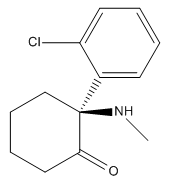
Dosage (insufflated),
Threshold : 10 - 15 mg
Light : 15 - 30 mg
Common : 30 - 75 mg
Strong : 60 - 125 mg
The K Hole : 100 - 250 mg
Duration (insufflated),
Onset : 5 - 15 minutes
Duration : 45 - 60 minutes
Normal After Effects : 1 - 3 hours
Dosage (oral),
Threshold : 40 - 50 mg
Light : 50 - 100 mg
Common : 75 - 300 mg
Strong : 200 - 450 mg
The K Hole : 500 + mg
Onset : 5 - 20 minutes (depending on stomach contents)
Duration : 90 minutes
Normal After Effects : 4 - 8 hours
Ketamine is a hallucinogenic drug used in human and veterinary medicine, primarily for the induction and maintenance of general anesthesia, usually in combination with a sedative. Other uses include sedation and anestheticin intensive care, (particularly in emergency medicine), and treatment of bronchospasm (a sudden constriction of the muscles in the walls of the lungs bronchioles).
Ketamine was originally developed as a medicine in 1965 as a derivative of phencyclidine (PCP), which was synthesized in 1926. It became popular among recreational users in the 1970’s but remains a ‘core’ medicine in the World Health Organization’s “Essential Drugs List", a list of minimum medical needs for a basic healthcare system.
This substance is a dissocitive which falls into the arylcyclohexylamine class of chemicals, and possesses NMDA receptor antagonist properties. NMDA receptors allow for electrical signals to pass between neurones in the brain and spinal column; for the signals to pass, the receptor must be open. NMDA receptor antagonists close the NMDA receptors by blocking them. This disconnection of neurones leads to loss of feeling, difficulty moving, and eventually the famous “k-hole".
This drug is the most famous of the classical dissociative hallucinogens and exhibits a wide array of complex subjective effects which are described in detail below…
Physical effects:
Assuming the substance has been insufflated, the very first physical effect hat is noticed is a sharp but relatively painless sensation within the nostril. An unpleasant taste is present for 15 - 20 minutes after insufflation and seems to come and go in an unpredictable manner.
At lower dosages, the physical sensations produced by the trip itself can be broken down into two distinct sensations. The first is a sharp, pleasurable tingling sensation which is location specific to the hands, feet and head. The second is a warm euphoric glow which emanates outwards from the centre of the body’s torso. Alongside of this, a significant decrease in the body’s overall weight is felt. This creates sensations of being extremely light and floaty in a way which is not necessarily stimulating, but still encouraging towards the act of moving around and engaging in physical activities.
As dosage increases, the physical sensations induced by the trip begin to become encompassed by feelings of physical detachment. This begins with feeling as if you are becoming removed from the body with a proportional loss of motor control and tactile sensation that increases along side of it. These sensations of dosage relative physical detachment are often described as feeling as if your body is not your own or feeling as if its movements have become partially to fully autonomous. As this effect increases motor control and bodily awareness are completely lost as total detachment from the physical senses and out of body experiences begin to take toll. This is accompanied by significant changes in the perceived direction and pull of gravity which results in feelings of flying over vast distances in multiple directions and varying speeds.
It’s worth noting that high dose ketamine trips can sometimes result in nausea and vomiting at the peak of trip. For most people, this is surprisingly not as unpleasant as they would initially expect due to the accompanying detachment from the physical senses.
Cognitive effects:
The most noticeable change in mental perception within the ketamine trip can be defined as a mild to complete detachment from the self and conscious awareness, which is the very definition of psychological dissociation. At lower levels this is usually described as feeling somehow separate and withdrawn from the external environment, as if life has somehow become a vague dream or film that plays out in front of you. Alongside of this, feelings of partial to complete autonomy associated with your thought stream and spoken conversation are often noted. As dosage increases, the cognitive detachment and dissociation eventually becomes so all-encompassing that ego death is inevitably reached, this is usually during high level out of body experiences. Along side of this, ketamine exhibits states of therapeutic dissociated introspection and spontaneous environment specific states of unity and interconnectedness.
It has also shown that ketamine, if taken even in small doses, is very effective for patients suffering from chronic depression and bipolar disorder. Specific studies which can be read about here and here have shown that the effect of the drug is immediate or within 2 hours and consistent in relieving patient’s depressive and/or suicidal symptoms, lasting up to 3 days after a single dosage. In comparison, common antidepressents, such as Prozac, are entirely ineffective for 40% of the population and can take weeks to show effects. This gives ketamine the potential to become an indispensable tool in the treatment of depression and bipolar, which is currently being held back by institutionalised drug prohibition. The mechanism behind this has been shown by studies which can be read about here. It stems from the way in which ketamine triggers the release of glutamate, which is a neurotransmitter that immediately stimulates the growth of damaged synapses which have been damaged by stress and depression.
Visual effects:
At lower levels of dissociation, the visual effects of ketamine can be described as the onset of a progressive detachment from the perception of sight and the brain’s ability to process it. This begins with blurred and doubled vision which leads onto the external environment, appearing as if it is being watched through a screen that becomes proportionally more distant dependent on dosage. Accompanying this, visual geometry similar in style to that of a psychedelic trip occurs. This experience is limited to level 1 - 4 experiences however and appears as significantly more colourful and intricate than anything found within MXE, but equal in complexity to that of DXM. Open eye perspective distortions such as alterations in the perception of size and distance attributed to the self and / or the external environment are commonly present.
Other dissociative specific visual distortions and alterations such as scenery slicing and environmental cubism are also present. As overall visual detachment increases in perfect proportion to its physical counterpart, out of body experiences eventually begin to set in. This takes a person’s conscious awareness into a place which can only be described as entering a vast and dark void, space or hole. It is commonly referred to by the drug community as “The k-hole" and contains within it an infinite array of level 1 - 4 hallucinatory structures.
Alongside of this, fully 3-dimensional hallucinatory states such as autonomous entity contact, landscapes and concepts are occasionally present, but significantly less consistent in their manifestation than psychedelics and deliriants.
Auditory effects:
At lower levels of detachment, a greatly enhanced sense of music appreciation becomes present. This can be described as the sensation of being able to comprehend and pay attention to each and every layer of sound to a complex piece of music. As dissociation increases however, sound can eventually become muffled, distant and extremely hard to perceive. Alongside of this, distortions in noise volume perception are often extremely altered at random points creating the sensation that everything is abnormally loud or silent.
Health effects, addiction potential and tolerance:
There are multiple dangers associated with compulsive ketamine abuse. It is because of this that I highly recomend doing as much research as you possibly can before considering trying this drug.
Extreme ketamine use can injure the bladder, causing ulcers (wounds) and fibrosis (stiffening of the bladder walls and shrinkage). This is strictly associated with regular overuse of ketamine and results in urinary frequency, urgency, pressure, pain, incontinence and/or bleeding from the bladder. They can receive a variety of diagnoses including ulcerative bladder, interstitial cystitis or ketamine cystitis.
Ketamine is also psychologically addictive when used on a regular basis. This can be avoided however by manually limiting your usage and not taking it compulsively.
Fatal ketamine overdoses are particularly rare but not completely unheard of. The LD50 for ketamine when injected into mice is 400mg/kg. As humans are generally more sensitive to drugs we devide it by 2, making 200mg/kg the estimated human lethal dose. Assuming the human weighs a conservative 50kg, this would require the lethal dosage to be atleast 10 grams. 40 times the amount of 250mg necessary for a highdose K-hole experience.
In terms of ketamine tolerance, this can take weeks to build up for some but for others it can take a single night of heavy use. Once a physical tolerance to ketamine has set itself in, it can often take a month or more to reset itself.
Legal issues:
- The increase in illicit use prompted ketamine’s placement in Schedule III of the United States Controlled Substance Act in August 1999.
- In the United Kingdom, it became labeled a Class C drug on 1 January 2006.
- In Canada, ketamine is classified as a Schedule I narcotic, as of August 2005.
- In Hong Kong, as of 2000, ketamine is regulated under Schedule 1 of Hong Kong Chapter 134 Dangerous Drugs Ordinance. It can only be used legally by health professionals, for university research purposes, or with a physician’s prescription.
- By 2002, ketamine was classified as schedule III in Taiwan.
Conclusion:
Ketamine and dissociatives in general are a truly fascinating experience which open up a whole new world completely unlike anything found with the world of psychedelics. However, they are not nearly as insightful and something which I only try on a very rare basis due to their addictive potential and adverse health effects.
-
bulletproofface reblogged this from disregardeverythingisay
-
abc-xtc-lsd reblogged this from adderalloctopus
-
dannyjpineda likes this
-
adderalloctopus reblogged this from druggybuddy
-
radiantfuckup reblogged this from druggybuddy
-
druggybuddy reblogged this from disregardeverythingisay
-
artedeinjuriar likes this
-
paradoxical--paradise reblogged this from happy-on-drugs
-
chloroformandinveiglement reblogged this from disregardeverythingisay
-
tueusesirene likes this
-
get-high-eat-babies likes this
-
dinyabalu likes this
-
fuxkfuxkfuxk reblogged this from cosmic-ketamine
-
jexclamationpointnx reblogged this from disregardeverythingisay
-
blazin1wilde likes this
-
yawnsighurgh likes this
-
proflogikbeats likes this
-
sinesthesiaa reblogged this from cosmic-ketamine
-
etchasketchy reblogged this from cosmic-ketamine
-
shutslame likes this
-
thereisnocureforpain reblogged this from cosmic-ketamine
-
foxchakra likes this
-
cosmic-ketamine reblogged this from disregardeverythingisay
-
tanksspecialk reblogged this from disregardeverythingisay
-
natebynight reblogged this from disregardeverythingisay
-
natebynight likes this
-
tanksspecialk likes this
-
hayburn3r likes this
-
zaeph likes this
-
badab1ng likes this
-
hannahs-in-wonderland likes this
-
radical-aura likes this
-
midarana likes this
-
27clvb likes this
-
liberal-fucking-libby reblogged this from happy-on-drugs
-
happy-on-drugs reblogged this from disregardeverythingisay
-
snapbacks-andcatstoo reblogged this from disregardeverythingisay
-
littlemissvivalabam likes this
-
ganjiac likes this
-
kidblondie likes this
-
palelittlewhale likes this
-
ssyssyphus likes this
-
kel-s-d reblogged this from disregardeverythingisay
-
beautifulpropaganda likes this
-
iamthemosthumblehumanever reblogged this from disregardeverythingisay
-
tryintotrip likes this
-
druggybuddy likes this
-
inbe-tween likes this
-
unicornmcgee likes this
-
jexclamationpointnx likes this
- Show more notes